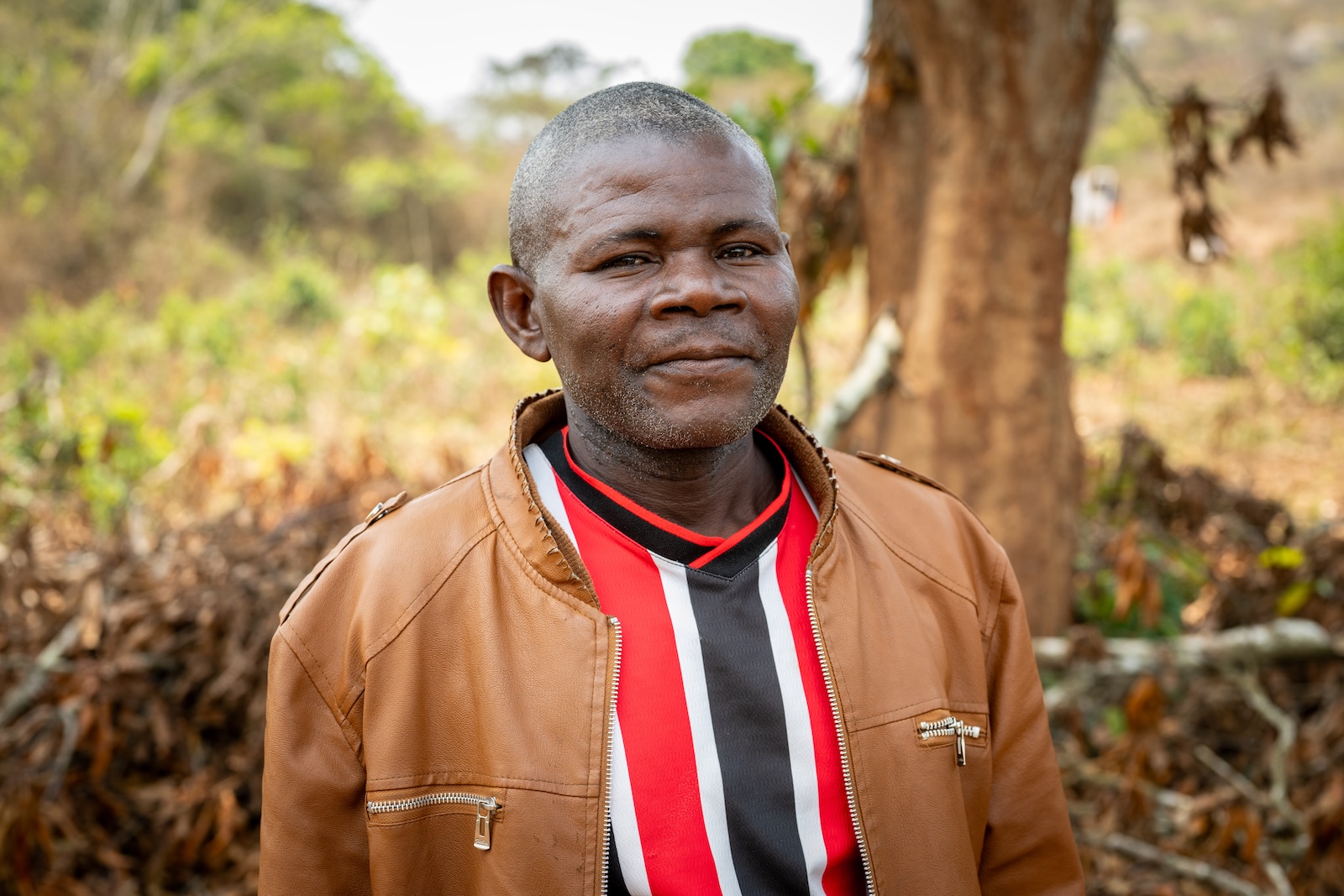
Growing Food on Land Once Mined: Felismino
Felismino is a farmer, father and grandfather from Aliwaio do Galo in Angola’s Cuanza Sul province. His family has lived and worked on the same land for generations. As a child during the civil war, he was kidnapped with his family and spent several years with soldiers before escaping and walking home with other children.
Today, Felismino supports his family by farming and working as a driver, transporting produce to Luanda. Landmines prevented him from cultivating part of his family’s land for years. Following APOPO’s clearance, he now has more ground to grow food for his family and crops to sell, although farming by hand and getting produce to market remain daily challenges.
In Angola, landmines are also found outside identified minefields. APOPO responds to community reports of these hazards through operations known as “spot tasks.”
The day after this interview, Felismino’s 18-year-old son brought him a landmine found on a different plot, separate from the land APOPO had cleared. It was taken to the village leader, who placed it on his roof to keep others from touching it. The next day, APOPO’s team disarmed that mine and another at the discovery site, cordoning off the area for future manual clearance.
The incident highlights the importance of explosive ordnance risk education, which teaches people never to touch or move suspicious items and to report their location. Unfortunately, that advice does not always reach everyone or get followed.
For Felismino, clearance of his family’s land has already made a difference, giving him more ground to cultivate and the freedom to work it safely. Read Felismino’s story in his own words:
Felismino’s Story
“My name is Felismino. This is my grandfather’s land. It has been in the family for a very long time. We grew up here. Our parents are gone, and now we, the children, have taken over.
During that very difficult time in the civil war, all those areas that were mined, we left unworked. During the war we all went to the town and lived there. But we could not come here and work freely. We only came to the fields sometimes to find food, because where we were living in town, we did not have fields. We would do whatever we could to survive, take some maize and cassava, and then go back to town. We had to be very careful.
A cousin of mine lost a foot when he stepped on a mine around 1980 or 81. At that time, we were also kidnapped here. In these very fields. The soldiers took my whole family. I was little, six or seven years old, around that. We stayed in the forest. I spent more than three years there with the soldiers.
The soldiers used the children to be bodyguards. When they reached a certain age, they would become bodyguards and later soldiers. We could not put up with that happening to us, too. So, we ran away because there was a lot of suffering there, even with food. We slept very badly in the open air. The cold was too much. We came back on our own, on foot. We were still just children. It took almost a week. You had to walk at night to avoid the troops. Only at night, not during the day. This area is ours, we know it, so we knew where to come back to even though it was a very long way to travel. Some members of our family were still here waiting for us.
When the APOPO team arrived here, they explained everything straight away. They called together the people from this area. They said, “We are the demining team. We have come to remove these mines that are here.” We accepted it because it was good for us. When they finished the work, they told us, “There is no more problem. You can work.” Then we went back without any problem. We went back and started clearing the ground to start planting. We produce many things. Maize, groundnuts, beans, tomatoes. Sweet potatoes, bananas, everything. There is a lot. This land is very productive. Very productive indeed. Even without fertilizer, it produces.
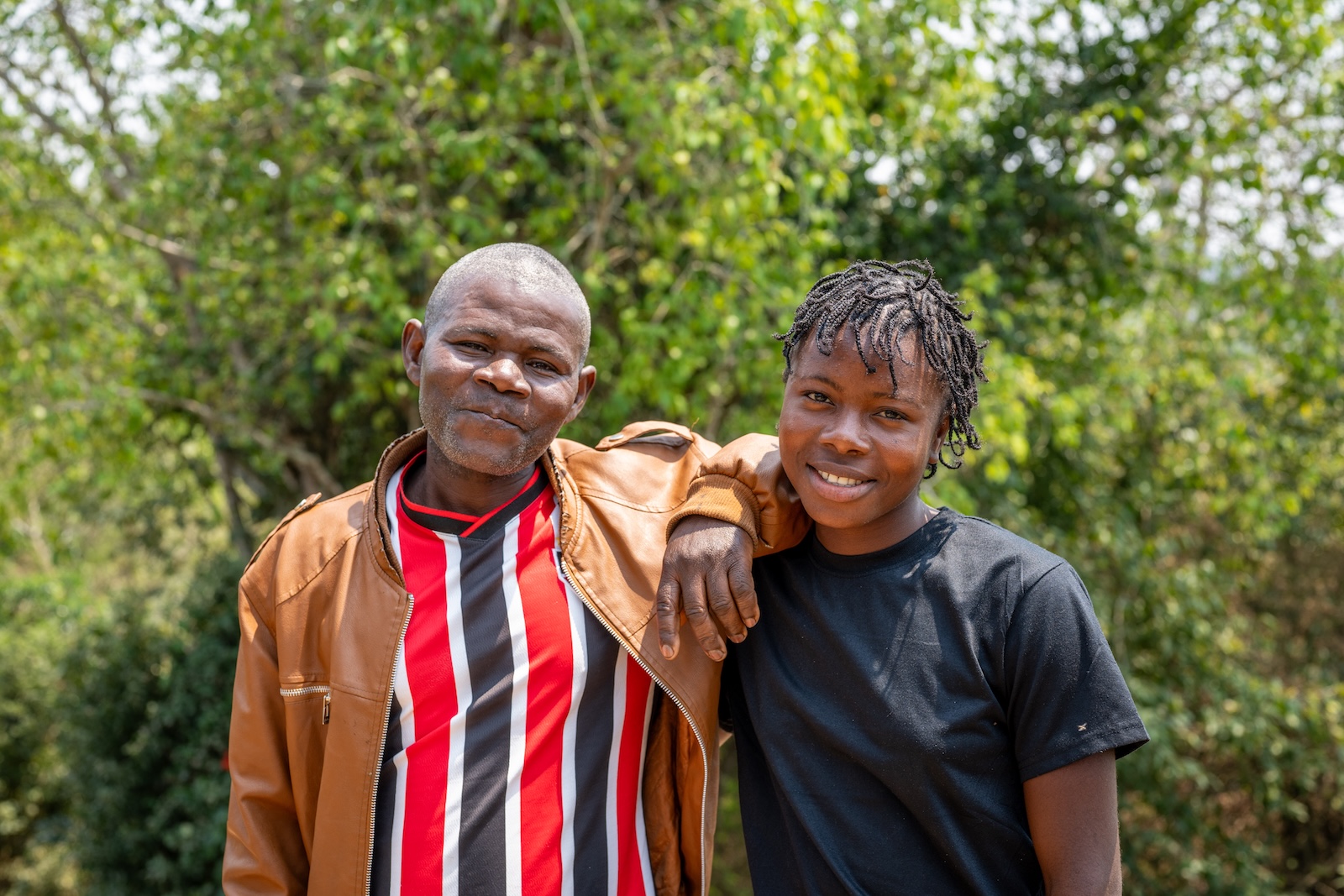
I have many children. Some help here. My granddaughter, Letícia, helps a lot too. She helps very well, and she studies too. They all need to eat, so I have to work. The crops we get from the fields are for food. The rest is for other needs. We sell it and use the money to buy other things we need. We have plans, but often the work in the fields fails because of the rain. Sometimes we do not earn very much. We earn little, but with what we get, we manage to do something.
The problem here is that we lack the means to help us. We work by hand. Those people who can afford machines can make use of them. For those who cannot, it is by hand.
I also work as a driver. We take produce to Luanda, tomatoes when it is time to harvest them. The vehicle is not mine. If I already had my own vehicle, I would be rich. It is hard work. There is no sleep. We want a vehicle, a motorbike, a bicycle, all of that. Transport would improve things. We take the produce from the fields to sell in Luanda, but we do not have vehicles. Sometimes it rots in the fields. It is because we lack the means to take it to market.
We have seen a big improvement since the land was cleared. We can now walk freely. We are very grateful for the demining work. We were very pleased.”