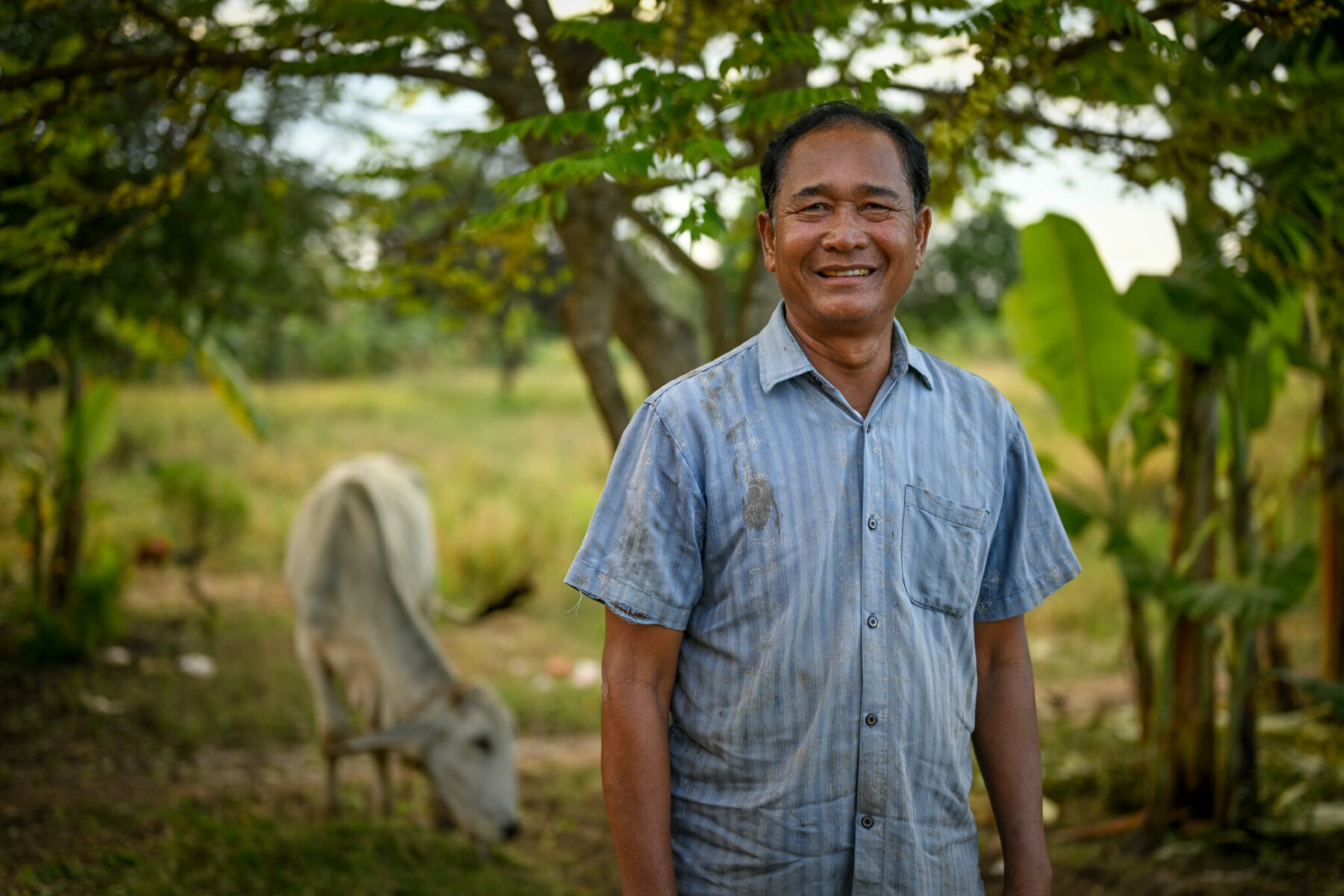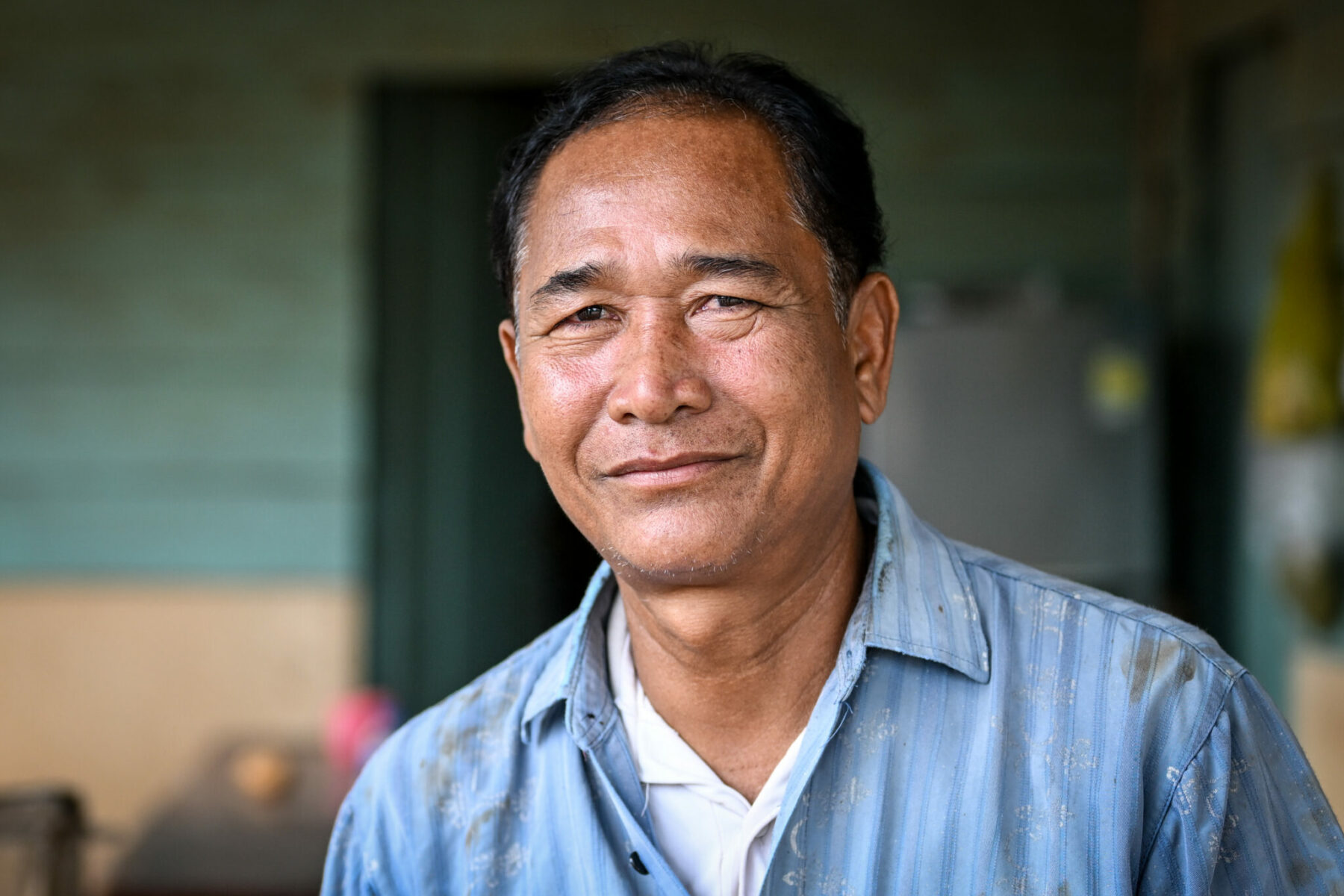
Clearing Explosives to Support His Family
Landmines and explosive remnants of war still affect the lives of many Cambodian families. Before professional demining support reached some communities, people were forced to manage dangerous items themselves, often while clearing land they urgently needed for farming.
Sophal had served in the army and could recognize many of the explosives he encountered when preparing farmland for his family. Even with that knowledge, disposing of them himself placed him at enormous risk. Today, APOPO’s demining teams are working near his community, giving residents a safe way to report dangerous items and helping protect the land for future generations.
Read Sophal’s story in his own words below.
“My name is Sophal, I am 63 years old. I was born in Takeo province and after the civil war I moved first to Pursat province and later to this area around 2008.
I already knew that the area was contaminated when I acquired the land, but I had no alternative, so I started clearing the bushes and trees to make the land usable for farming. While doing that I found many explosive items, grenades, rockets and other remnants, often not buried but left in groups.
I used to collect them and burn them, which caused explosions and large clouds of smoke. I found a lot of them, not just one or two but many, spread across the land. I was scared, but I had no other choice because I needed to farm to support my family. I had some knowledge of these devices because I served in the army for 16 years, so I could recognize them and understand the danger.
Clearing the land took me almost a year, and at that time the community relied on shared knowledge. People warned each other to be careful, especially those who had military experience and understood the risks.
After I cleared the land and removed what I found, I did not encounter more explosive items in that specific area, and I believed that those items had been stored or left on the ground rather than buried.
When I first came here, this place was completely different. It was forest. There were very few families, maybe five or six, and even wild animals like tigers and elephants. There were no services and no support, so everything depended on us.
Life was very difficult. I had to leave my children at home while I worked in the fields, and I was always worried that they might wander into dangerous areas or be attacked by wild animals. There was no way to protect everything, so the older children would take care of the younger ones.
I moved here because in my previous place I had only five hectares of land, which was not enough to support my family, and the price of land was too high. I came here because with the same money I could access a larger area.
When I arrived, I eventually had about 12 hectares of land and over time I distributed it to my children, giving each of them around two hectares. Now I no longer own land myself and I live with my wife while my children farm the land.
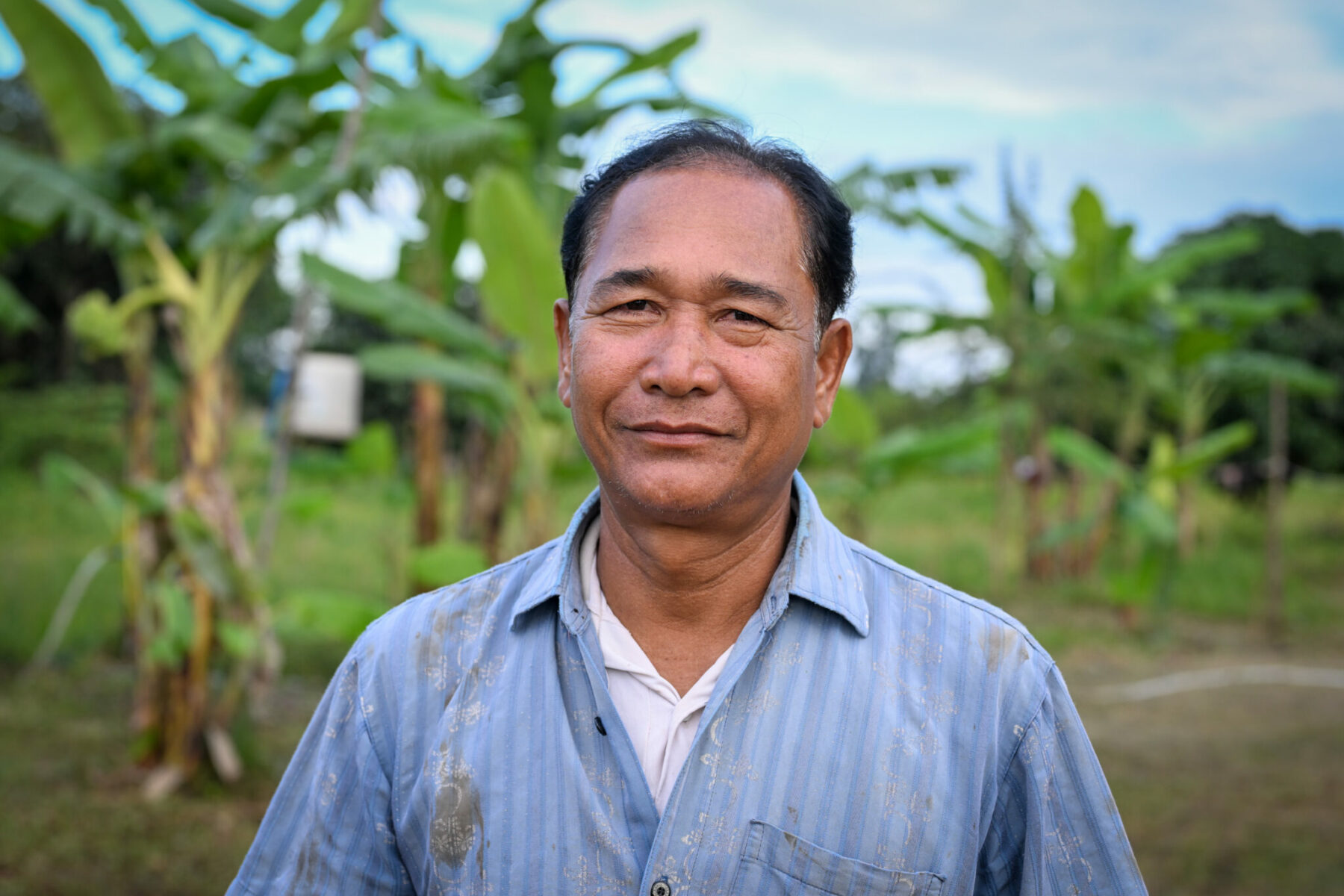
Looking back, I do not regret moving here because, even with the risks, having enough land allowed me to support my family and give each of my children a piece of land, which would not have been possible before.
I have six children. They are all married. Two of them work in factories and the others stay here and continue farming. We live close to each other. I stay with my wife in one house and my children live nearby.
My wife runs a small shop selling drinks, food for children and animal feed, which is our main source of income together with support from our children, especially because I am older and have health issues.
Today, seeing the demining teams from APOPO working near our homes is something I appreciate deeply. I respect their skills and the work they do because they are making the land safe for everyone.
I have spoken with them and learned about their work, including the use of rats to detect landmines, which I find surprising and impressive, very different from the rats we know, because these animals are trained to help people instead of causing damage.
My message to others who still face the same situation is clear. Now there are organizations that can help, so if you find something dangerous you should report it and not try to remove it yourself, because it is too risky.
My hope for my children is that they can continue to benefit from the land and have a stable life, and for my grandchildren that they can go to school and achieve a higher education, because I am now old and cannot support the family in the same way anymore.”
I also want to say something to those who still produce and use these weapons. They should stop because people have already suffered enough from landmines and explosives, and no one should have to live with this danger.”