
Protecting the World’s Most Trafficked Mammal
Morogoro, 21 February 2026 — World Pangolin Day falls on the third Saturday of February each year. Observed annually by conservationists, researchers, and wildlife advocates worldwide, the day raises awareness about pangolins and the urgent threats they face.
Pangolins are remarkable animals, uniquely covered in protective keratin scales, the only scaly mammal in the world. They are found in both Asia and Africa, with four species on each continent. Their name comes from a Malay word meaning “roller,” reflecting how they curl into a tight ball when threatened. While this defence can deter natural predators, it offers little protection against human exploitation.
Read on to learn about the threats faced by pangolins and the work APOPO is doing to combat wildlife trafficking of this endangered animal and several others.
Why World Pangolin Day 2026 Matters
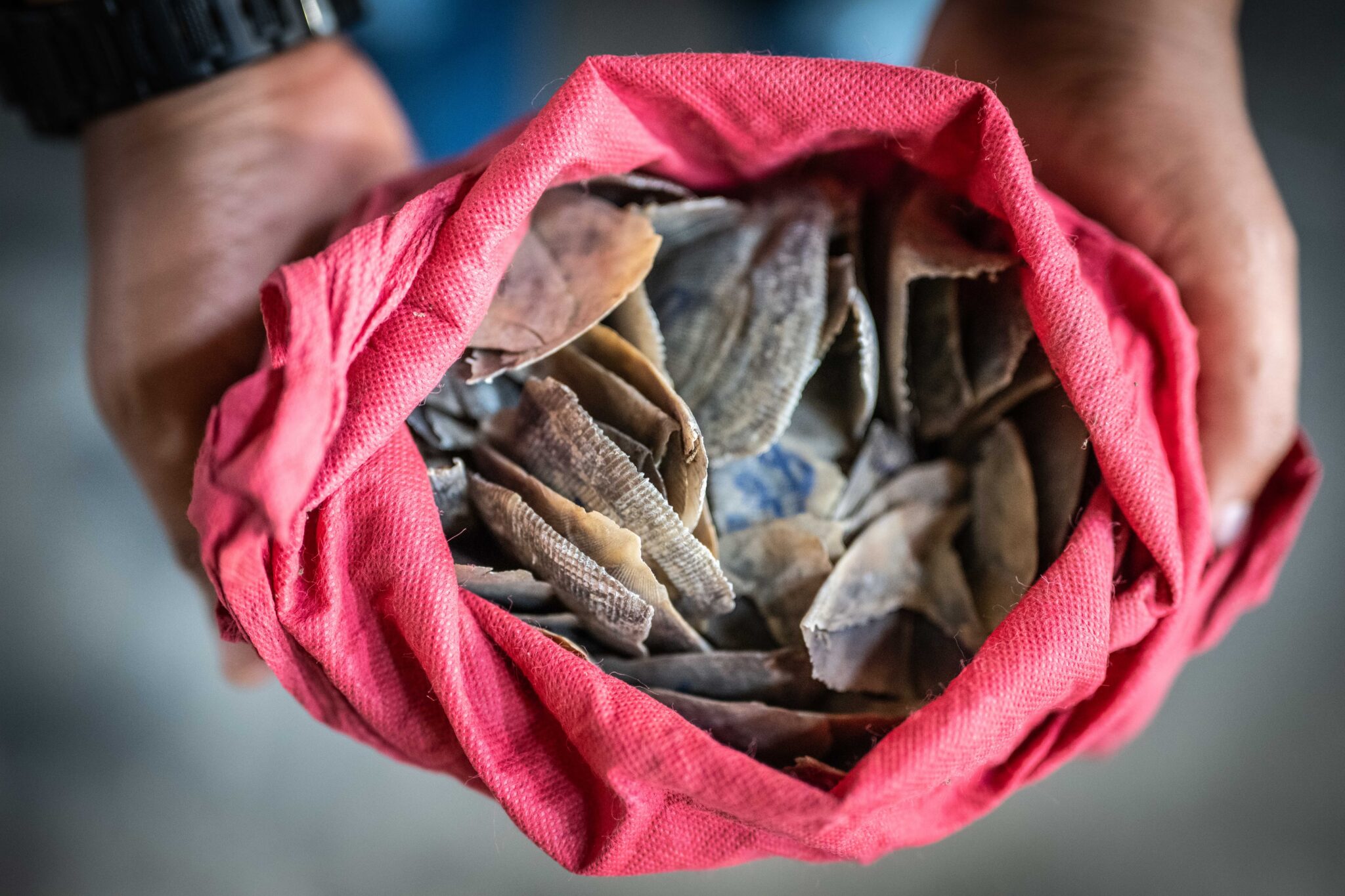
All eight pangolin species are listed in Appendix I of the Convention on International Trade in Endangered Species, the highest level of protection under CITES. This listing bans international commercial trade in wild caught individuals and their parts.
Despite these strict protections, illegal trafficking continues at alarming levels. Pangolin scales are sought for use in traditional medicines in parts of Asia, even though there is no scientific evidence that they have health benefits. Pangolins are also hunted for meat and other uses.
According to the World Wildlife Fund, more than one million pangolins were trafficked over a ten year period. This makes them the most trafficked mammals in the world.
Wildlife trafficking threatens not only pangolins but also biodiversity, ecosystem stability, and governance systems. It is a transnational crime that demands coordinated, innovative responses.
APOPO’s Wildlife Detection Project
APOPO is developing its Wildlife Detection Project to help address illegal wildlife trade. The project focuses on training African giant pouched rats (Cricetomys ansorgei), known as HeroRATs, to detect trafficked wildlife products by scent.
Training targets include pangolin scales, elephant ivory, rhinoceros horn, giraffe hide and hair, and African blackwood. These items are frequently associated with illegal trade networks that operate across borders.

As Alice, APOPO’s Head of Innovation, explains, “Pangolins are considered to be the most exploited and illegally trafficked mammal group on Earth. World Pangolin Day highlights the sadness of the problem and thereby the urgency of tackling this illegal trade. As the Wildlife Detection Rats move closer to operational deployment, we are focused and motivated to operationalize our robust and accurate approach that can meaningfully contribute to protecting threatened species like pangolins.”
The aim is to prepare detection animals that could one day support authorities screening cargo in high risk trade environments such as sea ports, airports, and border crossings. While the Wildlife Detection Project is not yet operational, significant progress has been made in refining training protocols, validating detection accuracy, and building the partnerships required for responsible future deployment.
Support and Donors for the Wildlife Detection Project

The development of the Wildlife Detection Project is made possible through the support of committed partners who believe in innovation as a tool for conservation. The project is supported by the Deutsche Gesellschaft für Internationale Zusammenarbeit (GIZ) GmbH, BMUKN, (formerly BMUV), the Anne Innis Dagg Foundation, and players of the People’s Postcode Lottery through the Postcode Planet Trust. Their investment in the research, training, and validation of APOPO’s Wildlife Detection project is helping lay the groundwork for future operational impact.
Take Action on World Pangolin Day 2026
World Pangolin Day 2026 is a reminder that awareness must be paired with action. Innovative approaches, strong enforcement, and public support are all part of the solution.
One of the animals currently being trained as part of APOPO’s Wildlife Detection Project is HeroRAT Jane. She is learning to identify the scent of trafficked wildlife products, including pangolin scales.
By adopting HeroRAT Jane, you support the research, training, and validation work needed to bring innovative wildlife detection tools closer to operational reality.
Mark World Pangolin Day 2026 by standing with pangolins and supporting practical solutions that aim to combat illegal wildlife trade and protect endangered species for generations to come.
APOPO is grateful to all donors and partners who are instrumental to the success of our wildlife detection rats project.