
12–14 November 2026 | SUA Olmotonyi Campus, Arusha, Tanzania
Learn through Syntropic Agroforestry Training to combine avocado, cashew, and macadamia trees with vegetables and other crops that provide food and income while the trees mature. This APOPO HeroTREEs three-day training covers how to design, establish, and manage a syntropic agroforestry system, with two days of field practice.
Led by Thiong’o Gachie, a Kenyan regenerative agriculture specialist with around ten years of experience, alongside Haji Khamis, APOPO’s Syntropic Agroforestry trainer. The training is open to farmers, students, agricultural professionals, and organizations.
What You Will Learn
Syntropic Agroforestry combines agricultural production with ecosystem restoration. It draws on how forests develop, using complementary plants and active management to support crops and improve soil health.
The training covers:
- Core principles: Plant diversity, vegetation layers, and natural succession, including how plants support each other as a system develops.
- Farm design: Selecting suitable species, combining crops, and arranging planting rows to make effective use of sunlight, nutrients, and space.
- Avocado, cashew, and macadamia: Establishing these long-term commercial crops alongside food crops, support plants, and biomass-producing species.
- Early harvests: Growing vegetables and other short-term crops between tree rows to provide food and income from the first year.
- Pruning and soil care: Using strategic pruning, mulch, and soil cover to improve growing conditions and manage competition.
- Long-term management: Adapting the system as trees mature and the balance between crops changes.
REGISTER FOR THE THREE-DAY TRAINING
Your Trainers
Thiong’o Gachie focuses on practical, affordable approaches for smallholder farmers. He has helped establish agroforestry systems and trained farmers in Kenya, Uganda, Tanzania, Somalia, Namibia, and Eswatini. He collaborates with the Agroforestry Promotion Network and works as an independent consultant.
On his one-acre demonstration farm in Rumuruti, Kenya, he grows food crops, fruit trees, vegetables, and herbs. His training approach gives farmers opportunities to see and try successful systems before adopting them.
Learn more through his Wikifarmer profile, LinkedIn, or Facebook.
Haji Khamis, APOPO’s Syntropic Agroforestry trainer, will co-facilitate the course and support participants during field sessions.
Put Your Syntropic Agroforestry Training into Practice
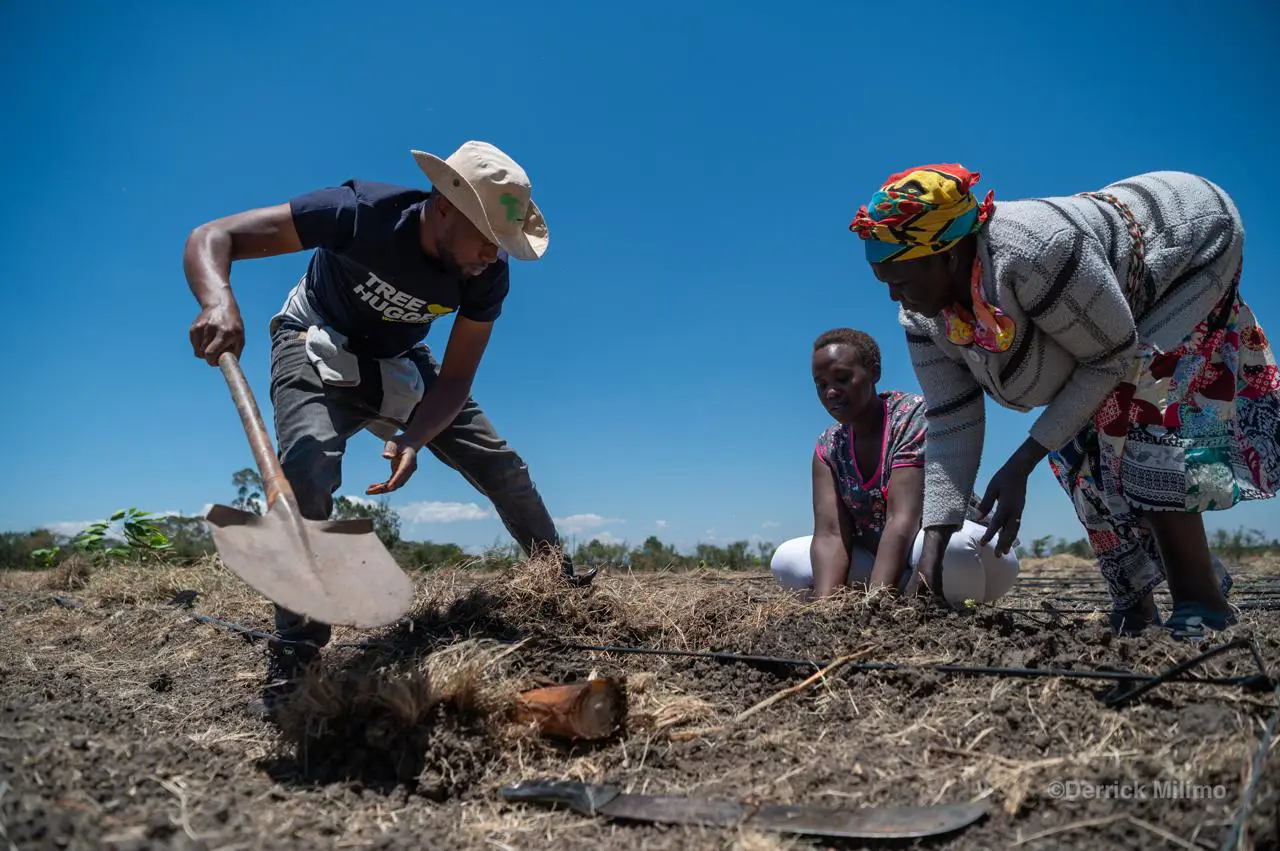
After a day covering the scientific and practical principles, spend two days laying out and establishing a syntropic system at Sokoine University of Agriculture’s Olmotonyi Campus.
You will practice field layout, plant positioning, soil cover, and management techniques, focusing on avocado, cashew, and macadamia with vegetables for earlier harvests. The team will also discuss coffee, bananas, and locally suitable support plants.
The sessions will build skills you can apply on your own farm or within your organization, while connecting you with other practitioners.
Schedule, Accommodation, and Payment
Thursday, 12 November | Theory | 09:00–17:00
Friday–Saturday, 13–14 November | Field training | 08:00–16:00
All sessions take place at SUA Olmotonyi Campus, Arusha. Bring comfortable field clothes, suitable footwear, and appropriate working gear.
Accommodation may be available on campus. Contact John Mkuya at +255 744 059672 to discuss arrangements.
Fee: TZS 100,000 per person (Food and drinking water included.)
Payment details
Bank: CRDB Bank
Account name: My Birthday Tree Organization-Syntropic
Account number: 10377930067
REGISTER FOR THE THREE-DAY TRAINING
Questions? Contact haji.khamis@apopo.org.
Organized by APOPO HeroTREEs through its Syntropic Agroforestry Innovation Accelerator (SAIA). SAIA connects farmers, universities, NGOs, and agricultural professionals through training, demonstration farms, research, and knowledge sharing. It works to make syntropic agroforestry more accessible, supporting livelihoods, healthier soils, biodiversity, and resilience to climate change.