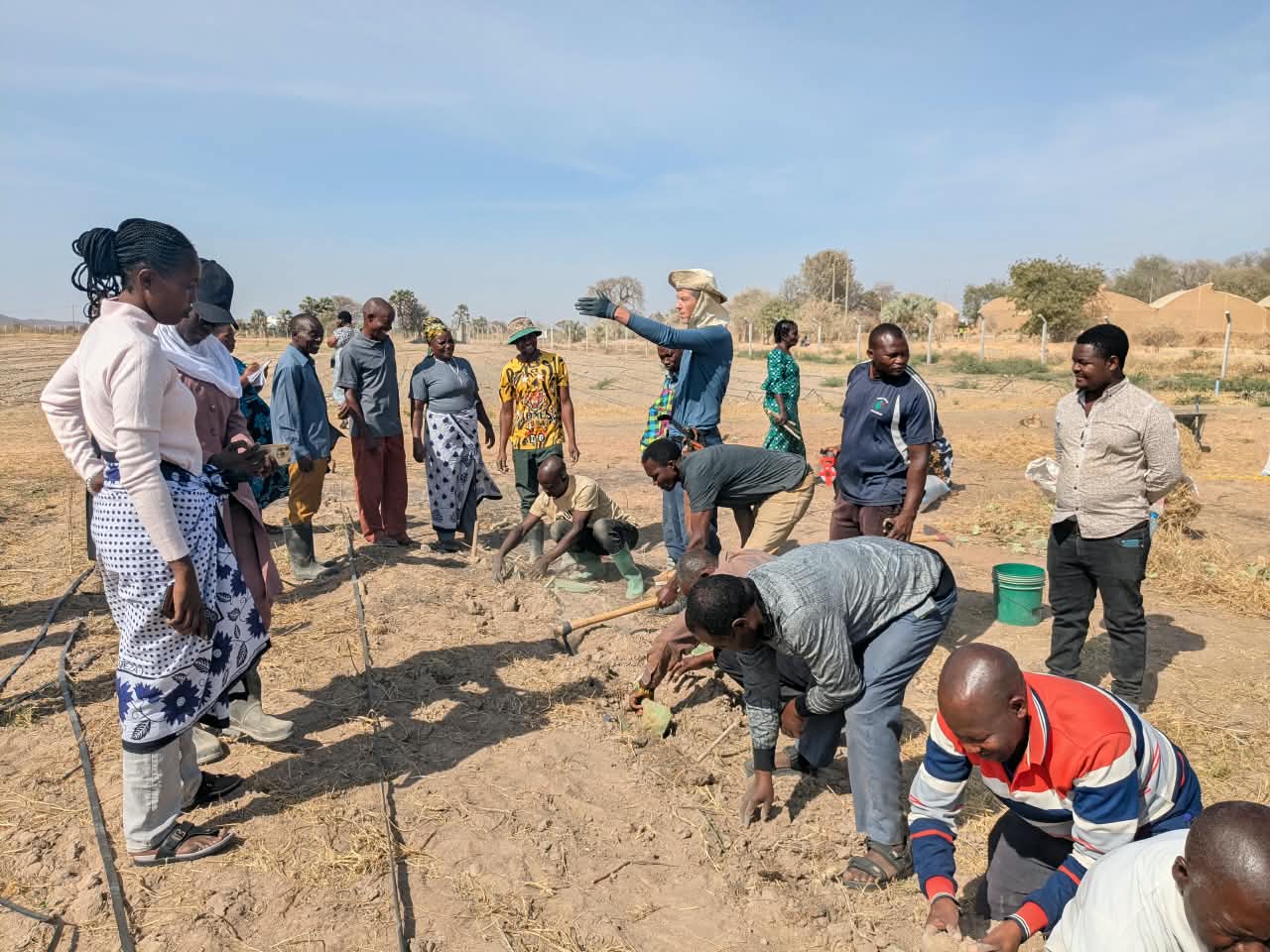
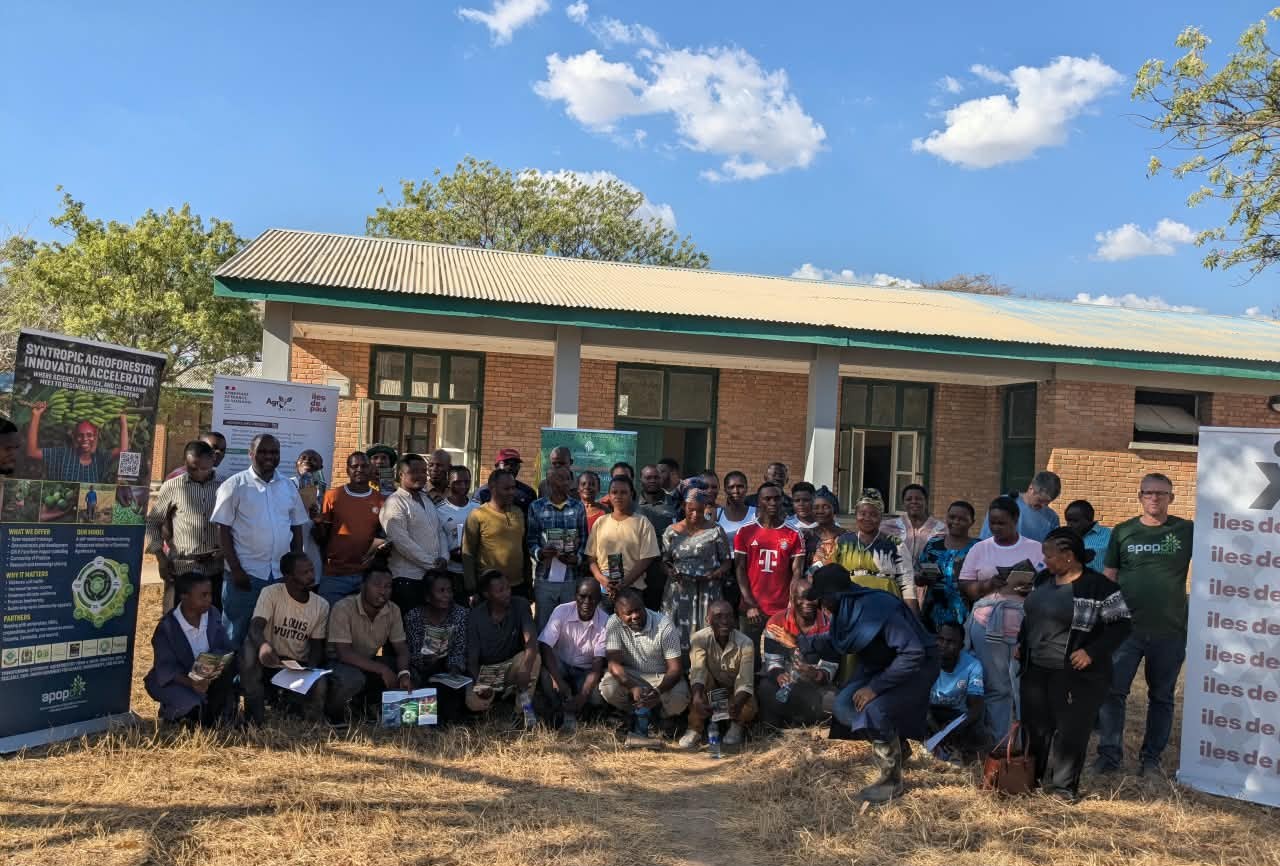
APOPO HeroTREEs has established a new demonstration plot to test syntropic agroforestry in Dodoma, Tanzania, following an invitation from the Tanzanian Ministry of Agriculture. The plot was created during a three-day training at Bihawana Farmers Training Center (BFTC), where 40 farmers and agricultural extension staff combined classroom learning with practical work.
Held from November 4 to 6, 2026, the training was organized with Iles de Paix Tanzania, part of the Belgian NGO Iles de Paix. APOPO collaborates with Iles de Paix through the Joint Strategic Framework for Belgian development cooperation.
The demonstration plot will provide a place to explore how syntropic agroforestry can be adapted to Dodoma’s semi-arid conditions, while giving farmers and extension staff an opportunity to see the approach develop over time.
Expanding Farmer Training with Ministry Support
The invitation followed a visit by representatives of Tanzania’s Ministry of Agriculture to APOPO’s syntropic agroforestry demonstration sites in March, 2026. Impressed by what they saw, the ministry invited HeroTREEs to establish a demonstration plot at the Bihawana Farmers Training Center, in the Dodoma region.
“The center trains farmers in organic agriculture, making it a valuable setting for testing and sharing farming approaches. Establishing a plot there creates an opportunity to reach farmers, extension officers, and other organizations connected to its training activities,” said Alex Wostry, APOPO’s Head of HeroTREEs & Sustainability.
Putting Practical Learning First
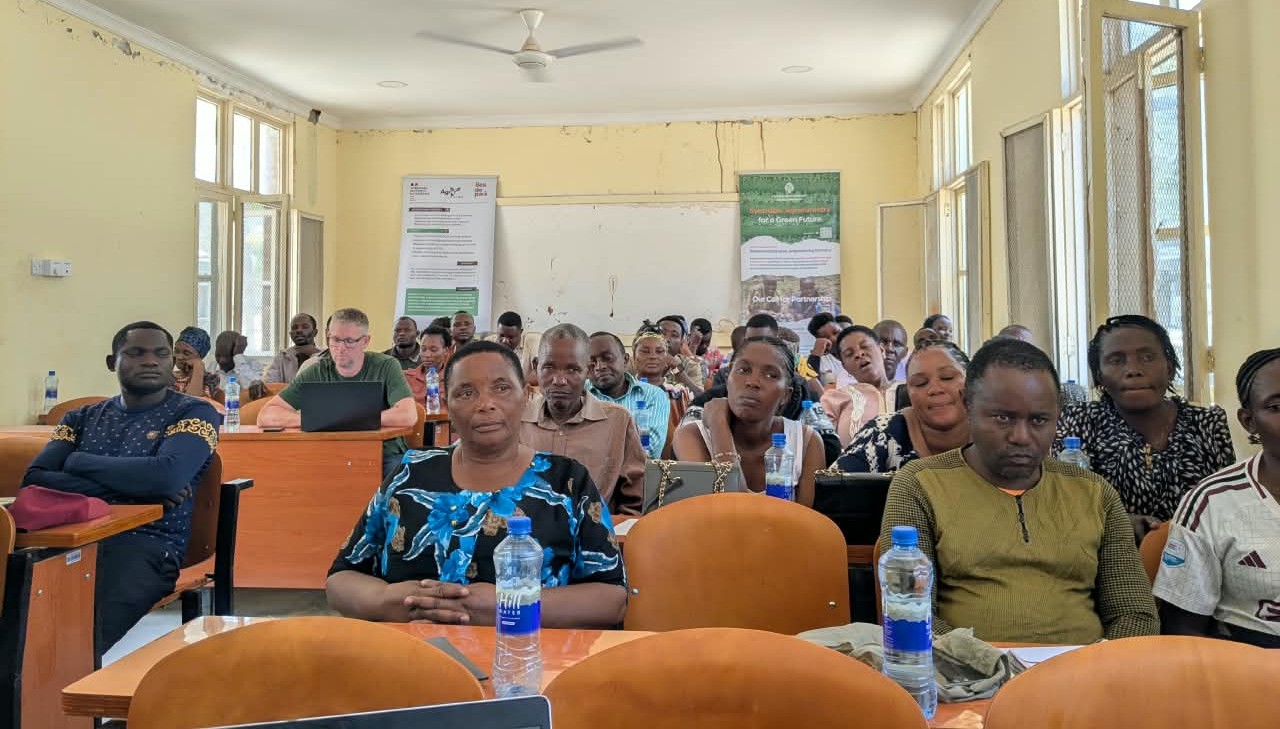
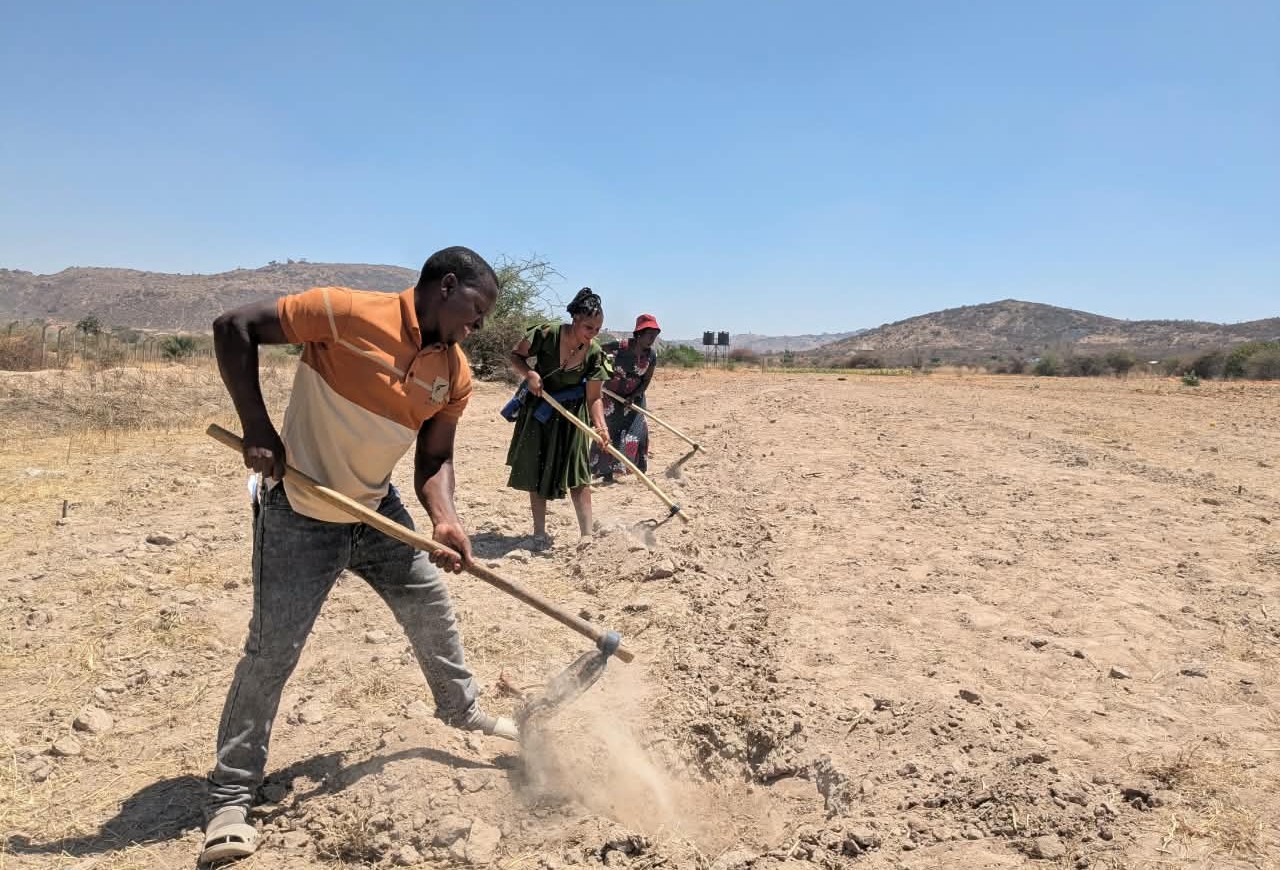
The three-day training combined theory with practical sessions, with most of the emphasis on establishing the demonstration plot. Participants worked alongside the APOPO and Iles de Paix teams, connecting the principles discussed during training with their application in the field.
The HeroTREEs team involved in establishing the new plot included Haji Khamis, Alex Wostry, and interns Sweetbert Lumwaga and Maliha Hamid. Staff from Bihawana also took part, alongside farmers and agricultural extension officers. By involving extension staff as well as farmers, the training created opportunities for the knowledge gained to reach other farming communities through their advisory work.
Adapting Syntropic Agroforestry to Dodoma’s Dry Conditions
Syntropic agroforestry follows a shared set of principles, but the species and planting arrangements must suit each location. Rainfall, soil, temperature, and water availability all influence how a system is designed and managed.
In Dodoma’s semi-arid conditions, this means selecting plants and combinations that can cope with prolonged dry periods. The training demonstrated how baobab trees and Opuntia cacti could be incorporated into the system, with particular attention to their role in water storage and biomass availability.
The demonstration plot also includes citrus, cashew, pomegranate, tamarind, and other trees. As the plot develops, we will learn which species and planting combinations perform best under local conditions, helping guide any expansion from 2027 onwards.
Learning Before Expanding
APOPO and Iles de Paix are responsible for the demonstration plot, with day-to-day management carried out by a Ministry of Agriculture gardener. From 2027, the partners will consider expanding the cultivated area, drawing on what they learn about crop performance and management at the site.
The demonstration plot also creates an opportunity to inform wider discussions about agriculture. If the system performs well, its location at a government training center could help bring practical evidence to policymakers and organizations working with farmers.
For HeroTREEs, the next step is to learn how the system develops in Dodoma and use that experience to guide future training, planting decisions, and expansion.
Learn more about APOPO HeroTREEs and our work with farming communities.