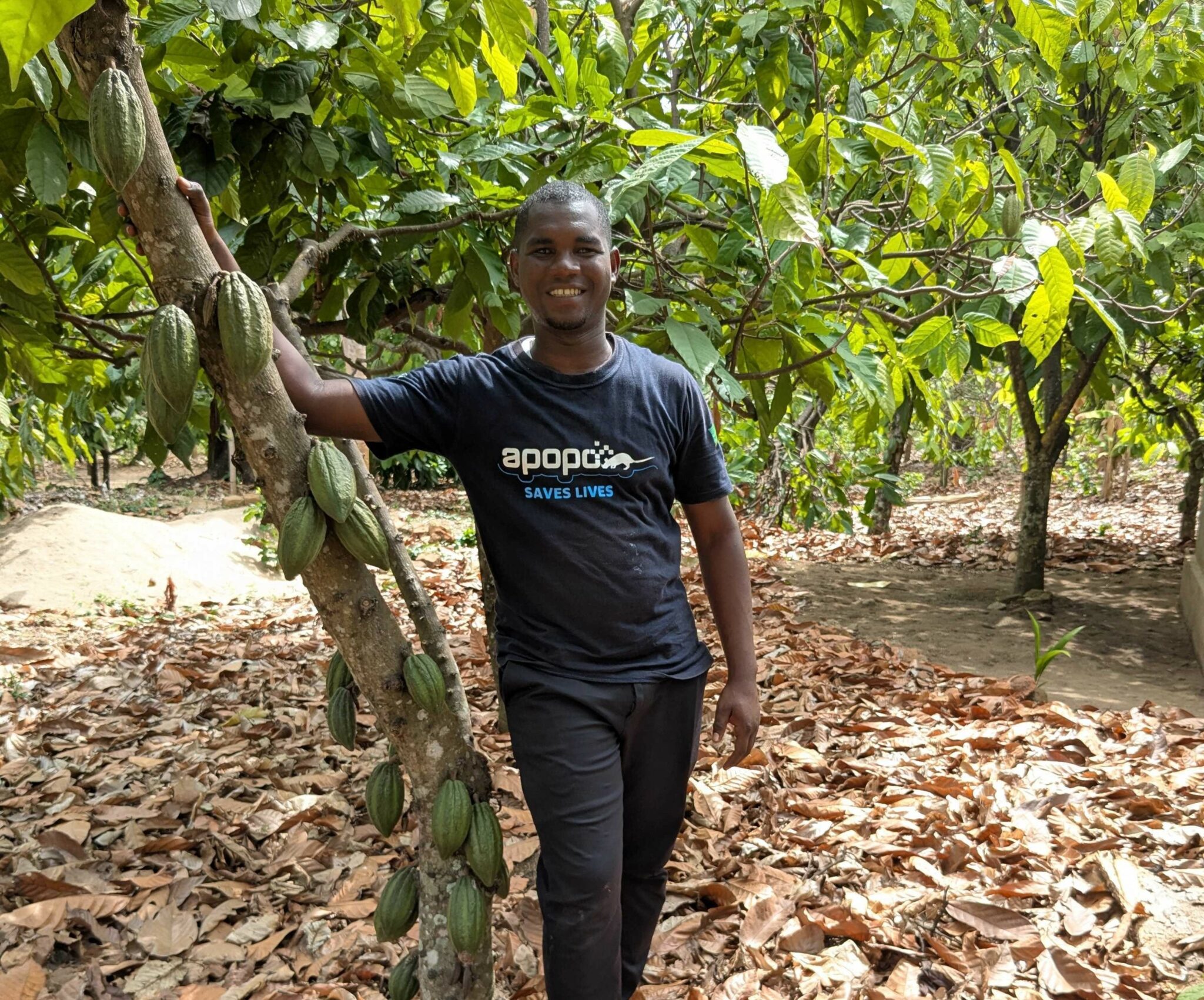
From November 23 to 25, 2025, APOPO partnered with Kokoa Kamili to deliver Syntropic Agroforestry training for cocoa farmers in Mbingu, Morogoro Region, Tanzania. The activity was part of APOPO’s Syntropic Agroforestry Innovation Accelerator (SAIA) and served as a field test of regenerative cocoa systems designed to combine productivity with climate resilience.
Kokoa Kamili is an organic-certified social enterprise based in Mbingu near Ifakara in the Kilombero Valley. It works with thousands of smallholder farmers to build a fair and transparent cocoa value chain by purchasing fresh cocoa beans at premium prices and providing centralized fermentation and drying. This model ensures high-quality cocoa for international specialty markets while strengthening farmer livelihoods and environmental stewardship.
The training was implemented through APOPO’s HeroTREEs program. HeroTREEs is APOPO’s agroforestry and land restoration initiative, which applies regenerative, tree-based farming systems to restore degraded land, improve soil health, and strengthen climate resilience while supporting sustainable livelihoods for smallholder farmers. The program combines practical farmer training, demonstration plots, and long-term system monitoring to show how diversified, tree-based systems can deliver both ecological and economic benefits.
Field Training in Mbingu, Morogoro, Tanzania
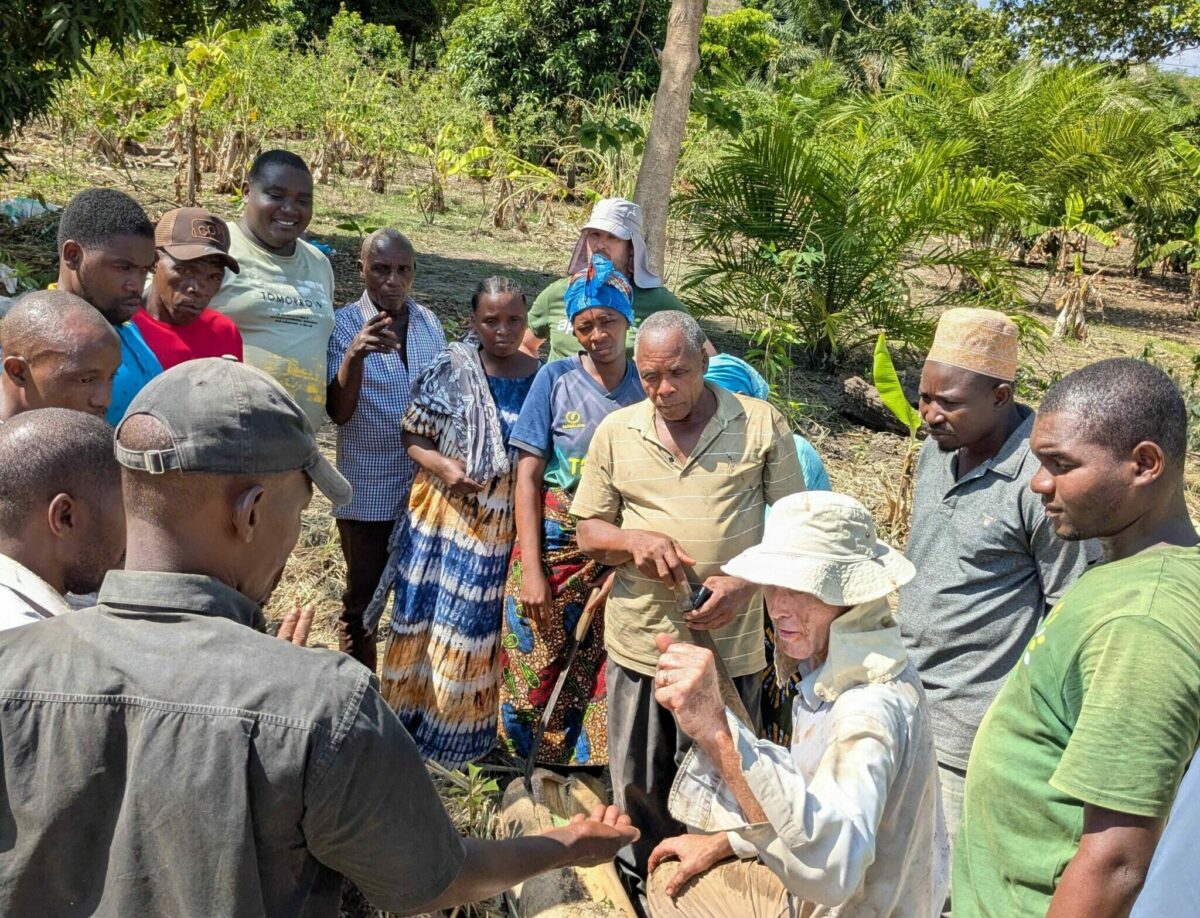
Nineteen participants took part in the training, including Kokoa Kamili staff and cocoa farmers from the Mbingu area. During hands-on sessions, participants established a 12 × 12 meter demonstration plot, planting 38 trees to demonstrate core syntropic agroforestry principles under real farm conditions.
These principles include:
- Designing multi-layered planting systems that combine crops, trees, and biomass species
- Actively managing shade to match crop needs over time
- Using regular pruning and mulching to build soil organic matter
- Promoting natural nutrient cycling and soil regeneration
- Reducing reliance on external inputs by strengthening ecological balance
The training was organized by APOPO HeroTREEs and facilitated in collaboration with Forests4Farming, an organization dedicated to sharing practical knowledge of syntropic agroforestry across Africa and other regions. Sessions were led by Johann “Hannes” Thaler, co-founder of Forests4Farming and an internationally recognized practitioner with experience across Africa, Europe, and Latin America. The program combined system design, field observation, and active management techniques tailored specifically to cocoa-based systems.
A Business-Focused Approach to Regenerative Farming
Within SAIA, training sessions are not standalone activities. They are part of a structured framework that looks at how syntropic agroforestry performs both environmentally and economically. For farmers, this means clearly understanding how the system can deliver reliable yields, manageable labor demands, and sustainable income over time.
Kokoa Kamili’s involvement highlights the value of Community of Practice members, meaning partner organizations and individuals that contribute practical, crop-specific expertise to SAIA. With strong experience in cocoa production and established relationships with farmers, Kokoa Kamili provides insight into agronomy, quality standards, and market expectations, helping ensure that regenerative systems remain commercially viable.
Why Cocoa Works in Syntropic Agroforestry Systems
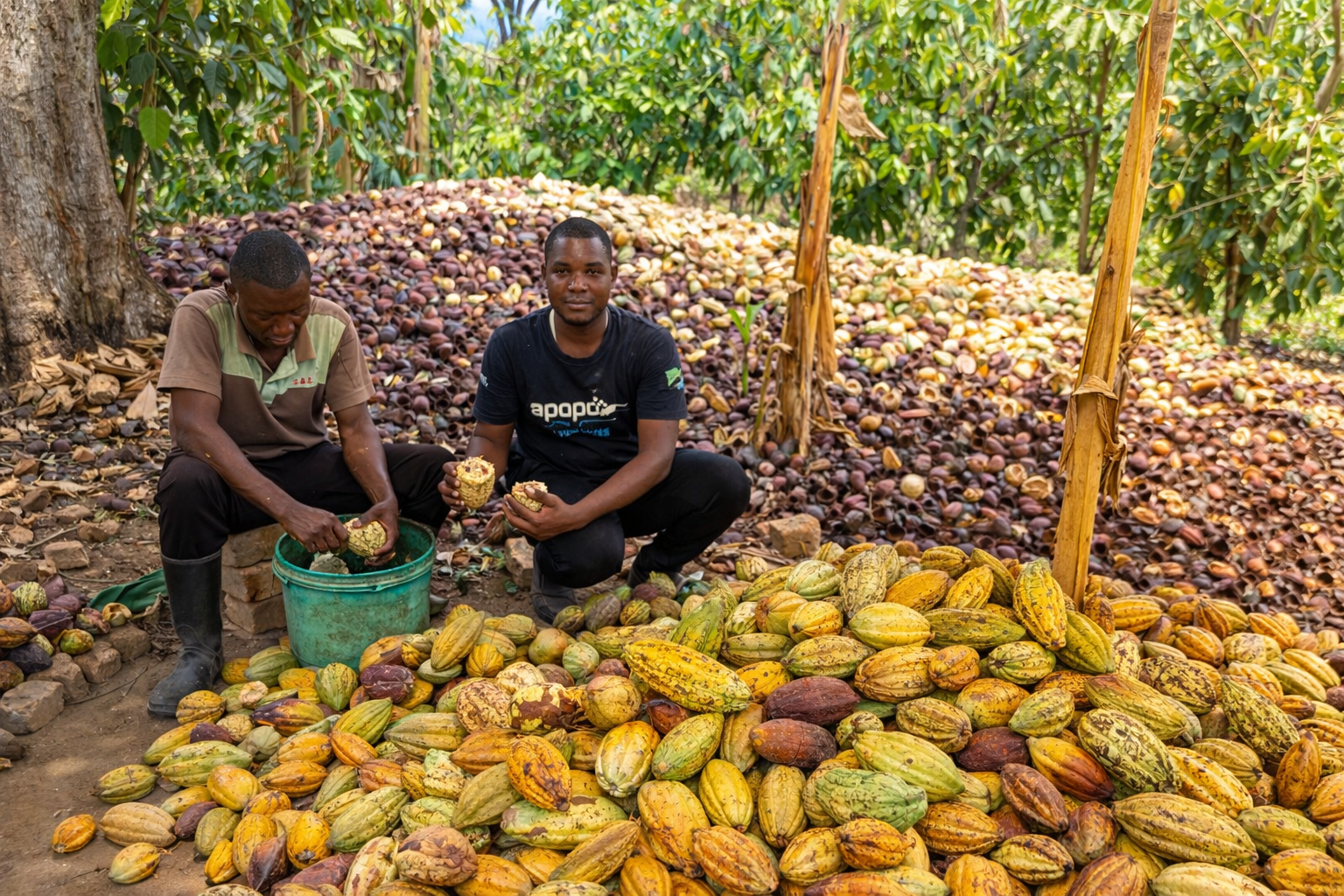
Cocoa is a high-value crop that originates from the Amazon and grows best under shade. This makes it well suited to syntropic agroforestry systems, where shade is intentionally designed and managed. Cocoa can be intercropped with food crops, fruit trees, and biomass-producing species, helping farmers improve soil fertility, manage microclimates, and diversify household income.
During the training, participants examined how carefully managed shade systems using bananas, leguminous trees, and other companion species reduce heat and drought stress on cocoa. Regular pruning and mulching increase organic matter, improve soil structure and water retention, and support beneficial soil organisms. Over time, these practices reduce the need for chemical fertilizers and pesticides, while increased biodiversity helps limit pests and diseases naturally.
Next Steps for Syntropic Cocoa in Tanzania
Following this initial field test, and after Kokoa Kamili staff took part in an additional SAIA training at Sokoine University of Agriculture, APOPO and Kokoa Kamili plan to establish three to five more syntropic cocoa plots in Tanzania. These plots will allow closer evaluation of system performance and farmers’ willingness to adopt and maintain syntropic agroforestry practices.
A key focus will be testing how syntropic agroforestry can be introduced into existing cocoa farms, enabling gradual adaptation without disrupting production or increasing risk for farmers. In 2026, selected cocoa systems will be modeled using FarmTree to assess long-term income potential and ecological outcomes. Results will be shared in a future SAIA newsletter and through APOPO communications.
Combining cocoa with food crops and trees has already improved shade conditions and soil quality on participating farms, increasing farmer confidence in cocoa production under changing climate conditions. The training also encouraged participants to view cocoa systems not only in terms of sustainability, but also as long-term, viable farming businesses.
Sign up to APOPO’s Syntropic Agroforestry Newsletter for regular updates about our program.