
What happens after landmines are removed? For farming families in Cambodia, clearing land is only the beginning. The next step is helping that land provide food, income, and a more secure future.
Since 2023, APOPO’s Minefields to Ricefields (M2R) initiative has combined humanitarian mine clearance with agricultural development. Working with the Cambodian Institute for Research and Rural Development (CIRD), APOPO supports farmers in bringing safe land into productive use.
In 2026, the project entered a new phase, co-funded by the UK’s Foreign, Commonwealth & Development Office (FCDO). Building on the original Development Impact Bond, this phase continues to use outcome-based financing, which links payments to independently verified results.
More Choices for Farmers
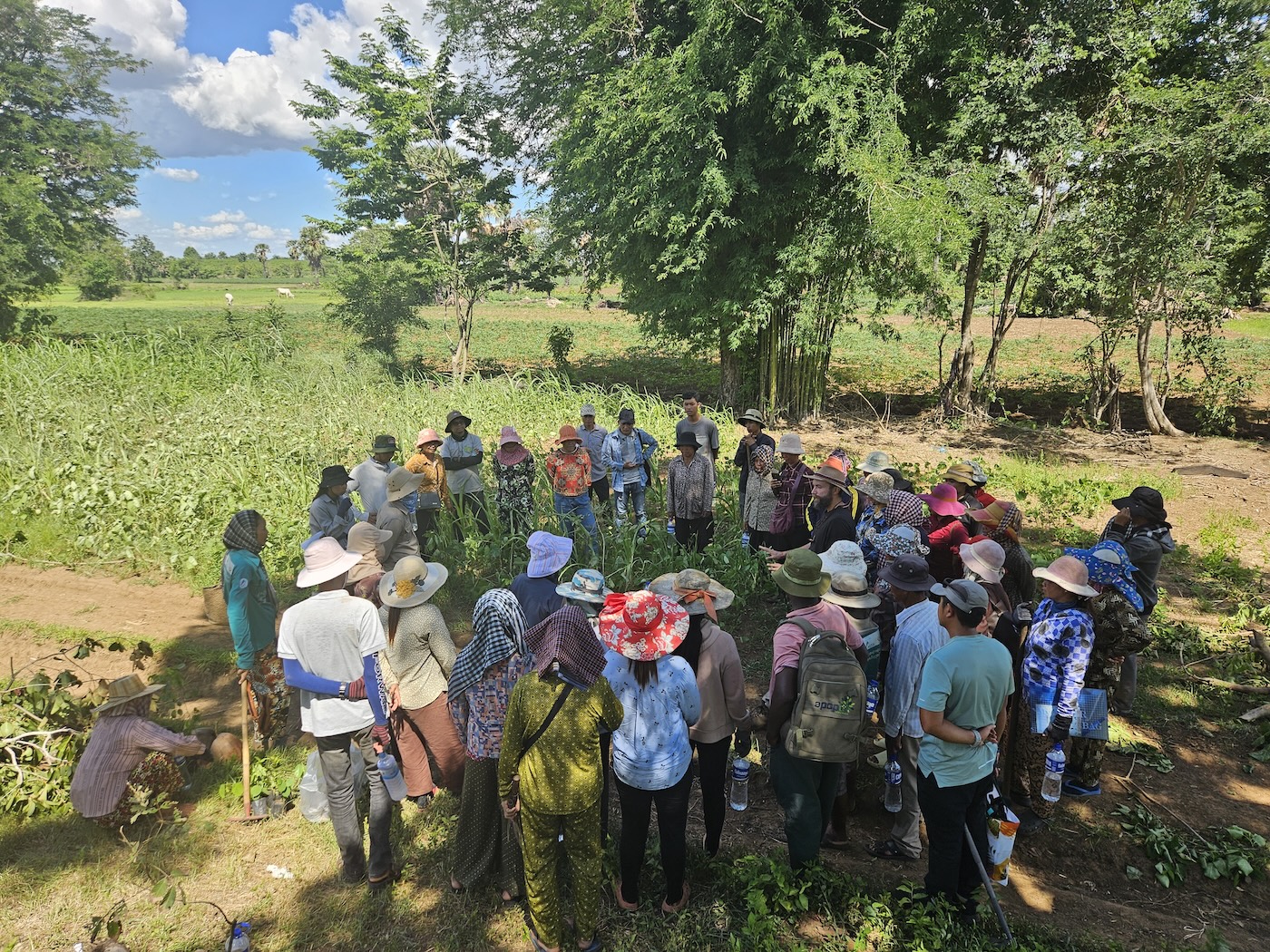
Initially focused on improving rice production, M2R now offers support for a wider range of agricultural activities. Farmers can choose support for rice, cashew, vegetables, rice seed multiplication, tree nurseries, and other income-generating activities.
Through APOPO HeroTREEs, farmers and local organizations are also being introduced to syntropic agroforestry. This approach combines crops and trees in planting systems designed to mimic natural forest development.
During the first quarter of the new project phase, 37 farmers participated in syntropic agroforestry training, and two demonstration plots were established. The plots provide places for farmers to gain practical experience, observe how the systems develop, and assess whether to adopt similar practices. Seven farmers have also adopted the approach.
APOPO is collaborating with agroforestry specialist EcoTop to strengthen the skills of local trainers, including those at CIRD. These trainers can then support additional Cambodian organizations and farming communities.
Tracking Results and Improving Practice
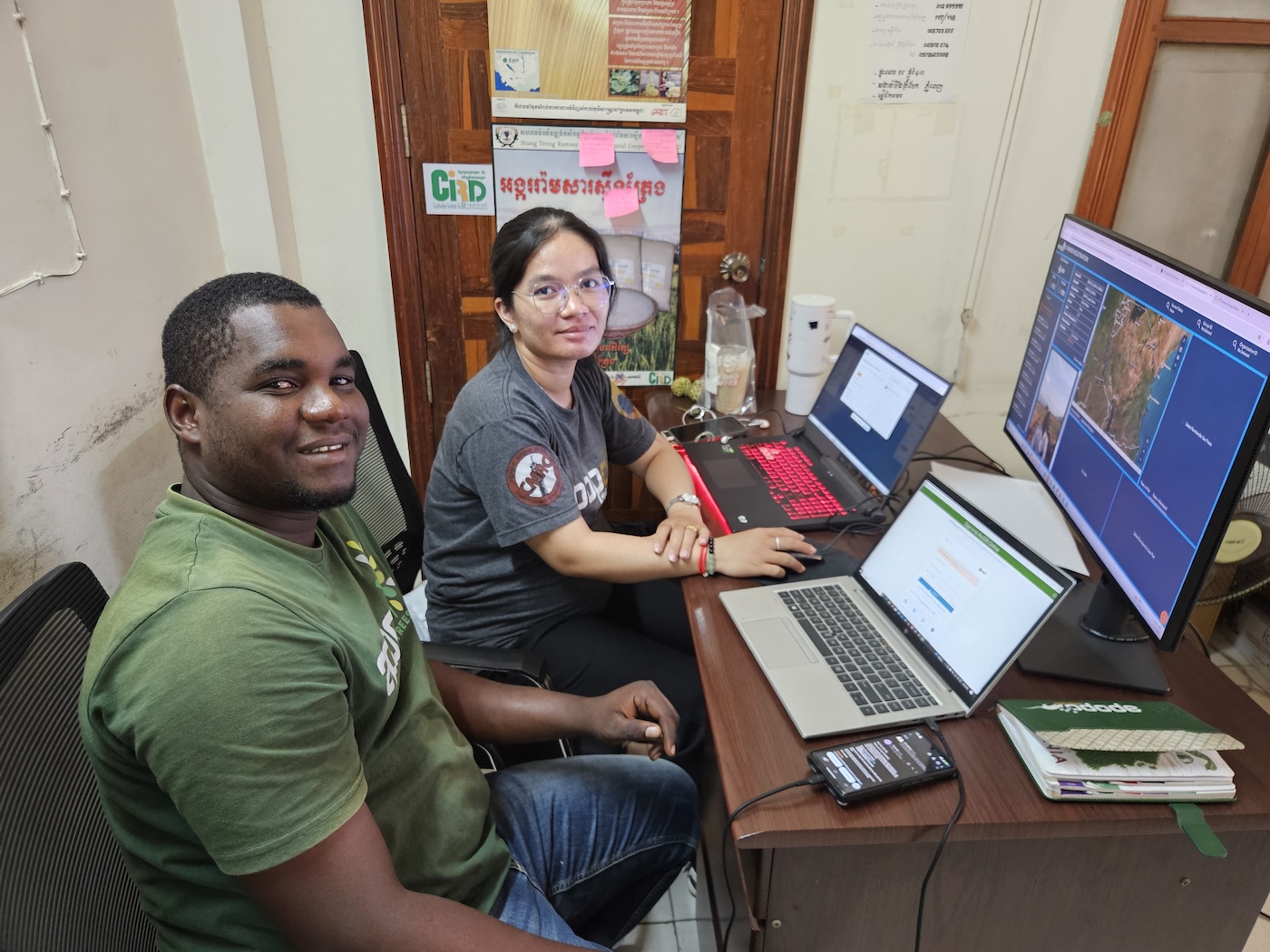
Monitoring is an important part of Minefields to Ricefields. Using Esri dashboards, APOPO and CIRD track agricultural activities, farmer participation, land use, and livelihood outcomes.
This information supports reporting to funding partners and helps the project team identify challenges and adjust its support to farmers.
For syntropic agroforestry, APOPO also aims to assess changes in farmer income, soil health, biodiversity, and climate resilience. Ongoing research and the upcoming international research workshop will help develop the indicators needed to monitor these changes over time.
Supporting Wider Adoption

Minefields to Ricefields provides an established network of farmers and partners, alongside experience in agricultural support and monitoring. This creates opportunities to introduce and evaluate syntropic agroforestry within an existing project.
Drawing on its experience with outcome-based financing, APOPO HeroTREEs aims to help local partner organizations develop and finance their own agroforestry projects. Planned support includes technical training, monitoring tools, impact data, and assistance with funding proposals. Partner organizations would, in turn, provide farmers with practical training, implementation support, and ongoing coaching.
If environmental and livelihood benefits can be measured and independently verified, they could provide a basis for future outcome-based funding. By combining mine clearance, agricultural support, and research, APOPO and CIRD aim to help more Cambodian families build productive farms on land once affected by conflict.