On International Day for Mine Awareness and Assistance in Mine Action, often referred to as World Landmine Day or Mine Awareness Day, attention turns to the long-term impact of conflict on communities and land.
Searches for the most bombed country in the world reflect a broader curiosity about the scale of conflict. In mine action, however, the more important question is what remains after the bombing ends.
A proportion of explosive ordnance does not function as intended. These items persist as explosive remnants of war, including unexploded ordnance, alongside landmines. Together, they create contamination that can last for decades. According to the Landmine Monitor, more than 60 countries and territories are contaminated by landmines and or explosive remnants of war, with civilians accounting for the majority of recorded casualties each year.
Organizations such as APOPO work to detect and clear both landmines and explosive remnants of war so that land can be used safely again.
What is the most bombed country in the world?
There is no single definitive answer because the term “most bombed” depends on how it is measured.
Laos and Vietnam are often cited among the most heavily bombed countries in history. In Laos, where APOPO operated until 2014, more than two million tons of ordnance were dropped between 1964 and 1973, making it the most heavily bombed country per capita. Vietnam, where APOPO also operated for a shorter period, experienced one of the highest total volumes of bombing during the same era. Both countries continue to face widespread contamination from unexploded ordnance, including cluster munitions that remain hazardous decades later.
Cambodia, where APOPO has been operating for the past 12 years, remains one of the countries most heavily affected by explosive remnants of war. Due to decades of conflict, including spillover from the Vietnam War and internal fighting, Cambodia is contaminated by a complex mix of landmines and unexploded ordnance. This enduring legacy continues to affect communities today and underpins APOPO’s long-term operational presence in the country.
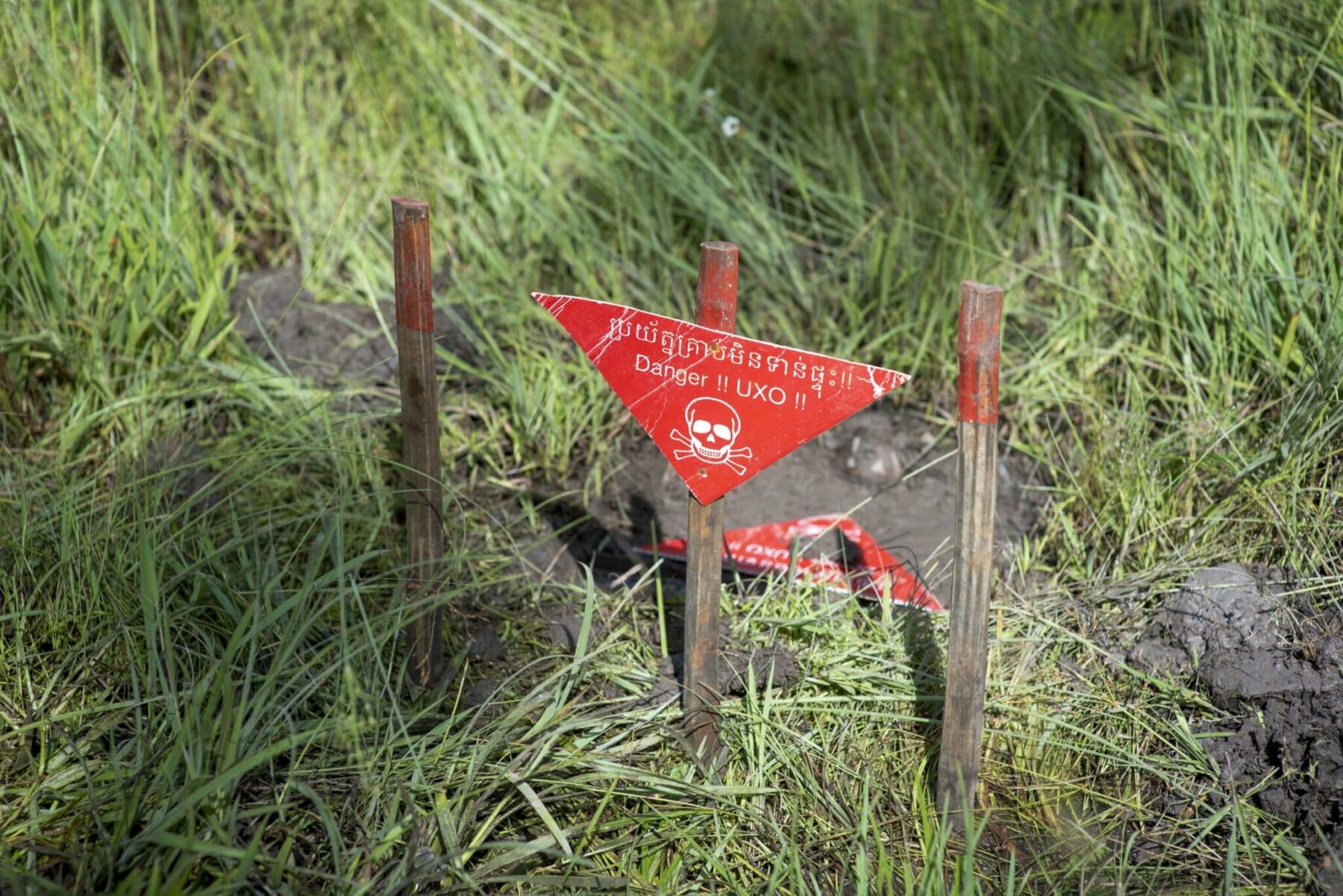
More recently, Ukraine has become one of the most heavily contaminated countries globally following the Russian invasion. The scale and intensity of explosive ordnance use has created a rapidly evolving and complex contamination environment. In response, APOPO has rapidly scaled up its operations and now runs its largest dog detection programme in Ukraine, deploying its specialized capacity to support survey and clearance efforts in this challenging context.
However, from a mine action perspective, the key issue is not the volume of bombs dropped, but the extent and type of contamination that remains in the ground.
From bombing to explosive contamination
Explosive contamination includes several categories of hazards:
- Unexploded ordnance, including bombs, artillery shells, mortars, and submunitions that failed to detonate
- Abandoned explosive ordnance, which has been left behind but not used
- Anti-personnel mines designed to be triggered by individuals
- Anti-vehicle mines designed to target vehicles
Failure rates vary depending on munition type, delivery conditions, and environment. Cluster munitions are particularly associated with high failure rates and wide-area contamination.
The Mine Action Review tracks contamination using indicators such as confirmed hazardous area and suspected hazardous area, along with clearance outputs and national capacity. Progress is also assessed against obligations under the Ottawa Treaty.
These measures provide a more accurate understanding of risk than bombing data alone.
The information below examines the current state of contamination in countries where APOPO currently operates, using available data to show how these risks translate into ongoing mine action needs.
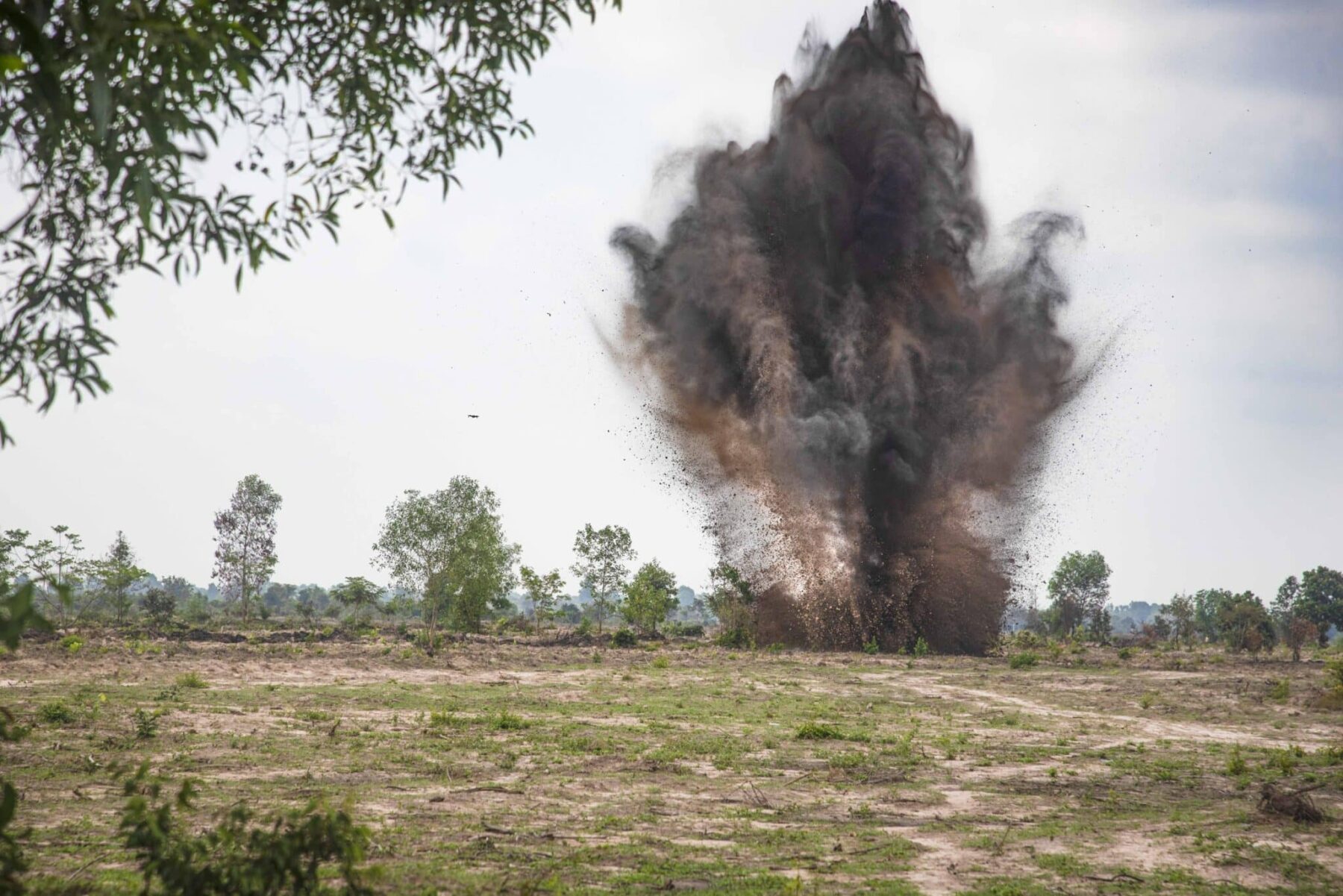
Cambodia: Progress continues as remaining contamination becomes more concentrated
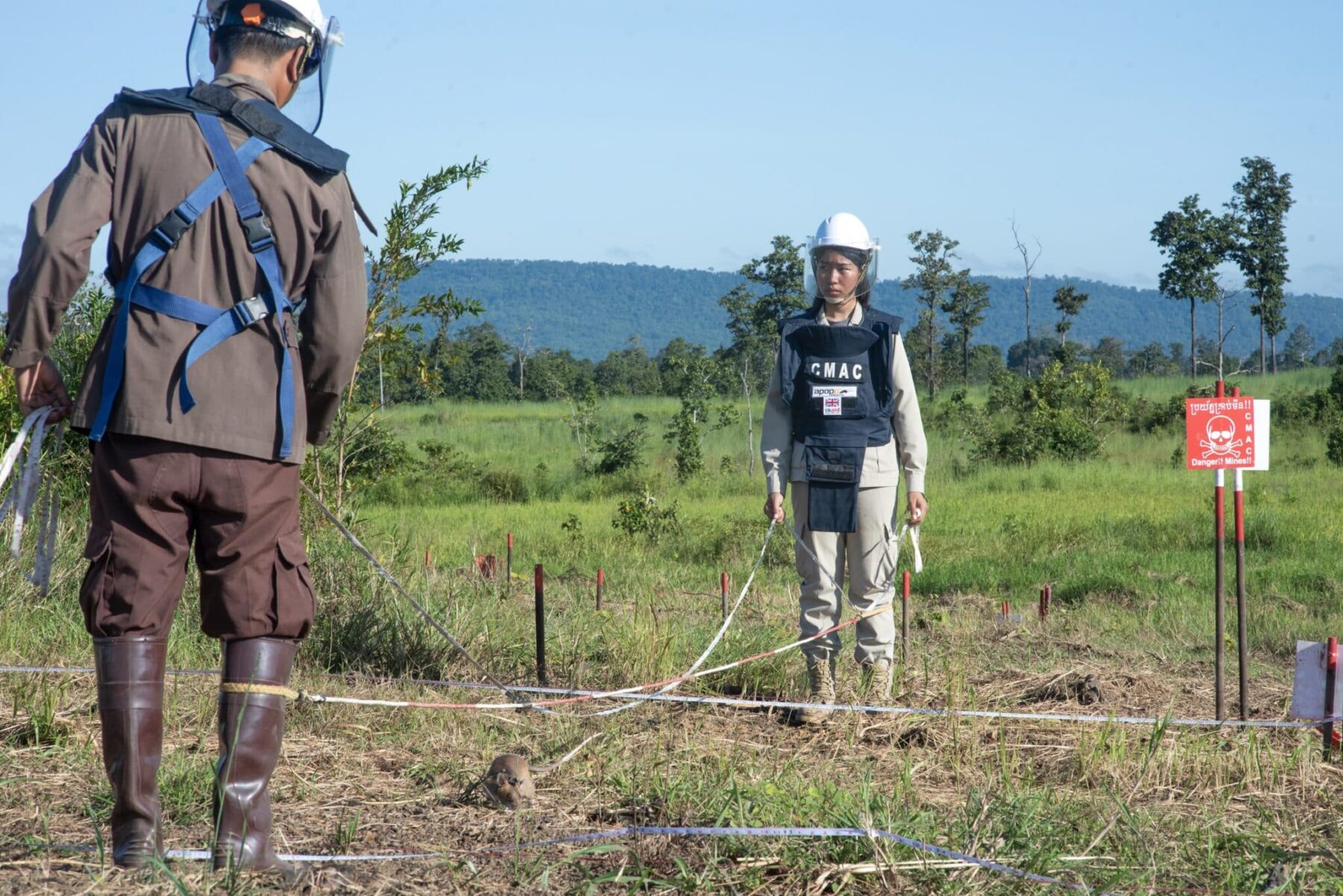
Cambodia is one of APOPO’s longest-running mine action programs and reflects a different stage of the same trajectory seen in Angola. Large areas have already been released, and national progress is evident, but the remaining contamination is increasingly concentrated in more complex and less accessible areas. According to Mine Action Review 2025, Cambodia assessed 524km2 of anti-personnel mine contamination in 2025, following new data from surveys along the border with Thailand, with contamination classified as massive.
Cambodia is continuing work toward completion of its Article 5 obligations under the Ottawa Treaty and has requested an extension until Dec. 31, 2030. This reflects both the scale of remaining contamination and the fact that the national baseline is still evolving. Survey efforts in recent years have identified significant previously unrecorded hazardous areas, particularly in border regions, reinforcing that completion depends not only on clearance but also on improving the overall understanding of where contamination remains.
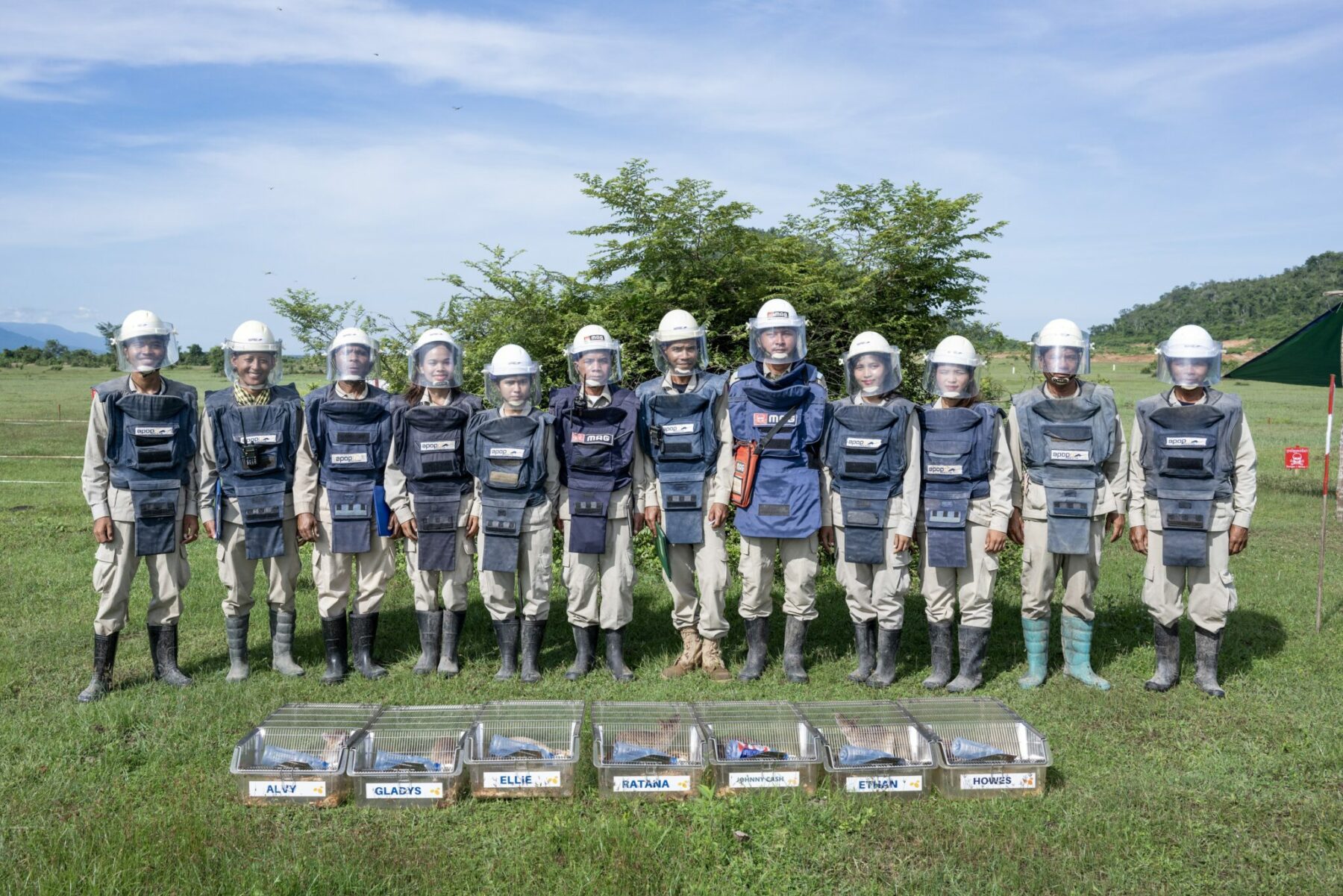
Within this national context, APOPO operates as one of the international clearance organizations working alongside national and international partners. Within this national context, APOPO operates as one of the international clearance organizations working alongside national and international partners. In Cambodia, APOPO deploys Mine Detection Rats and Technical Survey Dogs as part of joint operational tasks, including collaboration with CMAC MAG across five provinces.. This combination of animal detection and survey capacity is particularly relevant in a context where large areas of remaining contamination consist of scattered or low-density mines, and where accurate task definition is essential to maintaining efficiency as the program advances. This combined approach is particularly relevant in a context where large areas of remaining contamination consist of scattered or low-density mines, and where accurate task definition is essential to maintaining efficiency as the program advances.
Cambodia’s overall land release results illustrate this shift. Mine Action Review reports that 130km2 of mined area was released in 2024, including 80.44km2 through clearance and 49.9km2 through survey, with 10,534 anti-personnel mines destroyed. These figures were lower than in 2023, reflecting reduced funding and capacity, but they also reflect a transition away from clearing previously reclaimed or lightly contaminated land toward more complex tasks. As those easier areas are exhausted, maintaining progress depends increasingly on precise survey, effective prioritization, and coordinated tasking.
For APOPO, Cambodia represents a mature program where sustained investment and technical innovation have delivered measurable results and continued reductions in risk. At the same time, the remaining work is becoming more concentrated in border areas, where dense contamination, terrain, and access constraints present ongoing challenges.
Angola: Progress in Cuanza Sul as work continues toward completion
Angola has reached a stage that many long-running mine action programs eventually face. Much of the more accessible contamination has already been addressed, and what remains is harder to define, harder to reach, and often more complex to clear. According to Mine Action Review 2025, 963 anti-personnel mined areas covering an estimated 57km2 remained at the end of 2024, across 17 of Angola’s 21 provinces, with contamination still classified as heavy.
At the national level, Mine Action Review data shows that 3.03km2 was cleared in 2024, with declines in survey output compared with the previous year, alongside the continued addition of new hazardous areas to the database.
Angola is continuing work toward completion of its Article 5 obligations under the Ottawa Treaty and has requested an extension until Dec. 31, 2030. This reflects the reality that while significant progress has been made, the remaining contamination is increasingly complex and, in some cases, only now being fully identified as operations expand into less accessible areas. As programs advance, this phase is typically marked by slower land release and a more dynamic understanding of contamination. In Angola, that is reflected in the continued discovery of previously unrecorded hazards, including 1.55km2 identified in 2024, as operations expand into areas that were not previously surveyed or fully understood.
Within this national context, APOPO’s work in Cuanza Sul province shows how progress is being made in practice. In 2024, APOPO released land through 95,000m2 of non-technical survey, 675,682m2 of technical survey, and 172,672m2 of clearance, combining methods to define and address contamination efficiently. This structured land release approach is particularly important in Angola, where incomplete records and mixed contamination make evidence-based tasking essential.
That work is carried out with a relatively lean operational footprint. APOPO deployed manual clearance teams supported by Mine Detection Rats (MDR) and mechanical assets, with teams conducting both survey and clearance. As across much of the sector in Angola, funding constraints have tightened operational margins, placing greater emphasis on efficiency, prioritization, and careful task selection. In that context, approaches that reduce unnecessary clearance while maintaining safety are not only technically sound but operationally necessary.

Ukraine: Survey and clearance in a dynamic and highly complex contamination environment
Ukraine represents a fundamentally different mine action context from countries such as Angola and Cambodia. Rather than progressing toward completion after a defined conflict, Ukraine is dealing with large-scale, ongoing contamination linked to the Russian invasion of Ukraine. Hazardous areas are not only extensive but also evolving, with contamination continuing to be added while clearance is underway.
The contamination itself is both widespread and mixed. Ukraine’s national authorities typically report the scale of the problem as a single explosive ordnance (EO) challenge rather than separating landmines, cluster munitions, and other unexploded ordnance. In practice, most hazardous areas contain a combination of threats. Mine Action Review notes that both anti-personnel mines and cluster munitions continued to be used in 2024 and 2025, contributing to a complex operational environment in regions such as Kharkiv Oblast, Kherson Oblast, Donetsk Oblast, and Mykolaiv Oblast.
Ukraine is continuing work toward its Article 5 obligations under the Ottawa Treaty, but the policy context has become more complex. In 2025, Ukraine announced steps toward withdrawing from the Convention and subsequently declared a suspension of its implementation, a move that Mine Action Review states has no legal effect under international law. At the same time, clearance capacity has expanded significantly. National authorities reported increased survey and clearance output in 2024, supported by the large-scale deployment of mechanical assets and surface-scanning UAVs, alongside a national plan to survey all accessible areas for contamination by the end of 2026.
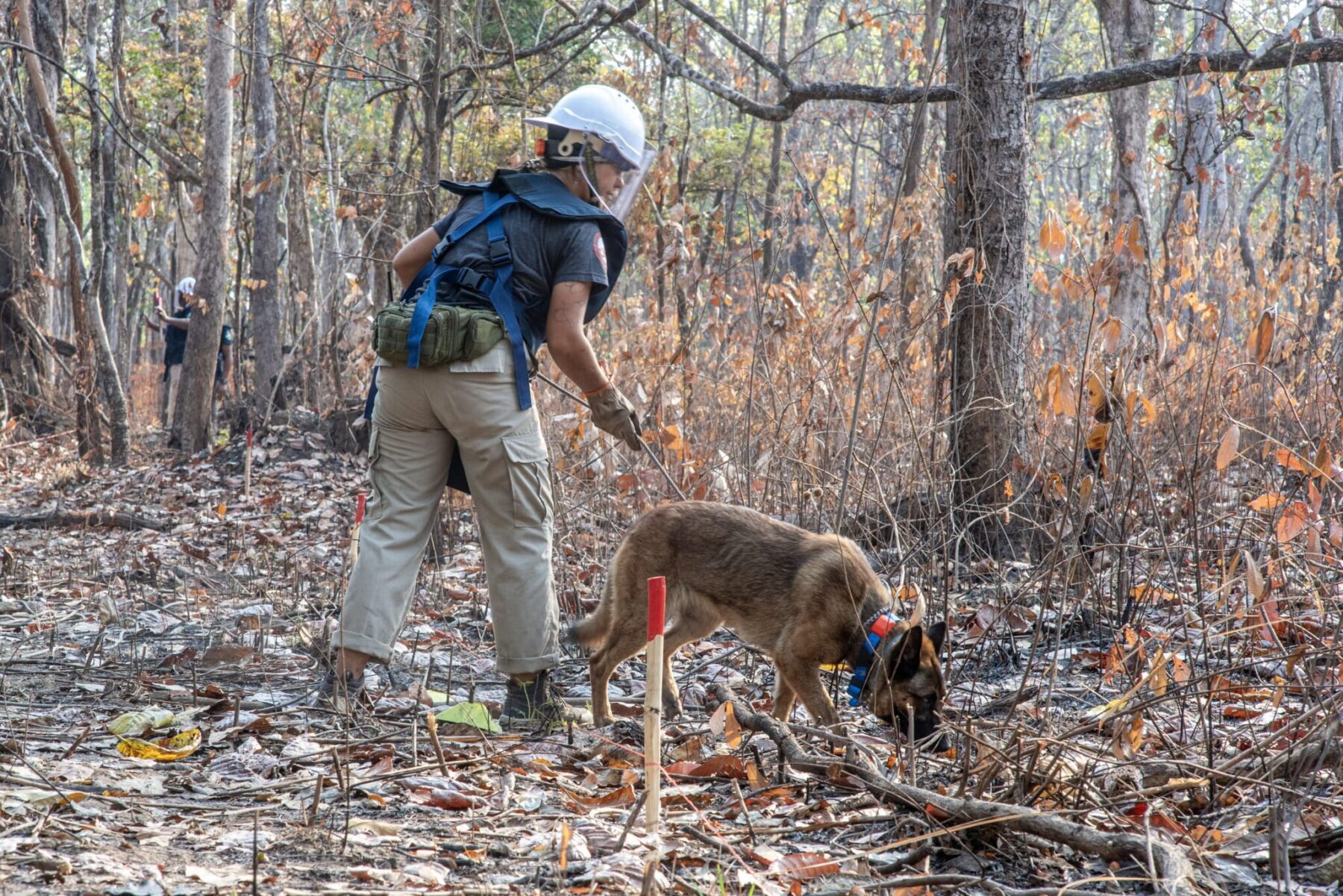
Within this context, APOPO’s role is specific and operationally targeted. We are deploying Technical Survey Dog teams in partnership with MAG and Ukrainian Deminers Association (UDA), supporting the identification and reduction of contaminated areas in priority locations. These dog teams are used to rapidly screen land, helping to confirm or rule out the presence of explosive hazards and enabling more efficient allocation of manual and mechanical clearance assets. In a country of Ukraine’s scale, this kind of targeted survey capacity is critical to maintaining operational efficiency.
Operational conditions in Ukraine differ significantly from APOPO’s work in more established programs. Seasonal factors, particularly winter conditions, affect scent detection, ground conditions, and deployment timelines. At the same time, access and accreditation processes, including permissions for explosive ordnance disposal, shape how quickly operators can scale activities. These constraints mean that progress depends not only on capacity, but also on coordination, regulatory processes, and the ability to adapt to changing conditions on the ground.
The scale of bombing often shapes how conflict is understood, but the longer-term impact lies in what remains. In Ukraine, that includes a complex, mixed contamination environment that will require sustained, technically precise mine action over many years. APOPO’s contribution is focused on improving the accuracy of survey, prioritizing clearance, and reducing risk in one of the most challenging mine action environments currently in operation.
Azerbaijan: Supporting large-scale clearance in a rapidly expanding national program
Azerbaijan is one of APOPO’s mine action programs and one of the largest clearance contexts in which we work. Survey and clearance by multiple organizations have expanded significantly across the country in recent years across areas affected by landmines and other explosive ordnance, where contamination continues to impact safe return, land use, and reconstruction. Mine Action Review 2025 describes anti-personnel mine contamination in Azerbaijan as massive, while also noting that the full extent of contamination is still being defined through ongoing survey.
This is a nationally led program operating at scale. In 2024, the Mine Action Agency of the Republic of Azerbaijan, ANAMA, reported releasing more than 5.3km2 of anti-personnel mined area through clearance and destroying 4,286 anti-personnel mines. Mine Action Review also estimated that a further 65 square kilometers of anti-personnel mined area was addressed through technical survey. These figures show continued progress, alongside the reality that the survey process is still refining the overall picture of contamination.
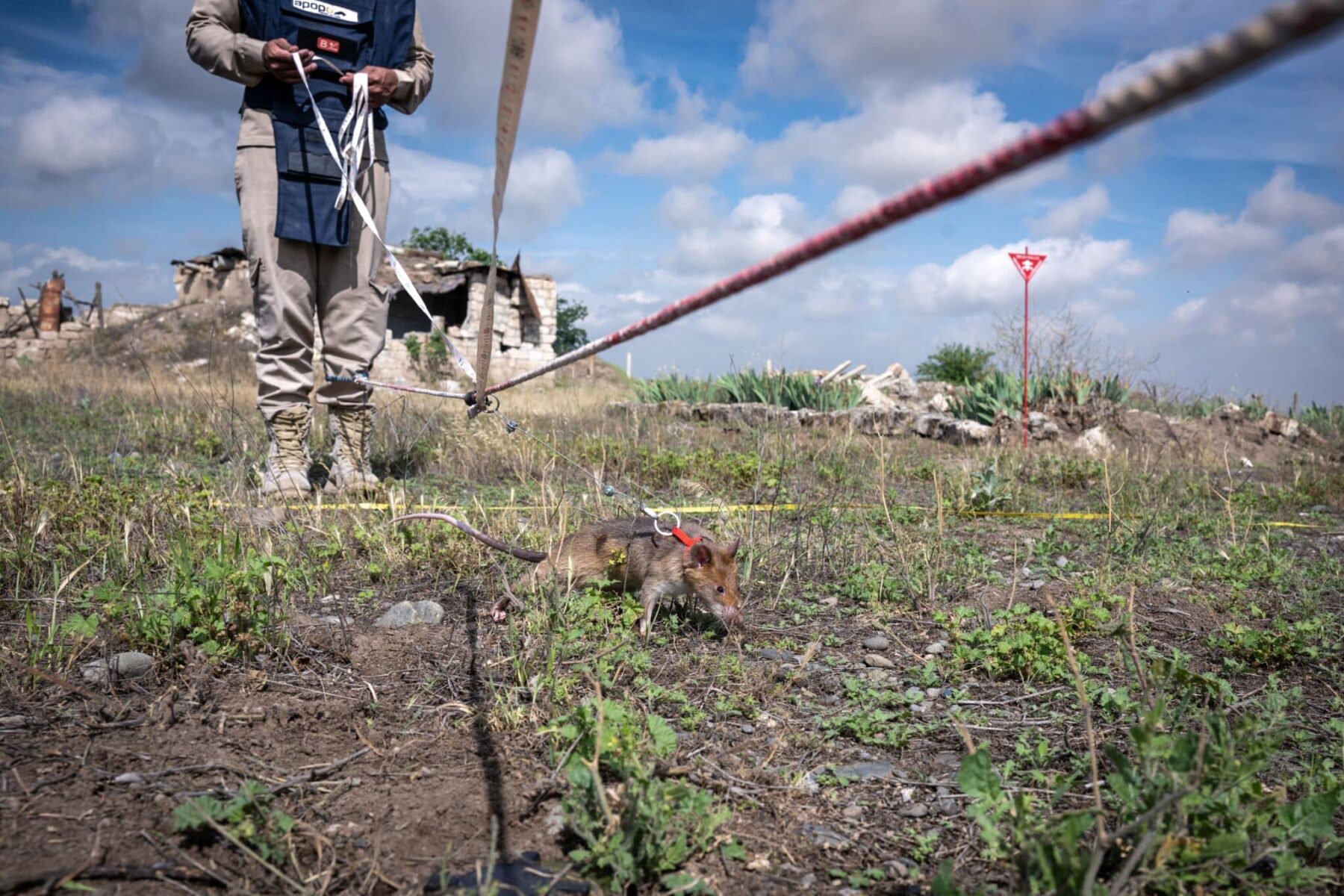
Within this broader effort, APOPO supports operations through specialist animal detection systems. Mine Action Review notes that ANAMA continued to use Mine Detection Rats through its collaboration with APOPO in 2024. APOPO supports operations in Azerbaijan through animal detection systems, working with ANAMA, and alongside other operators active in the sector. In 2024, APOPO scaled its deployment of Mine Detection Rats and Mine Detection Dog teams to support survey and clearance in Aghdam, Aghdere and Jabrayil regions.
For APOPO, Azerbaijan is a program where capacity is expanding rapidly and survey continues to improve understanding of contamination. Progress is evident in the scale of land released, while the overall task remains substantial. APOPO’s contribution, through dogs, rats, and collaboration with national and international partners, forms part of a broader effort to reduce risk and make land safer for communities and future use.
From conflict to land release
The question of the most bombed country in the world is often used to illustrate the scale of conflict, but it does not capture its longer-term impact. Explosive hazards include not only air-dropped munitions, but also landmines and other devices placed in the ground, which often remain long after fighting ends.
Explosive weapons leave contamination that persists long after fighting ends. That contamination restricts how land can be used, affecting agriculture, infrastructure, and daily life. Clearance is what enables recovery, making land safe for communities to return and rebuild.

On the International Day for Mine Awareness and Assistance in Mine Action, the focus is not only on the legacy of conflict, but on the work required to address it. Across Angola, Cambodia, Ukraine, and Azerbaijan, that work is shaped by the same operational realities: incomplete information about where hazards remain, complex and mixed contamination, environmental constraints, and, in some cases, ongoing insecurity.
These challenges mean that progress is not linear. The areas that remain are often the most difficult to survey and clear, requiring careful prioritisation, multiple methodologies, and sustained effort over time. While contamination can be created in a short period, its removal typically takes years and often decades, making continued operational capacity and support essential.
The impact of explosive weapons is measured not only in their use, but in how long they remain, and in the work required to remove them safely.