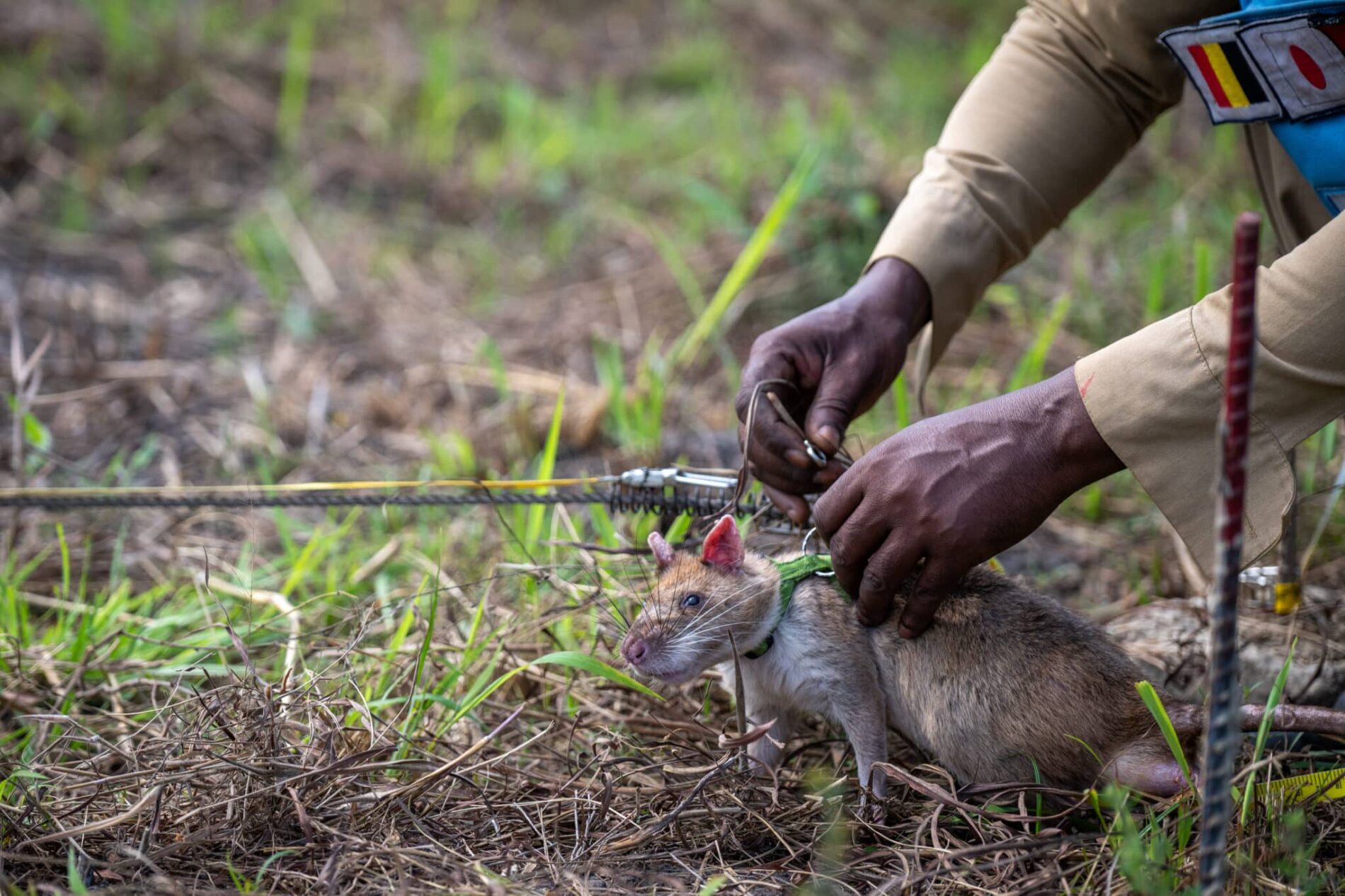
APOPO’s Mine Detection Rats (MDR) have passed national accreditation in Angola and Azerbaijan, allowing both teams to support the clearance of landmines and explosive remnants of war (ERW). All eight rats in Angola successfully completed their assessments and are authorized to work on the country’s minefields for another 12 months. In Azerbaijan, 11 rats and six handlers passed accreditation following a period of training and have since begun operations in the Karabakh region.
Angola’s eight HeroRATs pass independent testing
The Angolan National Mine Action Agency (ANAM) assessed each of APOPO’s eight mine detection rats twice over two days on 23rd and 24th September. Each test required a rat to search one box measuring 10 by 20 meters, covering a total of 200 square meters, with between zero and three targets in each box. ANAM technicians placed the targets without disclosing their locations or number to the APOPO team. This meant handlers could not guide the rats toward a known target or anticipate how many indications to expect. The possibility of a box containing no targets also meant handlers could not assume that every search would produce an indication. Every rat passed, securing national approval to continue operational work for the next year.
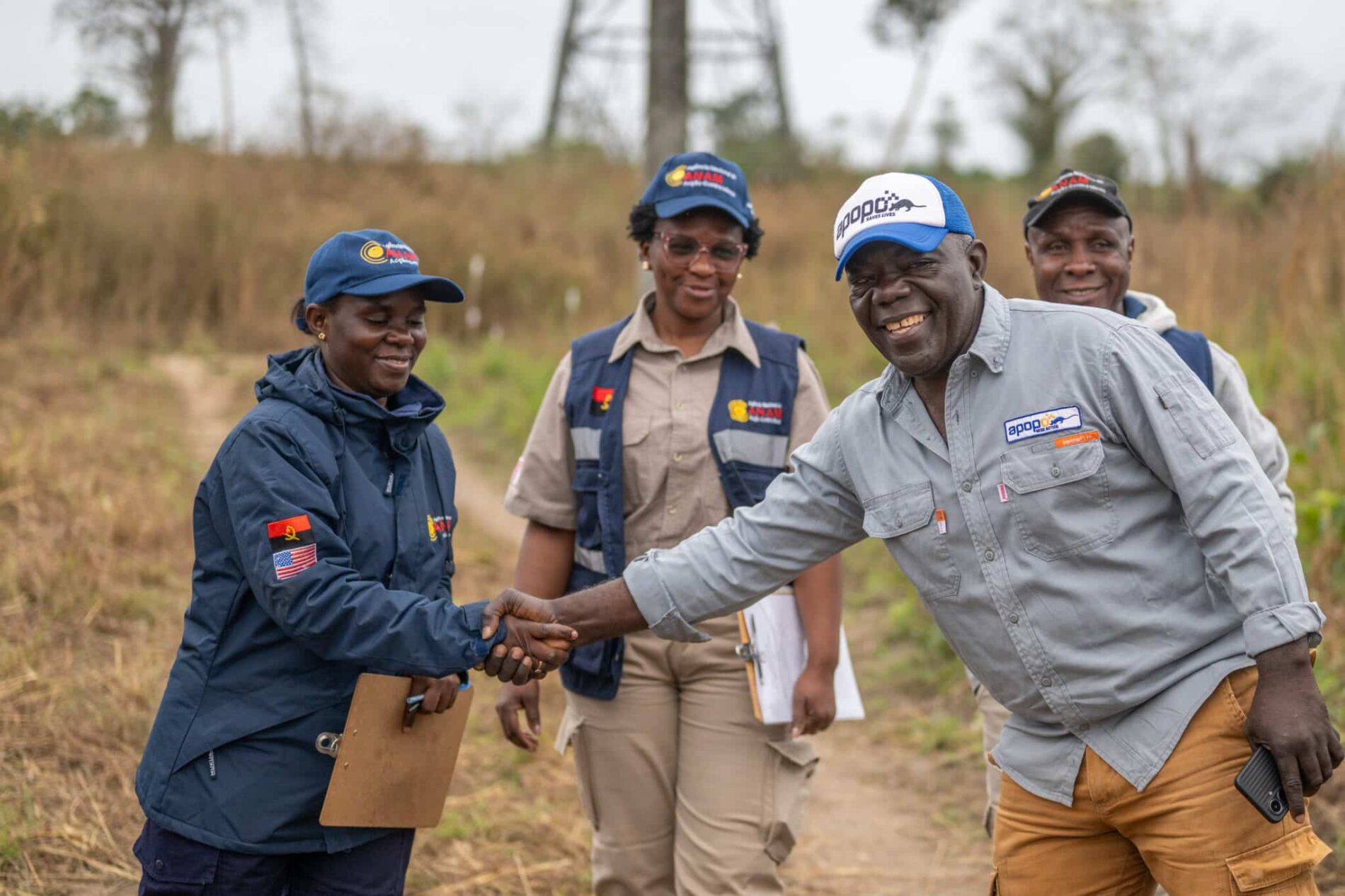
ANAM officials see the rats at work
Four ANAM officials oversaw the assessment, including two who had never previously seen APOPO’s rats working. Both were impressed by how quickly the animals searched the ground compared with manual deminers. The assessment gave them a firsthand view of how rats and handlers work together: the animal searches for explosive scent, while the handler guides its coverage and observes its behavior. Independent testing gives the national authority an opportunity to assess that performance before authorizing the animals to work on minefields.
Clearing Angola’s legacy of conflict
APOPO has worked in Angola since 2012 and currently operates in Cuanza Sul Province. Angola’s landmine contamination stems from its war of independence and the civil war that followed, which ended in 2002. More than two decades later, buried explosives continue to restrict access to farmland, grazing areas, water sources, and routes between communities. For rural families, an uncleared minefield can mean leaving productive land unused or taking longer journeys to avoid dangerous ground. Renewing the eight rats’ accreditation allows APOPO to continue using them alongside other demining methods to search contaminated land and help return it to safe use.
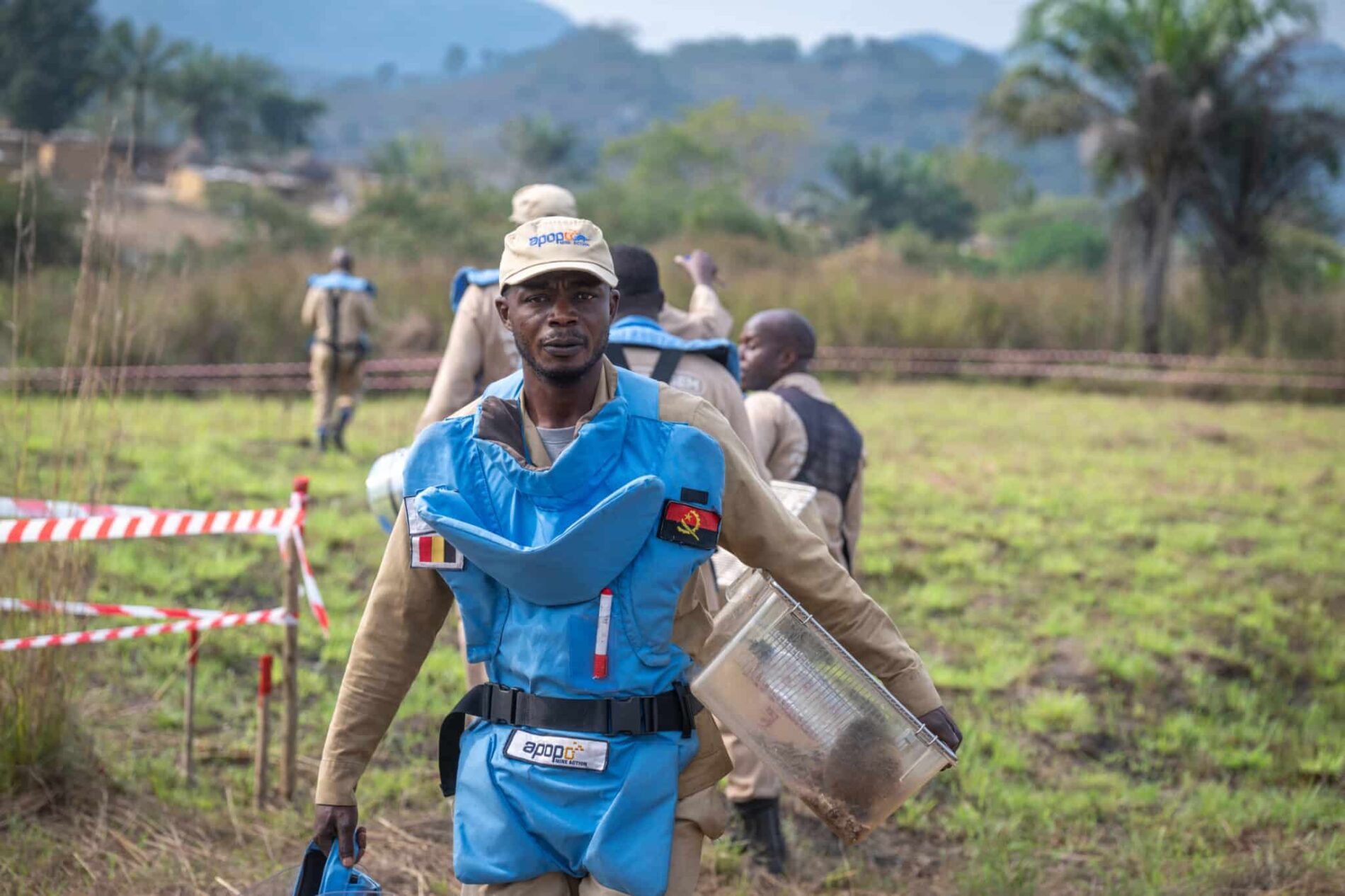
Azerbaijan’s accredited team begins field operations
In Azerbaijan, APOPO’s MDR team passed accreditation by the Azerbaijan National Agency for Mine Action (ANAMA) on 30 September. All 11 rats and six handlers successfully completed the assessment after a period of training. The team has since deployed to the Karabakh region, where it is working to help clear landmines and ERW near Khanabad village. Its expected search productivity is 8 to 9 hectares per month, equivalent to 80,000 to 90,000 square meters. The accreditation enables the rats and handlers to put their training into practice under ANAMA’s oversight.
Supporting safe return in Azerbaijan
APOPO began operations in Azerbaijan in 2022, initially deploying mine detection dogs. Rat and Technical Survey Dog teams followed in 2023, expanding the organization’s contribution to survey and clearance in Karabakh. Decades of conflict have left the region contaminated with landmines and other explosive hazards, threatening people’s safety and limiting access to land and infrastructure. Clearance is also essential for displaced families who want to return home. As UNDP’s mine action work in Azerbaijan explains, mines and unexploded ordnance prevent safe, voluntary return and the restoration of livelihoods. The newly accredited MDR team adds search capacity to the work needed before affected land can be used safely.
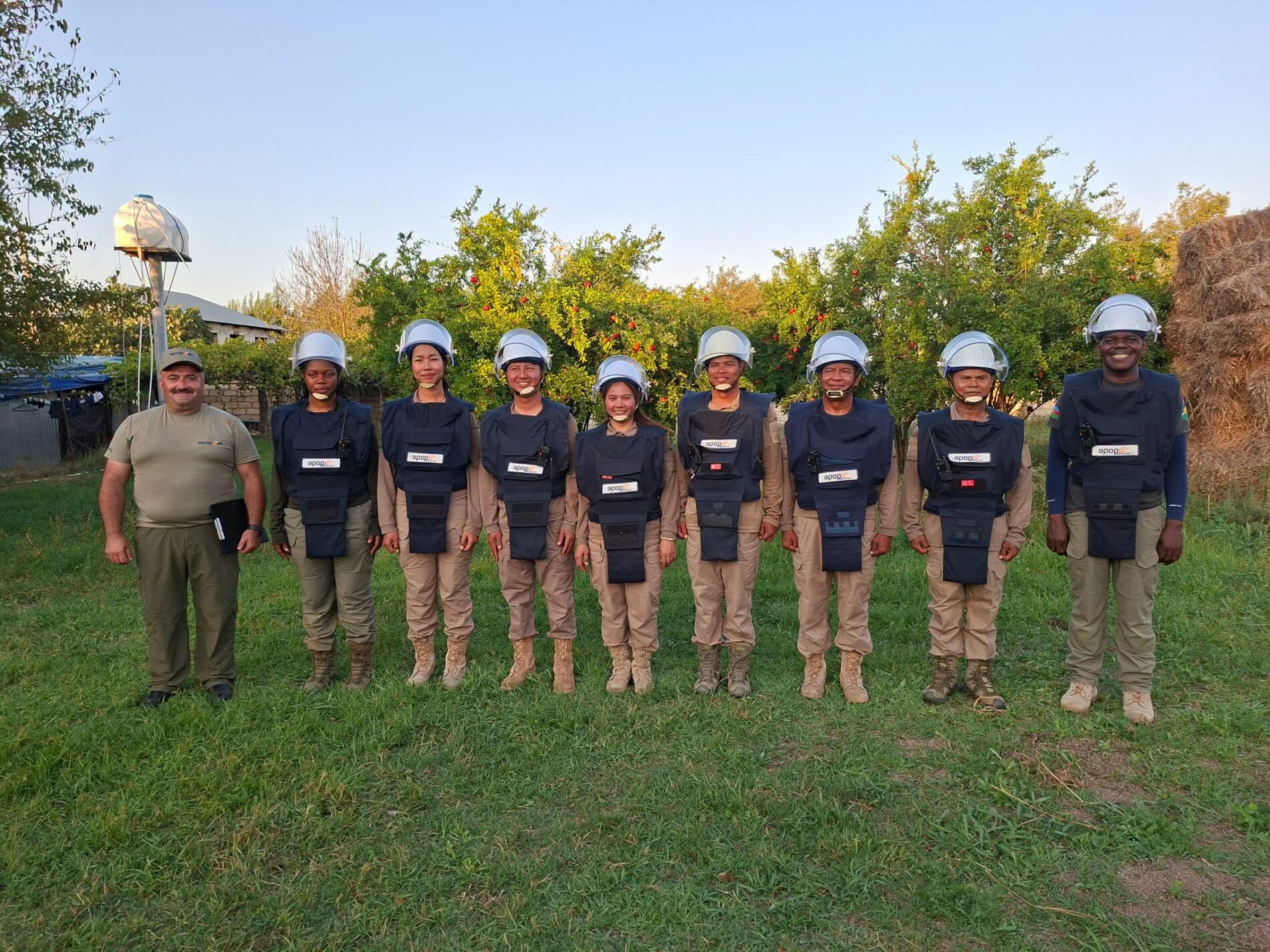
How mine detection rats support clearance
APOPO’s mine detection rats, also known as HeroRATs, are African giant pouched rats trained to identify the scent of explosives. When they detect that scent, they scratch at the ground to alert their handlers. Because they search by smell, they do not respond to harmless scrap metal, which can slow work with metal detectors by requiring repeated investigation. Their low weight also allows them to search without activating pressure-triggered antipersonnel mines. The rats work as part of a wider clearance process: trained deminers investigate their indications, locate explosive items, and ensure they are safely dealt with. National accreditation checks the animals’ operational readiness; the subsequent clearance and quality assurance work establishes when land can be released for communities to use.

APOPO Mine Action Angola and Azerbaijan are most grateful to our partners and donors for making our work possible