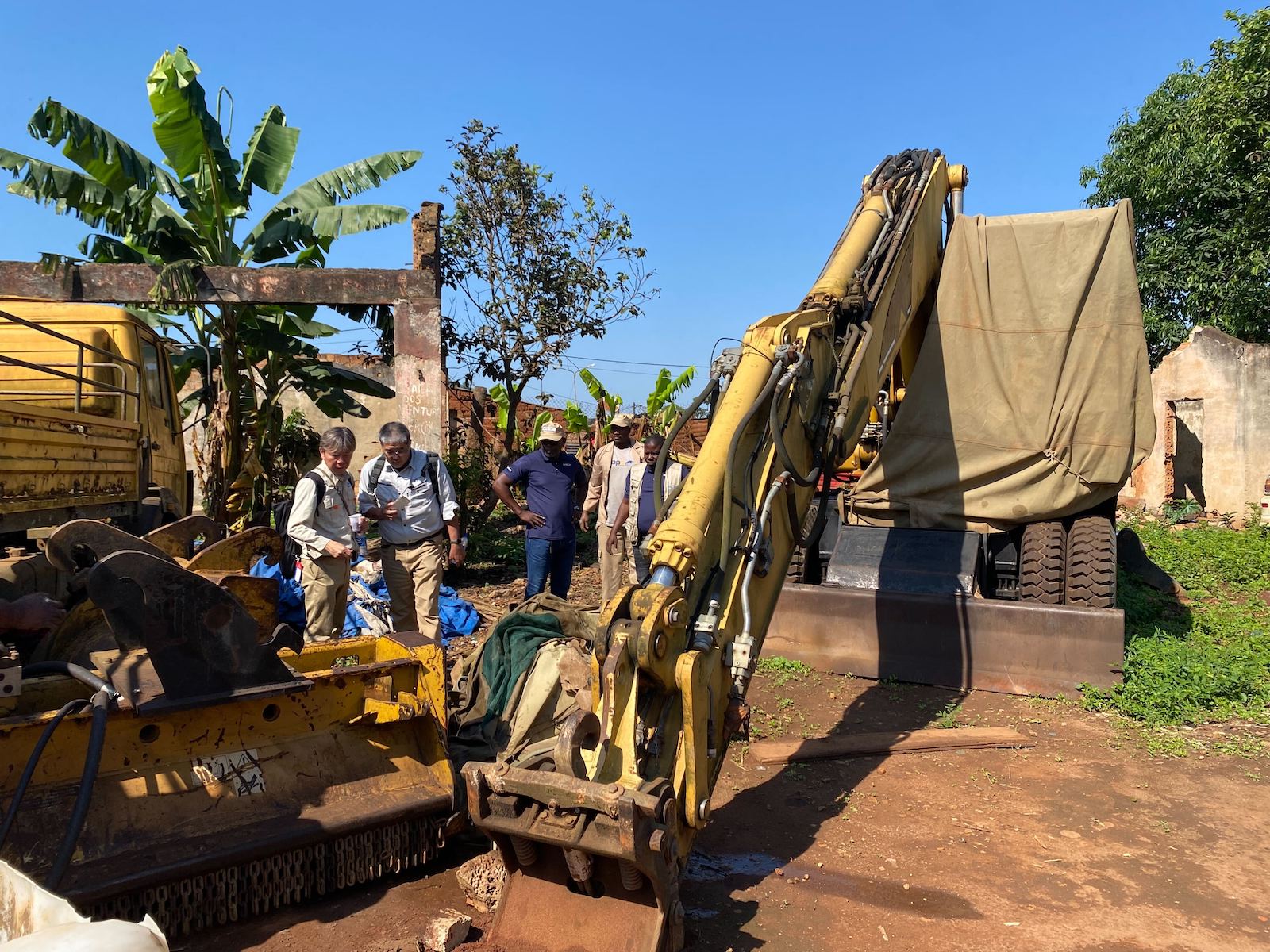
24 November, Gabela, Angola — APOPO Angola recently welcomed a delegation from Japan representing engineering company Nikken. The visitors included Chairman Makoto Amemiya, and Director of Engineering Toshiya Kudo and Technical Support Officer Mondlane Tavares, and they spent 21 and 22 November in Cuanza Sul province to understand how landmine contamination continues to affect local communities, and to assess APOPO’s urgent need for a replacement brush-cutting machine.
Purpose of the Nikken visit
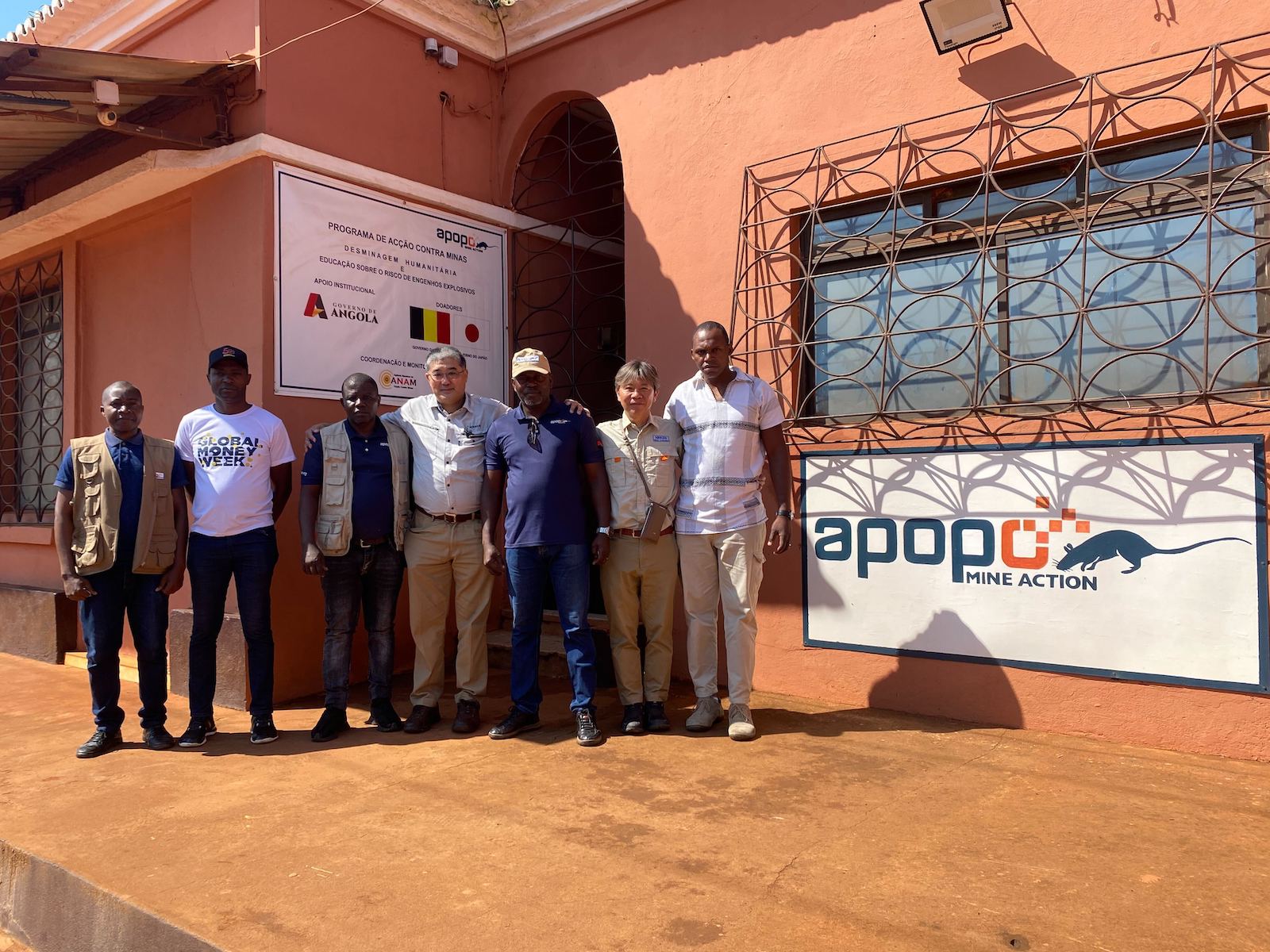
On 21 November in Sumbe, APOPO’s Country Director, Manuel Agostinho, and Information Manager, Airton Gândara, met the delegation at the Provincial Agriculture Office. Representatives from the National Mine Action Agency (ANAM), the authority responsible for coordinating all mine action in Angola, joined officials from the provincial tourism and agriculture sectors to outline the challenges that landmine contamination still creates for farming, mobility and rural development.
Field visit to demining tasks in Gabela and Seles

The following day, the delegation travelled to Gabela for an operational briefing before visiting a demining task in the Seles area. APOPO’s Explosive Ordnance Risk Education Officer, António Kuti, presented the site and introduced the clearance team working there. The visitors observed the terrain conditions, the density of vegetation and the progress already made.
What became clear during the visit is how heavily APOPO’s work depends on preparing the ground before clearance can begin. Thick vegetation must be removed so that manual deminers, HeroRATs, and handlers can work safely and efficiently. With APOPO’s brush-cutting machine currently out of service, teams must do this labour-intensive work entirely by hand, often over large and difficult areas.
Why brush cutting machines matter — and how they operate safely
Brush-cutting machines play a supporting but essential role in humanitarian demining. They clear tall grass, bush and thickets so that deminers can access the area, maintain visibility and move methodically through the task. It is important to note that these machines never drive or place weight on land that has not already been made safe. They operate from ground that has previously been searched manually. From this safe position, a long cutting arm or boom extends into the uncleared vegetation. Because the cutting head works above the ground and does not exert downward pressure, so it does not disturb the soil and risk detonating hidden explosives beneath.
This design allows APOPO to reduce vegetation safely while protecting both the clearance team and the surrounding environment. Once the area has been cut back, manual deminers and HeroRAT teams can begin their work on a clear, accessible surface.
Removing this vegetation quickly is crucial in Angola, where many contaminated areas are overgrown. A functioning machine often transforms several days of manual cutting into a much shorter process, helping APOPO maintain momentum and return safe land to nearby communities faster.
APOPO’s work in Angola
APOPO has been active in Angola since 2012, operating under the direction of ANAM to clear landmines left after decades of conflict. APOPO currently works in Cuanza Sul, where contamination still affects farmland, riverbanks, footpaths and other areas essential to daily life.
APOPO uses a combination of trained manual deminers, mechanical ground preparation and our renowned HeroRATs. In Angola, the rats play an important role in helping clear large areas quickly, while manual teams carry out the precise work of investigating and removing explosive items. Vegetation-cutting capacity is therefore critical for both groups to function effectively.
Over more than a decade of work, APOPO has returned millions of square metres of land to safe use in Angola, allowing families to expand farming, reopen routes and rebuild livelihoods.
Japan’s support to APOPO Angola
Japan is one of APOPO Angola’s key institutional donors. In 2025, the Government of Japan awarded USD 265,410 to APOPO for humanitarian demining in Seles, continuing a multi-year partnership. This follows two earlier grants of US$246,900 (2021–2022) and US$317,354 (2023–2024), bringing Japan’s total recent support for APOPO’s work in Angola to nearly US$830,000.
The latest grant will enable APOPO to clear 15 hazardous areas, release around 1,000,000 square meters of land for productive use and deliver explosive-risk education to approximately 10,000 people, including farmers, students and local administrators. These activities are expected to benefit more than 16,000 residents in Cuanza Sul.
Japan’s ongoing commitment, combined with technical engagement from Nikken during the recent field visit, is especially important at a time when APOPO urgently needs to replace its out-of-service brush-cutting machine to maintain clearance momentum.
The visit by the latest Japanese delegation is an important step toward addressing this gap and strengthening APOPO Angola’s demining capacity. With continued cooperation, APOPO aims to accelerate land release in Angola, support agricultural growth and help communities move forward on safe ground.
