Guest Article by Forests4Farming (F4F) on the Joint Mission with APOPO HeroTREEs in Tanzania, March 2026
Authors: Hannes Thaler, Misael Cunha (Forests4Farming)
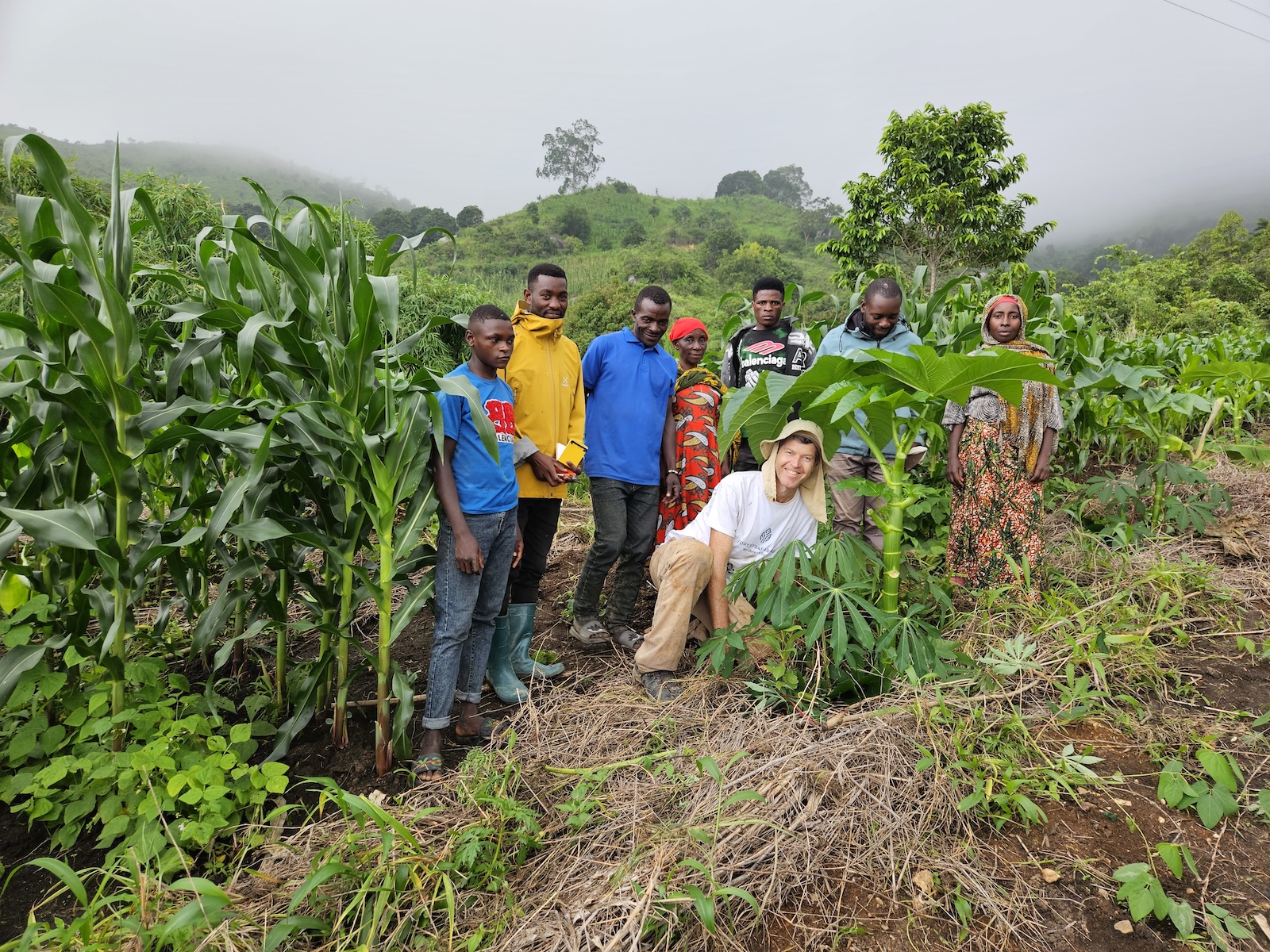
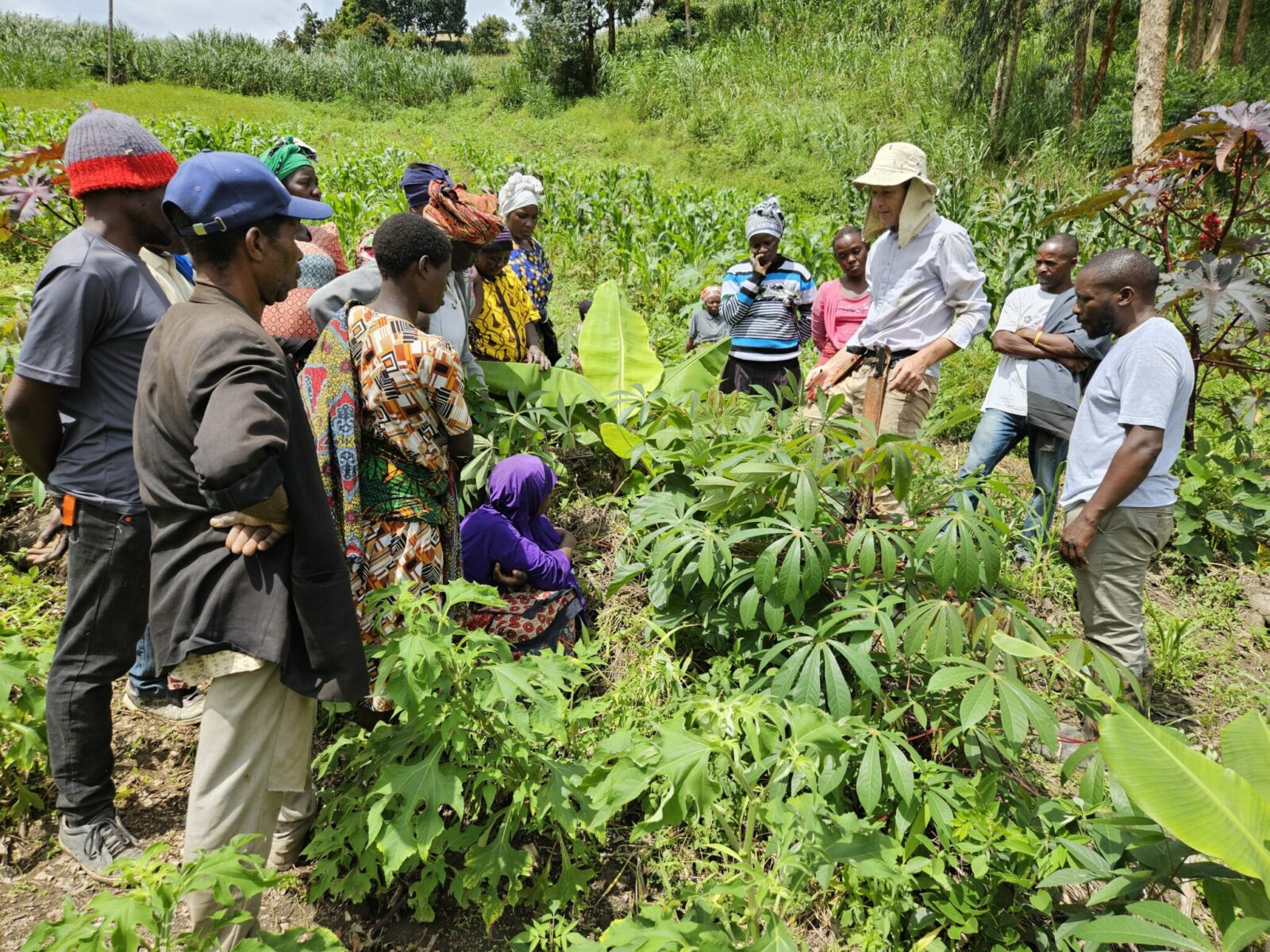
In the Uluguru Mountains, where steep terrain leaves the land highly vulnerable to soil erosion and makes every supply run a full day’s walk away, syntropic agroforestry holds extraordinary significance and potential. Here, a group of women farmers watched intently as Hannes Thaler, an experienced practitioner and field expert from Forests4Farming (F4F), demonstrated how to manage a young syntropic agroforestry demonstration plot. The moment he concluded the training on key techniques, including selective weeding, thinning, and pruning, the women immediately took up their own machetes and pruning shears and got to work. No further instruction was needed, and no prompt was required. It was a powerful display of immediate community ownership over a system designed to protect their soil and their future.
That moment, quiet and unhurried, captured the philosophy behind the partnership between F4F and APOPO HeroTREEs and illustrated what makes syntropic agroforestry different from just a tree-planting campaign.
The Problem With One-Time Interventions
Across sub-Saharan Africa, degraded land is both a symptom and a cause of a deeper cycle: poor soil produces less food, leaving families with fewer resources to restore the land, which then degrades further. Many reforestation and agroforestry programs respond with a single visit, a bag of seedlings, and good intentions. Results are mixed at best.
F4F was founded on a different premise. The goal is not simply to plant trees, but to establish them as part of a living methodology. It is about transferring a system that becomes more valuable, and less dependent on outside expertise, with every passing season.
Three Sites, One Month, One Framework
In March 2026, Hannes traveled across Tanzania alongside Alex Wostry and Haji Khamis, APOPO HeroTREEs’ lead technicians, to conduct a series of installations and management sessions across three distinct sites:
Sokoine University of Agriculture (SUA), Morogoro: A new 625 m² demonstration plot was installed during an open workshop attended by representatives from more than a dozen organizations working in agroecology, reforestation, agroforestry, and permaculture across Tanzania. A second, existing 250 m² plot established during a November 2025 visit also served as a site for management training.
Practical Permaculture Institute Zanzibar (PPIZ): A new 225 m² demonstration plot was installed with approximately 25 farmers and technicians.
Mgeta Livelihood Development Foundation (MLDF), Uluguru Mountains: A new 250 m² plot was established at Luale Primary School, alongside management activities on a 360 m² plot installed in November 2025, with a group of around 20 women farmers.
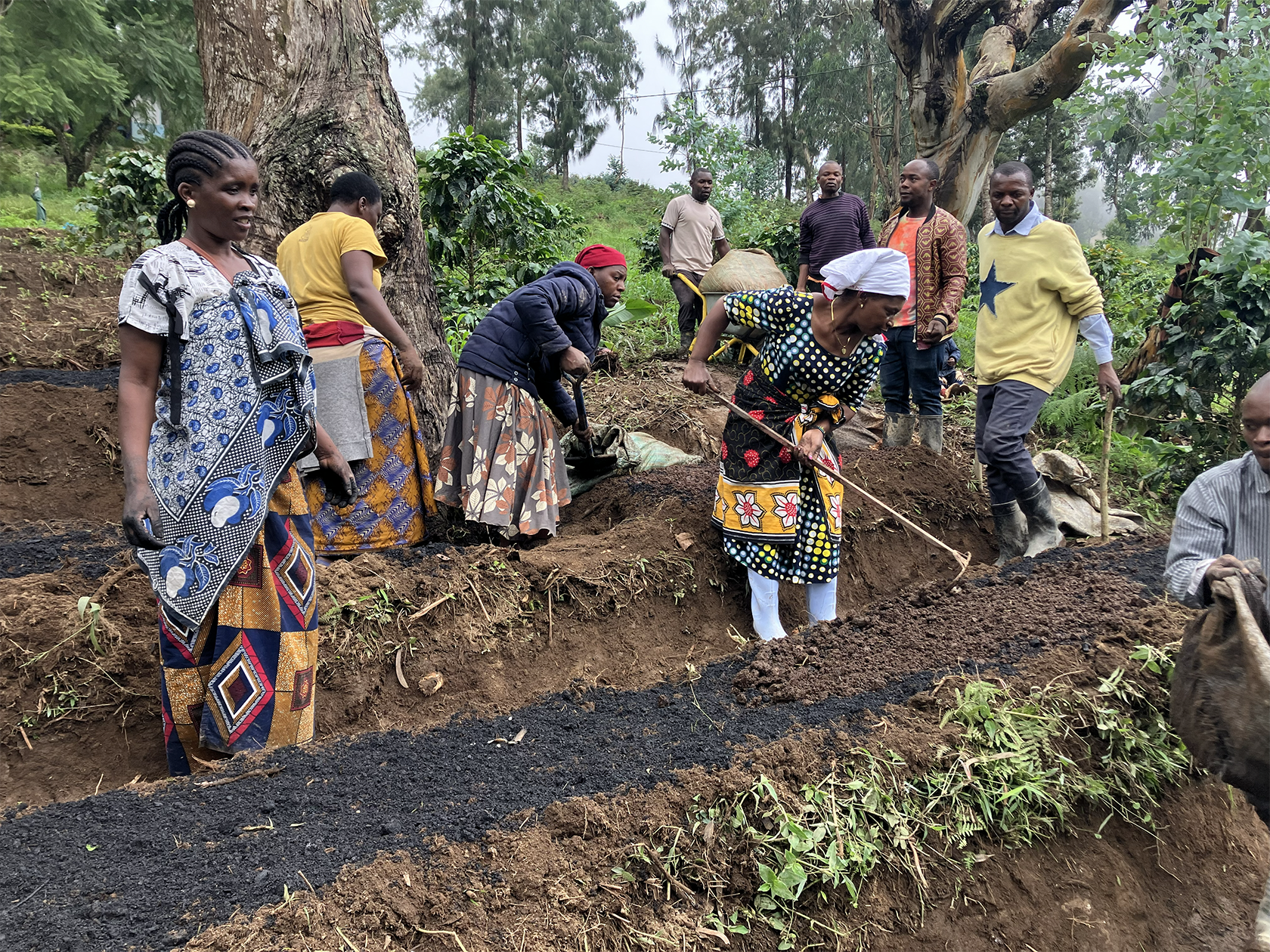
Each site presented a different challenge. At SUA, the soil was compacted and completely devoid of tree cover, requiring mechanical plowing before planting. In the Uluguru Mountains, the terrain made machinery impossible. Teams cleared vegetation by hand, loosened soil manually along planting lines, and worked with the organic matter that was locally available.
All three sites are located in tropical or high-altitude tropical biomes. All three were, before the intervention, in varying states of degradation.
How a Forests4Farming Intervention Works
F4F’s methodology is structured in five steps, designed from the outset to make itself unnecessary.
Step 1: Baseline Assessment
Before anything is planted, F4F evaluates the site: soil condition, existing vegetation, local climate, and available resources. This can be done in person or remotely, guided by photos and videos sent by local partners.
Step 2: Preparation
Sites are selected, motivated farmers identified, planting material sourced, and logistics organized. Species chosen for each plot balance local biodiversity with practical needs, including food, timber, and soil-building plants occupying different layers and stages within the system.
Step 3: Installation Workshop
The demonstration plot is established as a group exercise, with 20 to 80 participants working alongside F4F staff. This is not a lecture. It is a practical introduction to syntropic principles: how plants interact, why soil life matters, and how pruning supports ecosystem development. Hannes often uses role play in the field to explain ecological succession and the relationship between fungi, soil life, and plant health, making complex ecological concepts tangible and accessible.
Step 4: Close Digital Accompaniment
For the first three months after installation, partner organizations submit weekly photos and videos to a shared drive. F4F reviews them and updates an action list outlining what to prune, what to replant, and what to monitor. After month three, the reporting schedule shifts to every two weeks.
F4F’s Online Academy, which provides comprehensive online training on all aspects of syntropic agroforestry, and the SyntroPedia app, a free encyclopedic plant reference designed specifically for practitioners, serve as key long-term support tools. Crucially, the academy’s courses are currently being dubbed into Swahili, placing these resources directly into the hands of Tanzanian farmers in their native language.
Step 5: In-Person Follow-Up Visits
At least twice a year, F4F staff return to the field for hands-on management training. Over time, the focus shifts from instruction to observation: from “here’s how to do this” to “show me how you’ve been doing this.”
The Women of the Uluguru Mountains
That defining moment on the hillside, when the women took the machetes into their own hands, did not come out of nowhere. The women’s farming group working with MLDF had already been managing their demonstration plot since November 2025 through weekly observation, regular reporting, and patient care of a system they were still learning.
“Strong cohesion, team spirit, motivation, and passion,” Hannes noted afterward.
These women were not waiting for the next visit to move forward. They were becoming the kind of ambassadors who could carry syntropic agroforestry to neighboring farms and communities while continuing to benefit from F4F’s technical guidance.
For farmers in the mountains, the stakes are tangible. Transporting animal manure or other external inputs to highland plots can mean days of walking. A syntropic system, once established, rebuilds soil fertility from within, reducing dependence on those inputs over time while increasing resilience through diversity. If one crop fails, others remain.
Building a Movement, Not a Dependency
The open workshop at SUA offered a different kind of multiplier effect. Representatives from organizations working across Tanzania in agroecology, reforestation, agroforestry, and permaculture gathered to learn syntropic principles and install a demonstration plot together.
The goal was for each participant to return to their organization as a carrier of the methodology rather than simply a participant in a project.
It was the second such event, following an earlier workshop in November 2025, and a third was planned for November 2026.
This is how F4F thinks about scale: not through the number of plots it installs directly, but through the number of people and institutions it equips to act independently.
The partnership with APOPO HeroTREEs fits this model closely. APOPO brings an established presence, community trust, and operational capacity across Tanzania. F4F contributes methodology, training tools, including its free online academy and the SyntroPedia app, and the accumulated learning of interventions across multiple continents.
Together, the organizations are building something neither could create alone: a network of practitioners rooted in local communities and capable of spreading syntropic agroforestry without waiting for the next flight from Europe.
The partnership aims to expand its reach to dozens of partner organizations across Tanzania, creating ripple effects that could ultimately benefit thousands of farming families.
What Comes Next
By March 2026, plots installed in November 2025 had already demonstrated the rapid returns possible through this method, producing their first harvests of fruits and vegetables, including maize, beans, and leafy greens, within just three to four months.
Full autonomy, where a community manages its system without external support, typically takes three to five years.
That timeline is not a weakness. It is the point.
The goal was never a photo opportunity with a freshly planted seedling. It is a farm that feeds families, rebuilds soil, and teaches the next generation long after any NGO has moved on.
The machetes are already in the hands of the women in the Uluguru Mountains. The work continues.
Forests4Farming (F4F) is a nonprofit organization specializing in syntropic agroforestry. Its free online academy (https://academy.forests4farming.org) and the SyntroPedia plant encyclopedia app (https://forests4farming.app/) are available to practitioners worldwide at no cost. A detailed project story and full project designs will be published on the Forests4Farming website (https://www.forests4farming.org/en/stories) for those interested in learning more.