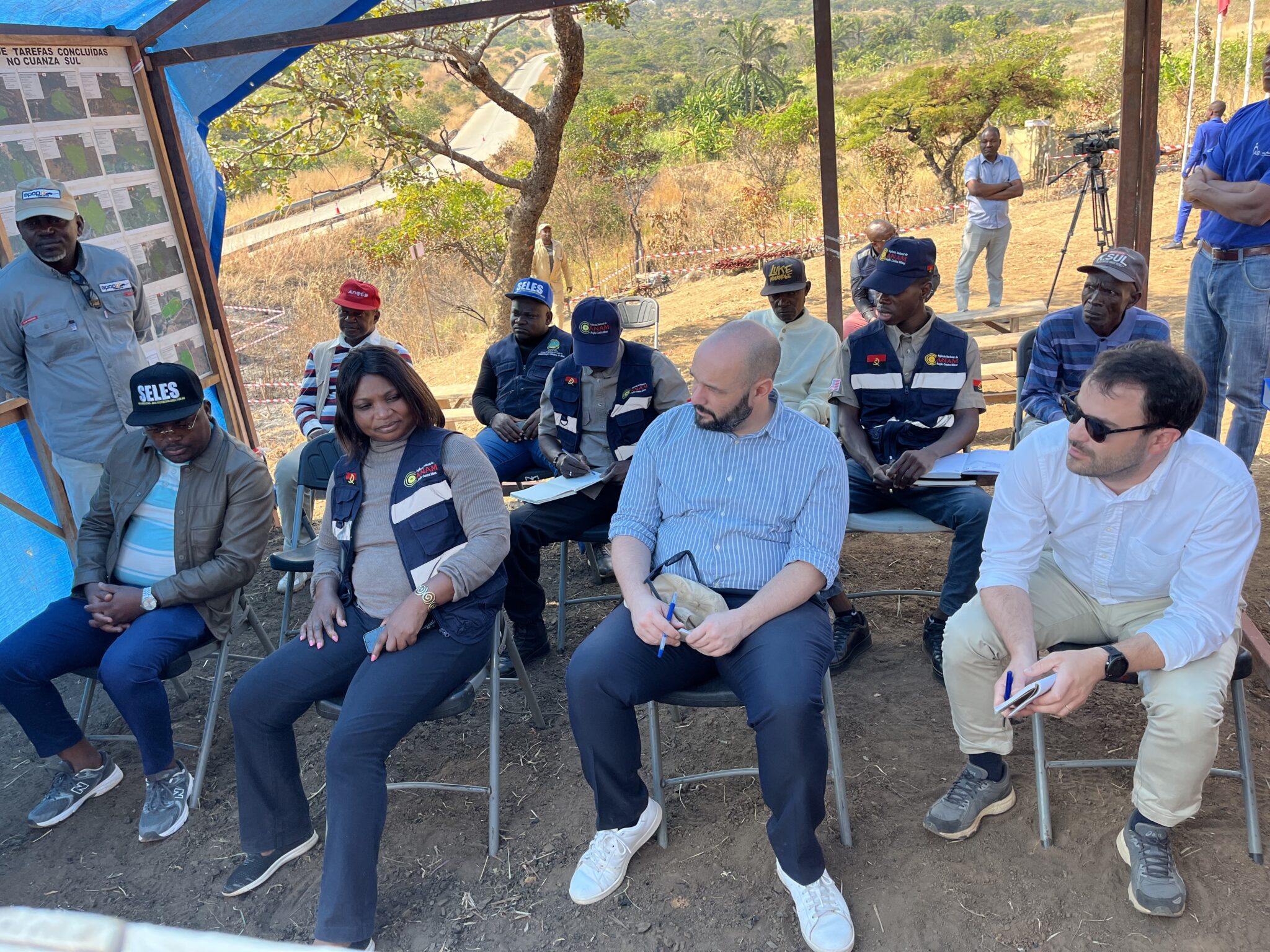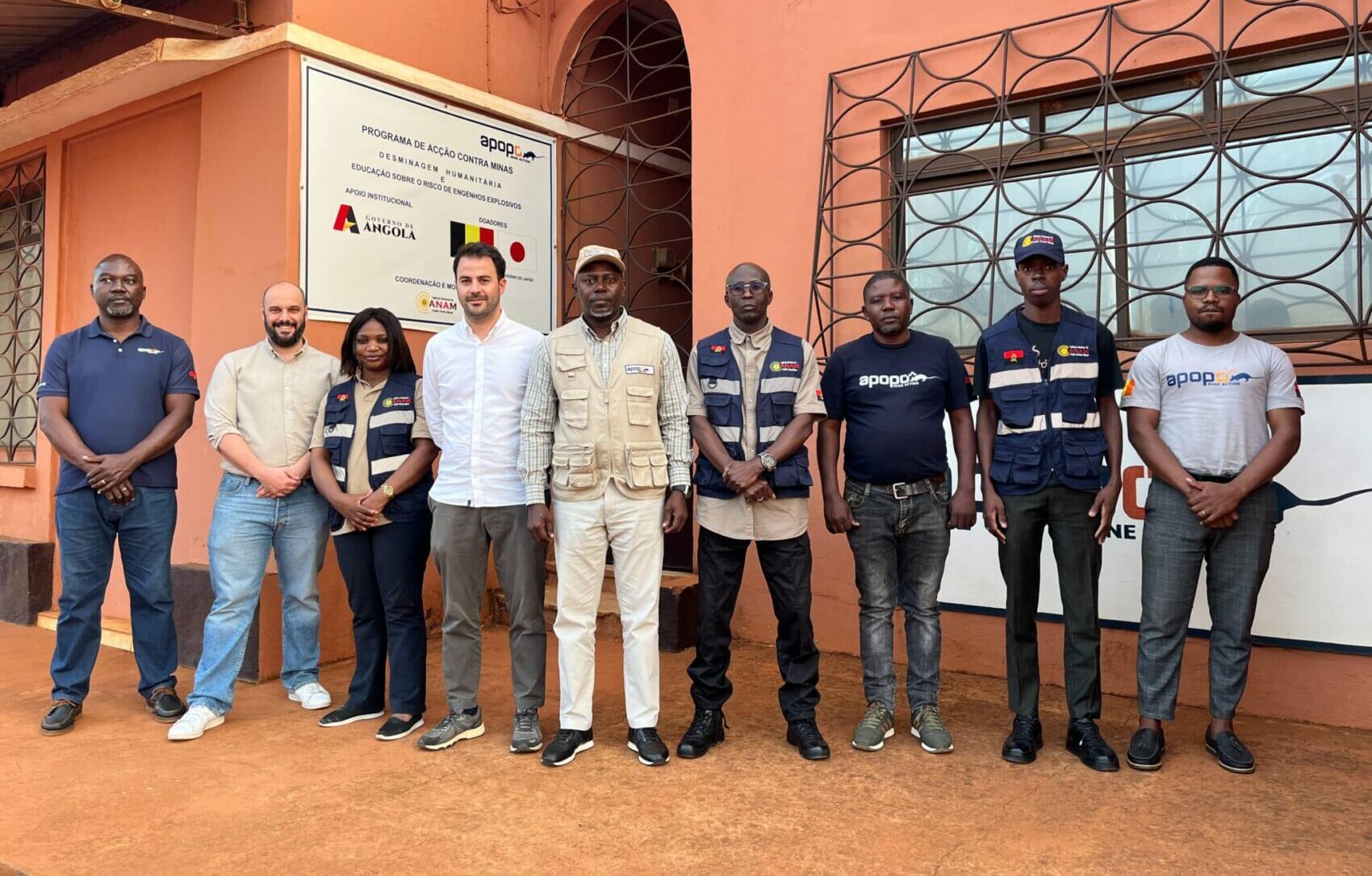
SELES, Angola, June 24, 2026 — Representatives of the Belgian government concluded a two-day visit to APOPO’s mine action operations in Cuanza Sul Province, in Angola combining operational discussions with field visits focused on demining, HeroRAT training, and the long-term impact of safer land for local communities.
The delegation included Simon Roemen, deputy head of mission at the Embassy of Belgium in Angola, and Thomas Claesen, desk officer for Angola with the Belgian government. They were joined by a technical delegation from Angola’s National Mine Action Agency, ANAM.
The visit began at APOPO’s Angola office, where the team presented operational results through May and discussed current priorities and challenges. Topics included the need to strengthen mechanical capacity, strategic plans for future operations in Bié Province, and the wider goal of achieving a landmine-free Angola by 2030. The delegation also visited APOPO’s mechanical assets and met members of the team responsible for supporting mine action operations in the field.
From Technical Work to Community Impact
On the second day, the delegation traveled through the municipalities of Seles and Amboiva to observe several aspects of APOPO’s work firsthand.
In Seles, visitors attended a live HeroRAT training demonstration and received a technical briefing on how African giant pouched rats are trained and prepared to support demining operations.
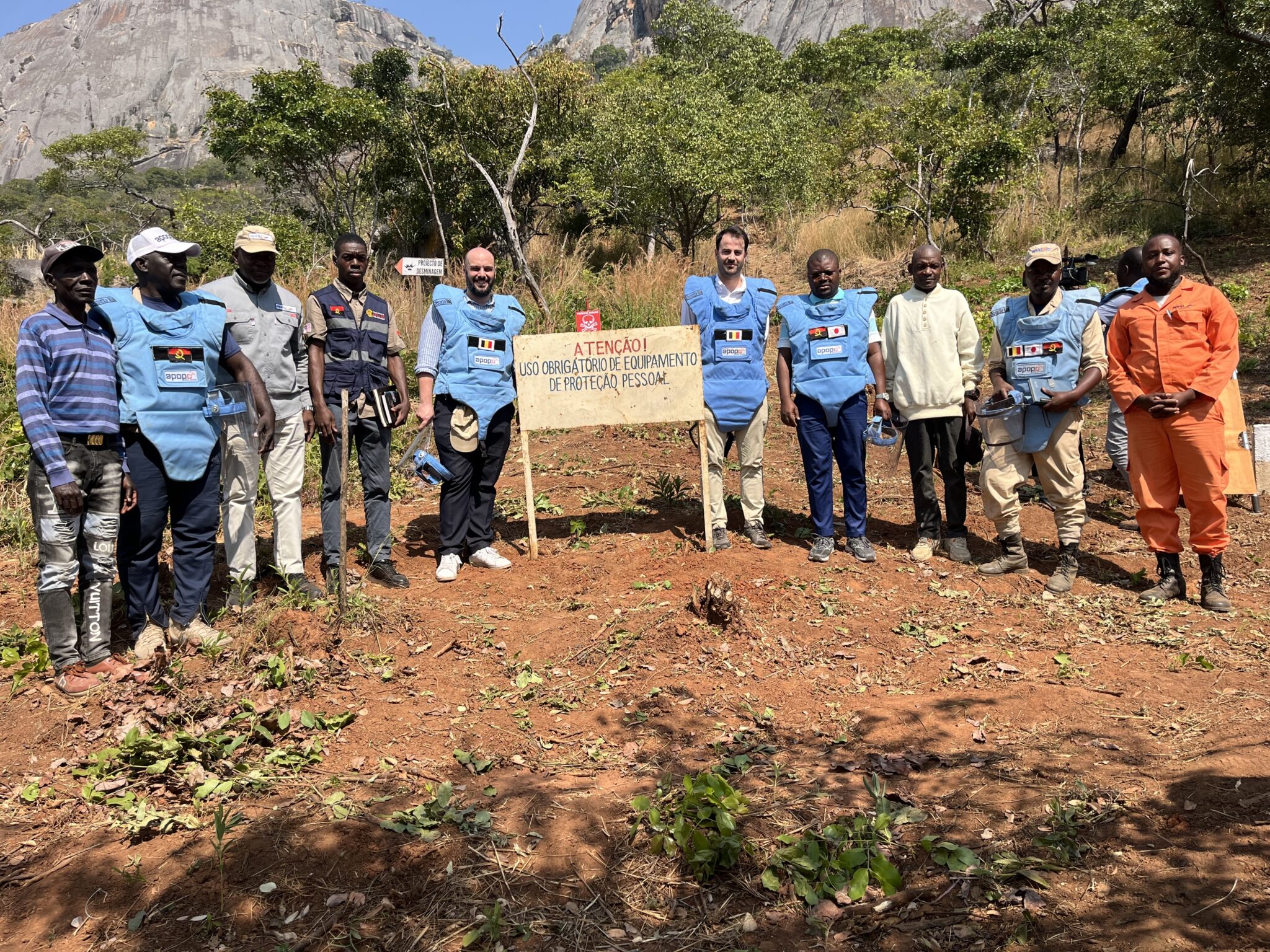
The delegation then continued to Chissonde, where APOPO teams are carrying out active demining operations. Technical staff explained the work underway, the conditions faced by field teams, and the processes used to support the safe release of land.
For Roemen, the visit provided an opportunity to look beyond operational reports and better understand how mine action affects people’s lives.
“Removing mines is important, but the reason we do it is to allow people to live normal lives on the land,” he said. Roemen also recognized the work of the deminers who carry out demanding tasks each day to help make land safer for others.
Local authorities highlighted the importance of demining for both mobility and economic development. Releasing land can improve the movement of people and goods while creating new opportunities for agriculture and other productive activities.
In Amboiva, municipal representatives explained that support for farming families, including access to seeds and agricultural supplies, can be expanded as more land becomes available for safe use.
ANAM representatives also observed the work underway as part of the agency’s responsibility for monitoring mine action activities, overseeing quality control, and supporting the formal certification of released land.
 Supporting Communities Beyond Demining
The visit also included the donation of educational materials to the municipal education departments of Seles and Amboiva. APOPO currently conducts explosive ordnance risk education activities in both municipalities, helping communities better understand the risks associated with mines and other explosive ordnance and encouraging safe behavior in affected areas.
At the conclusion of the visit, representatives from APOPO, ANAM, and the municipal administrations took part in joint media interviews covered by TPA, Rádio Cuanza Sul, and local press. APOPO Angola Program Manager Manuel Agostinho thanked the Belgian delegation, ANAM, municipal authorities, community leaders, and APOPO field teams for their continued cooperation.
The two-day visit reinforced the shared commitment of Belgium, Angola’s national authorities, local administrations, and APOPO to ensuring that progress in mine action translates into safer land, stronger communities, and new opportunities for the people who depend on it.