
Advancing Regenerative Farming in Tanzania
APOPO’s HeroTREEs program is transforming land management through the Syntropic Agroforestry Innovation Accelerator (SAIA), a pioneering initiative dedicated to expanding regenerative agriculture across Tanzania and beyond. By combining training, research, and hands-on implementation, the Accelerator empowers farmers, students, and communities to adopt syntropic agroforestry, a farming approach that restores ecosystems while enhancing productivity, resilience, and livelihoods.
Tackling the Knowledge Barrier
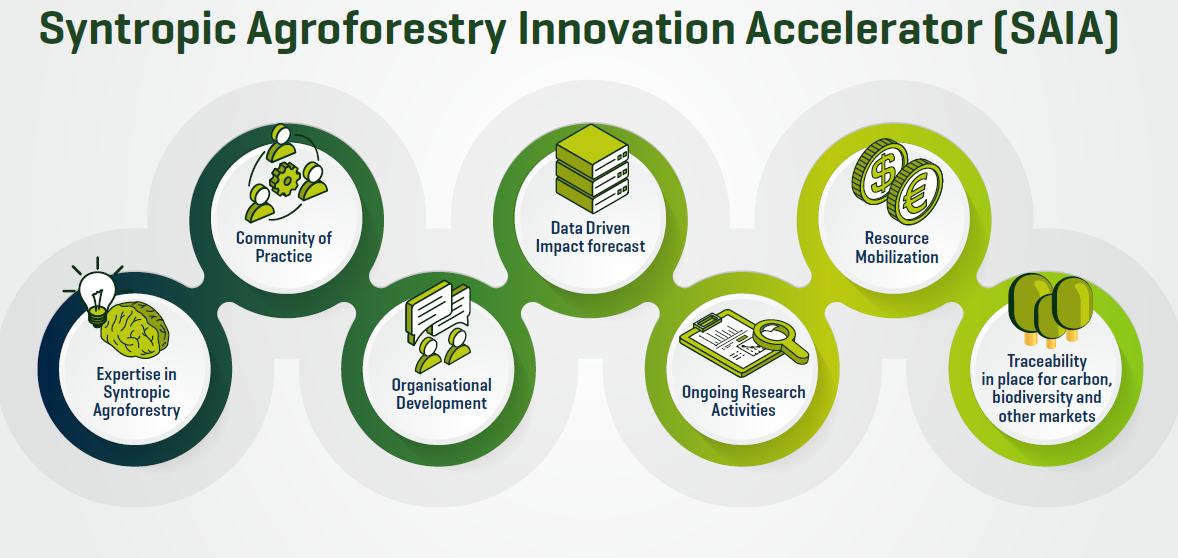
A major challenge in regenerative agriculture is the knowledge gap: many farmers and organizations lack access to practical, science-based approaches for restoring land and increasing productivity. SAIA addresses this by integrating research, hands-on practice, and co-creation, supporting participants to design, test, and scale syntropic agroforestry systems that benefit entire communities across Africa and beyond.
What SAIA Offers
To bridge this gap, SAIA provides:
-
Open regional trainings to build practical skills
-
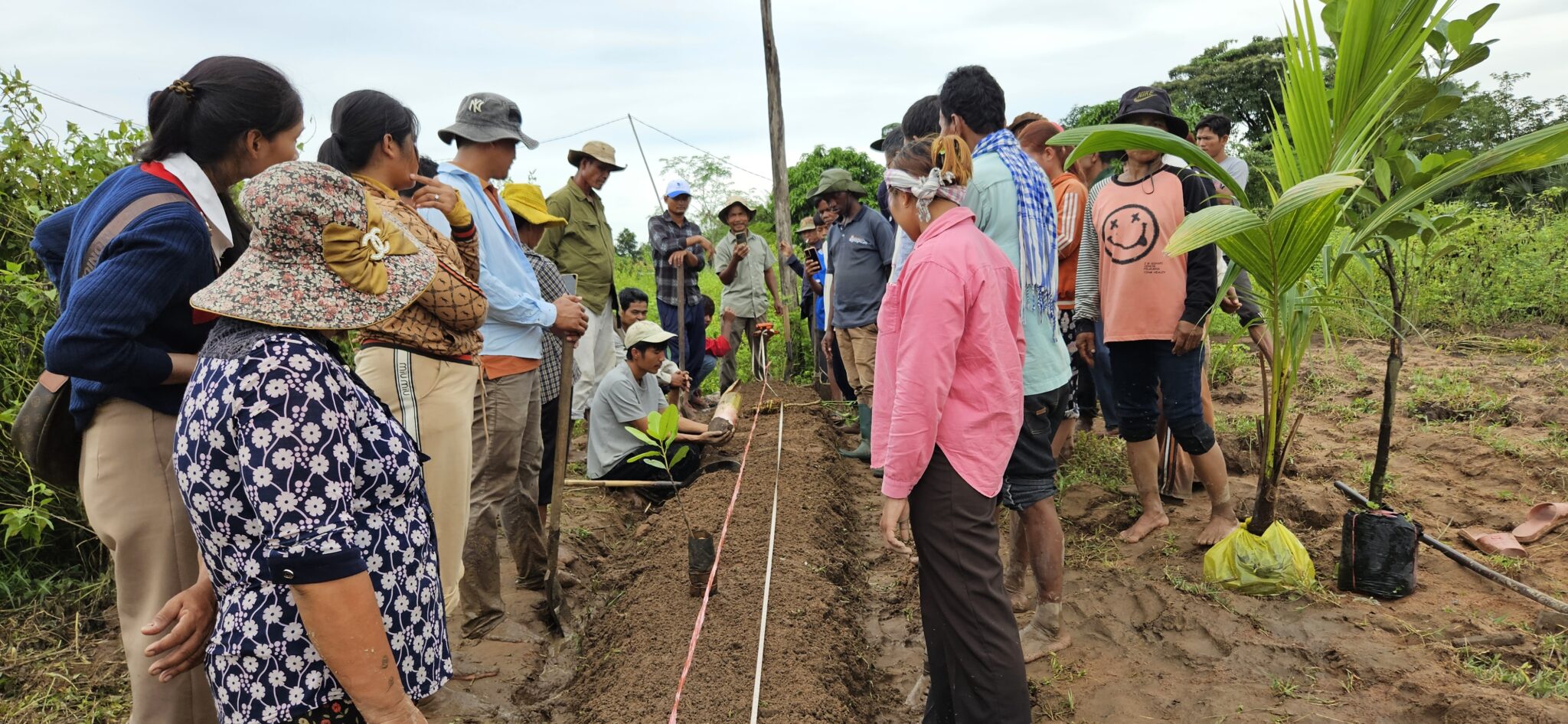
Demonstration plot development for hands-on learning
-
GIS & FarmTree impact modeling to track growth, carbon storage, and economic outcomes
-
Co-creation and Communities of Practice to encourage peer learning and collaboration
-
Research and knowledge sharing to advance innovation in regenerative agriculture
Core Principles
SAIA is grounded in the principles of syntropic agroforestry, developed by Ernst Götsch:
-
Successional planting, arranging crops and trees to mimic natural forest regeneration
-
Layering and species diversity, combining plants of different heights and functions to optimize sunlight, water, and nutrient use
-
Regenerative system design, rebuilding soil structure, increasing biodiversity, and creating ecosystems that grow more fertile over time
Our Model
SAIA operates through a self-reinforcing flywheel:
Forum → Training → Testing → Implementation
This model ensures that knowledge, experimentation, and field application continuously feed into one another, driving the adoption and scaling of syntropic agroforestry systems.
SAIA in Action
The Accelerator is already transforming learning and land use in Tanzania:
-
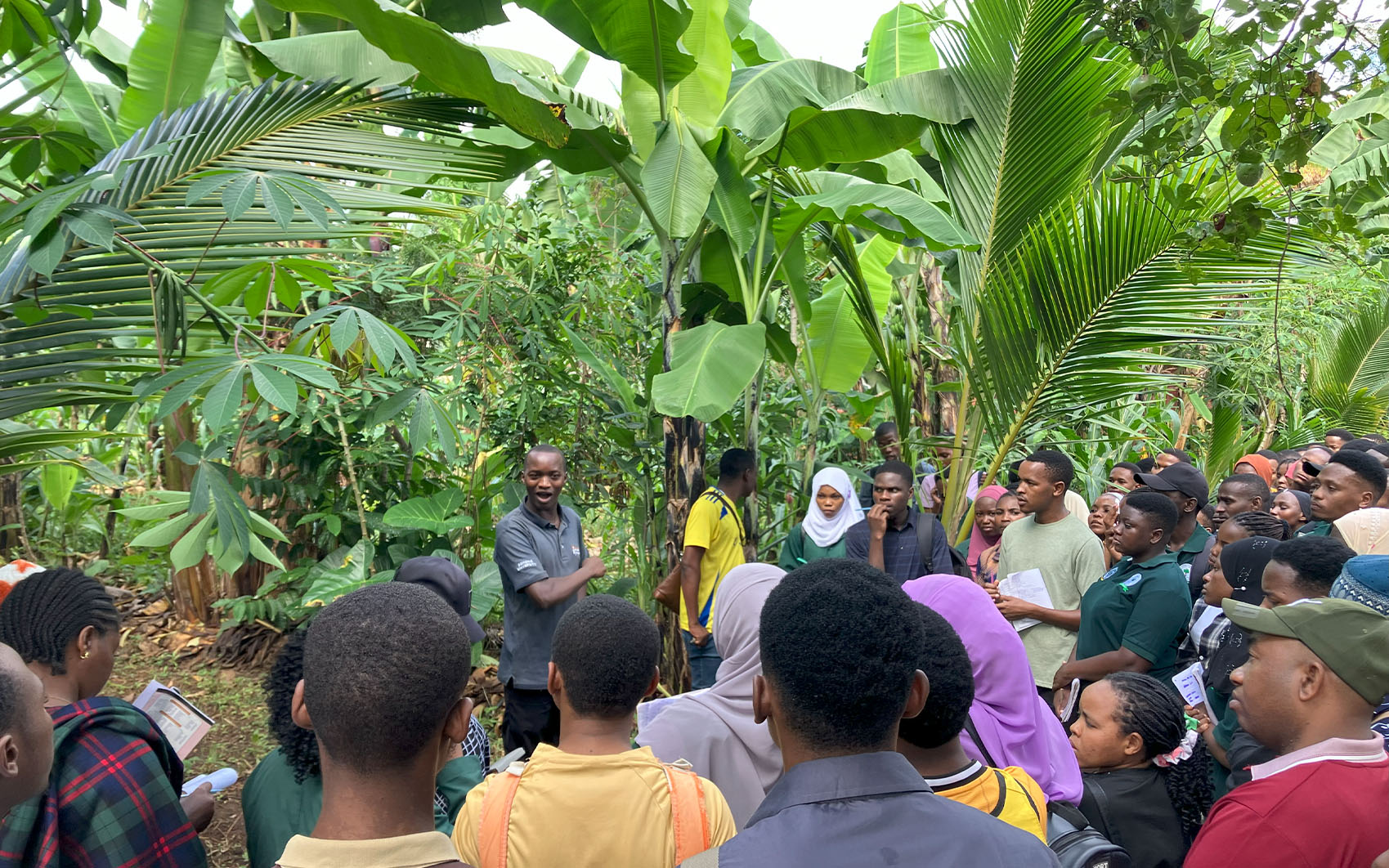
Student engagement: Nearly 200 students from Sokoine University of Agriculture have participated in field training, gaining hands-on experience in designing and managing syntropic agroforestry systems.
-
Community impact: In the Uluguru Mountains, farmers supported by SAIA are turning degraded land into productive, multi-species agroforestry plots that improve food security, soil health, and ecosystem resilience.
-
Applied research: Demonstration sites enable students and interns to test tools like FarmTree modeling software, improving predictions of biomass growth, carbon capture, and economic outcomes.
Why It Matters
By promoting regenerative farming, SAIA delivers tangible benefits for people and the planet:
-
Restores soil health and fertility
-
Increases farmer income through diversified harvests
-
Enhances climate resilience by building adaptive farming systems
-
Protects biodiversity by fostering multi-species landscapes
-
Builds long-term community capacity through training, collaboration, and knowledge sharing
Looking Ahead
Through SAIA, the HeroTREEs program is scaling regenerative farming practices across Tanzania and beyond. By building networks of practitioners, researchers, and community leaders, SAIA strengthens local capacity, promotes innovation, and supports practical field application.
The vision is clear: a future where sustainable agriculture and ecosystem restoration go hand in hand, equipping the next generation of farmers, researchers, and practitioners to restore degraded landscapes, enhance livelihoods, and build climate-resilient communities.
Sign up here to APOPO’s Syntropic Agroforestry Newsletter for regular updates about our program.