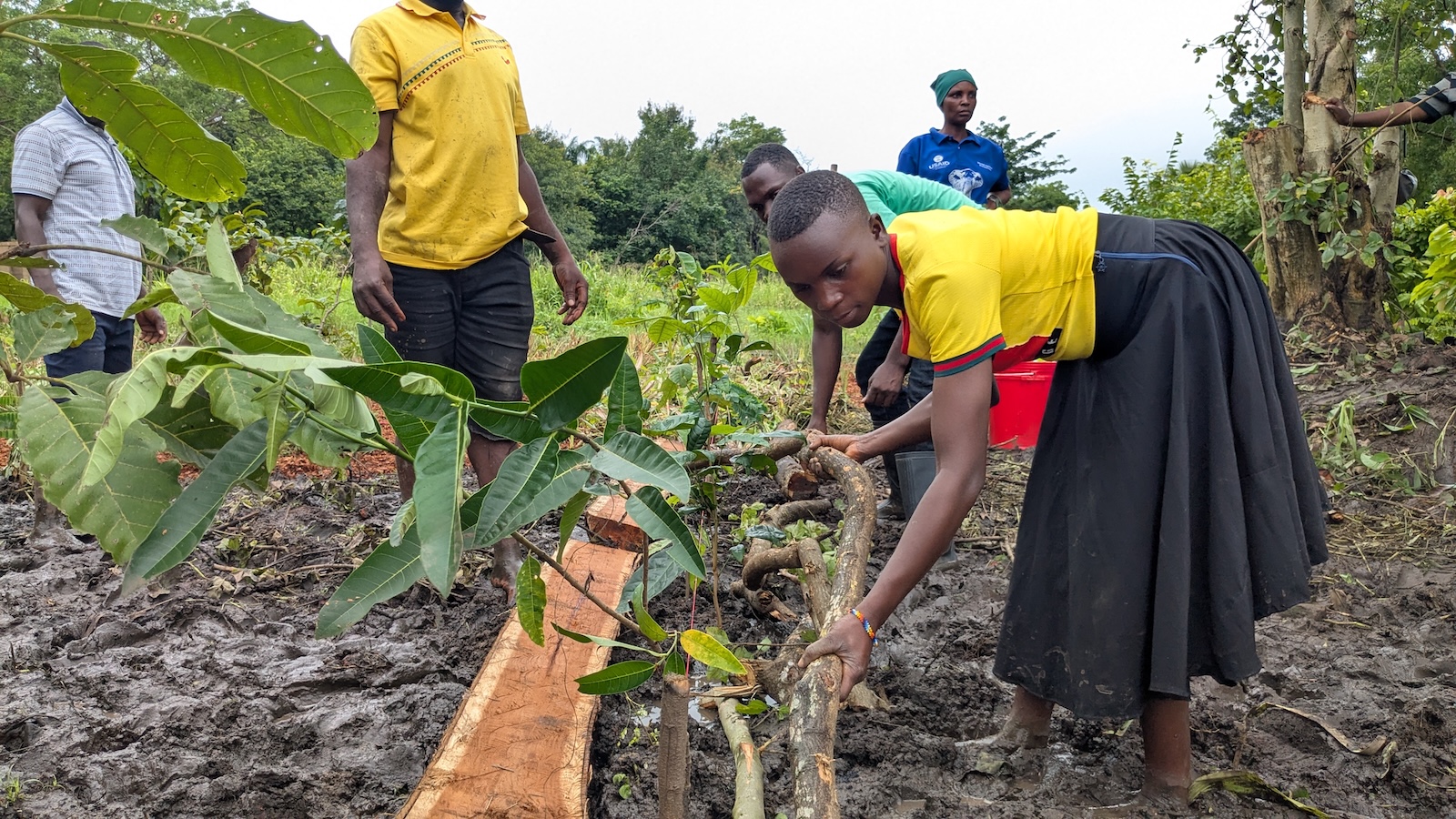
APOPO’s HeroTREEs program, in collaboration with Reforest Africa, established two syntropic agroforestry demonstration plots in Tanzania’s Greater Udzungwa Landscape following a two-day training session held at the Udzungwa Botanic Garden in March 2026.
The training brought together 46 participants from six villages surrounding the landscape: Mang’ula A, Katurukila, Magombera, Msolwa Station, Kanyenja, and Sole. Representatives from the Tanzania National Parks Authority (TANAPA), Sustainable Technologies and Environmental Projects (STEPS), the Mazingira Alliance for Community and Conservation (MACCO), Reforest Africa, and local agricultural extension officers also participated.
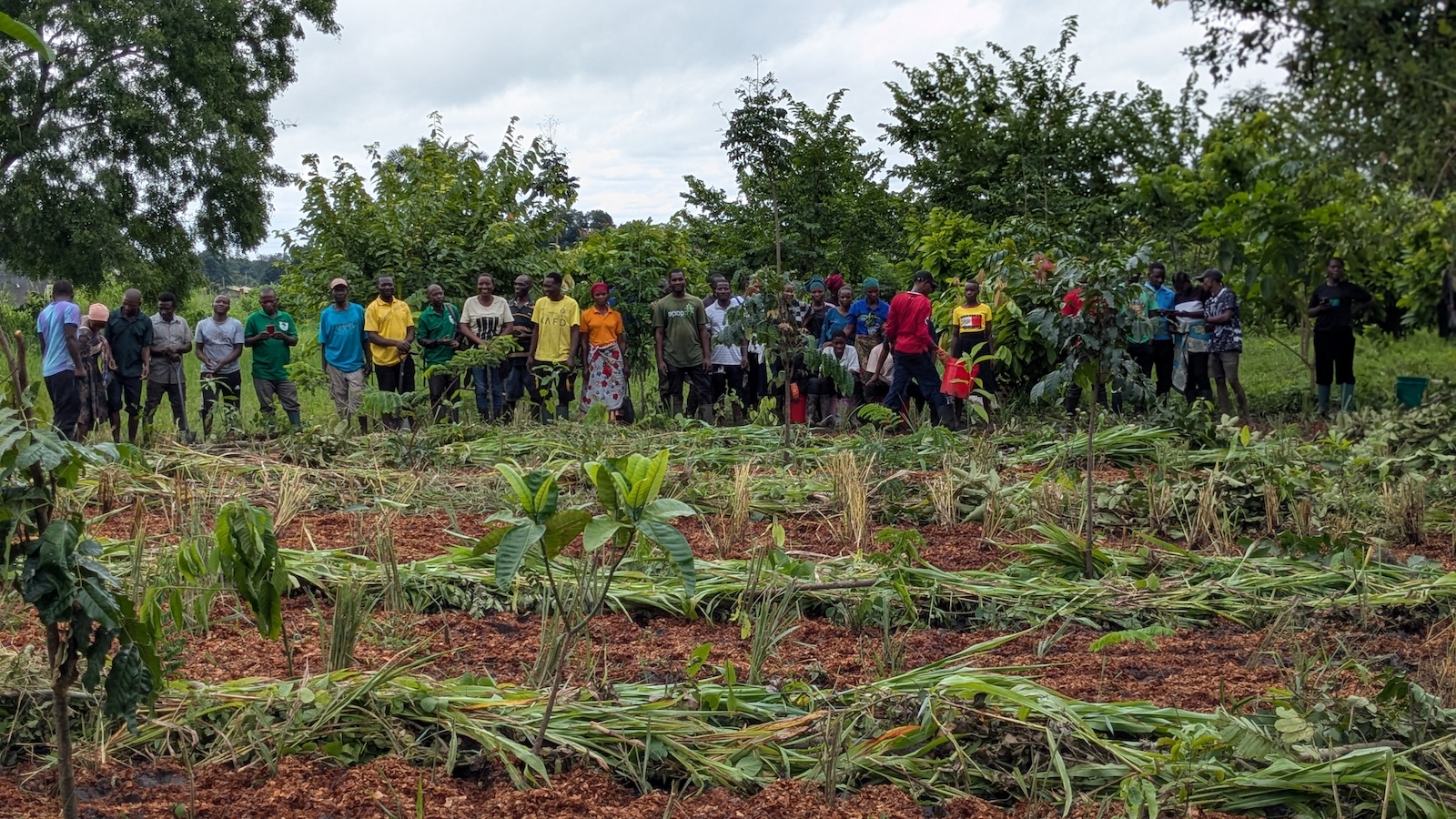
The training was intended to add to local knowledge of regenerative farming approaches that improve soil health, support biodiversity, and improve long-term food and income security for communities living alongside important conservation areas.
Introducing Syntropic Agroforestry
The first day focused on the principles of syntropic agroforestry, a regenerative farming approach inspired by natural forest systems. Rather than cultivating crops in isolation, syntropic systems combine trees, food crops, and ground-cover species in ways that mimic natural ecological succession, helping farms become more productive and resilient over time.
Participants explored how plant species can be arranged according to height, growth cycles, and light requirements to create mutually supportive systems. Discussions also focused on biodiversity integration, soil regeneration, and long-term farm planning, with practical examples adapted to conditions in the Udzungwa landscape.
Establishing Demonstration Plots
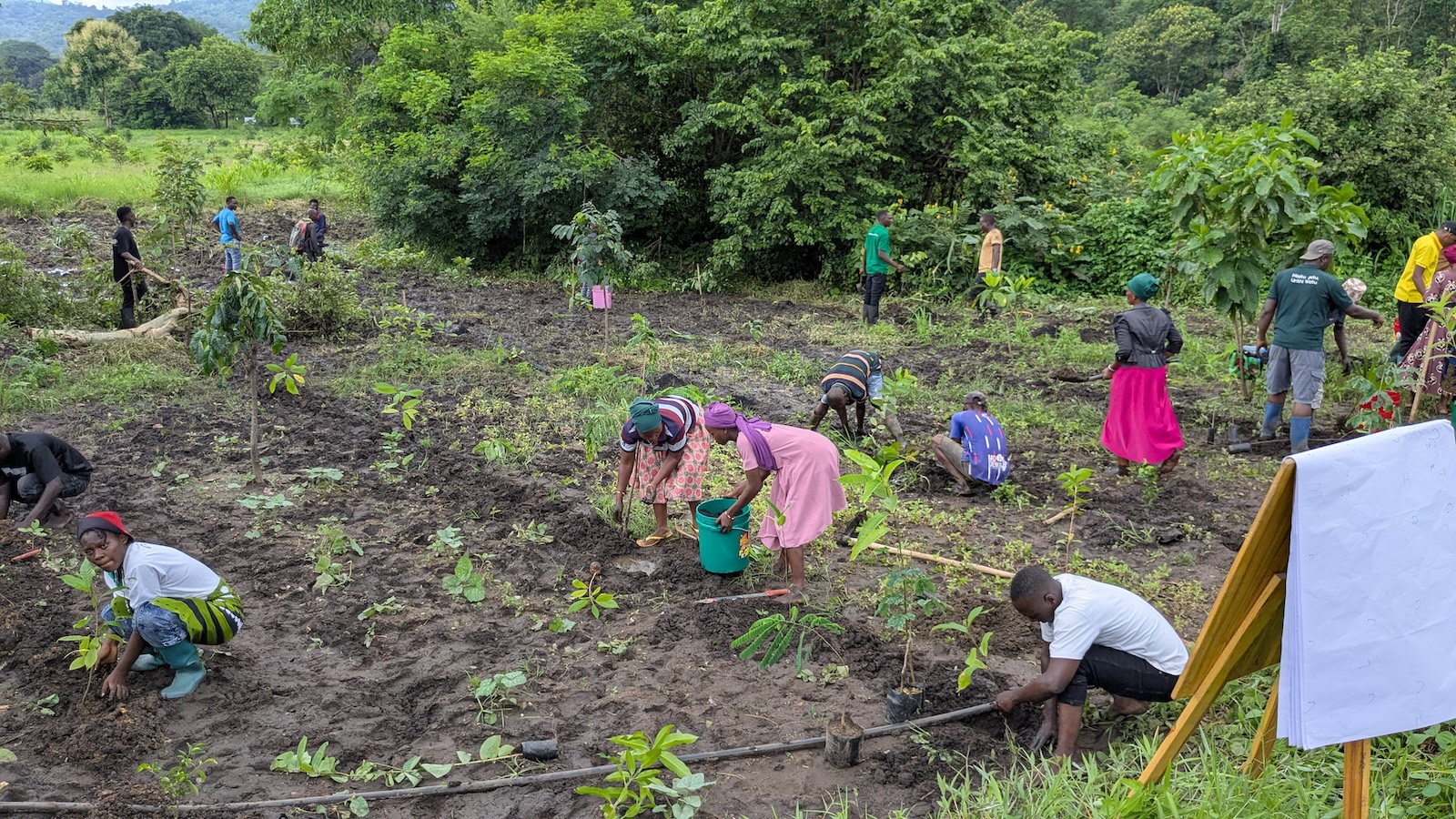
On the second day, participants moved from the classroom to the field, where they established two demonstration plots at the Udzungwa Botanic Garden. Designed as practical learning sites, the plots demonstrate how regenerative agriculture techniques can be adapted to local environmental and economic conditions.
A total of 261 trees and crops were planted during the activity. The plots combine native tree species intended to support ecological restoration with crops that can contribute to household nutrition and income generation.
Among the indigenous “mother trees” planted were Albizia gummifera, Khaya anthotheca, Milicia excelsa, and Bridelia micrantha. These species were selected for their ecological value, resilience to pests and diseases, and ability to generate biomass that can later be used for mulching and soil improvement.
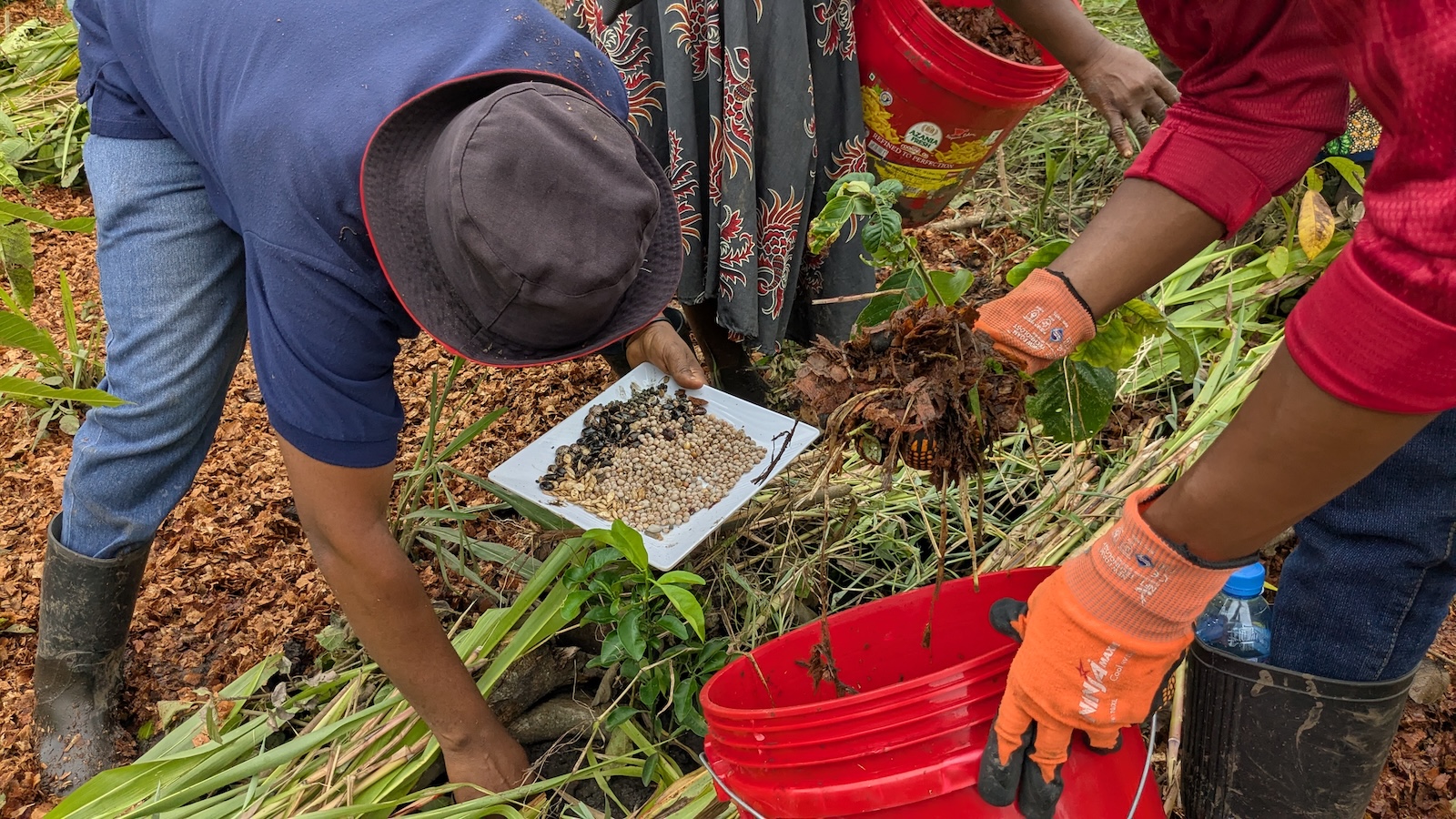
The plots also incorporate cocoa and lemon as potential income-generating crops alongside a range of fruit trees. Ground-cover species such as peas, beans, and mucuna were added to improve soil fertility, retain moisture, and suppress weeds naturally.
Supporting Human-Wildlife Coexistence
A key consideration in designing the demonstration plots was the presence of elephants in the Udzungwa Landscape. Farmers in the area regularly experience crop losses linked to elephant movement, creating ongoing challenges for both livelihoods and conservation efforts.
To help reduce human-elephant conflict, the plots were designed using species considered less attractive to elephants while still maintaining ecological and economic value. The approach demonstrates how regenerative agriculture can contribute not only to ecosystem restoration, but also to community resilience and coexistence with wildlife.
The two demonstration plots will remain as practical learning spaces for farmers and partner organizations working in the region. APOPO and its partners hope the initiative will support wider adoption of regenerative farming practices across the Udzungwa Landscape, contributing to healthier ecosystems, stronger rural livelihoods, and more sustainable land use over the long term. APOPO is grateful for the background support of Forests4Farming in these activities.