
Rice grown on land once contaminated by landmines is now being brought to market under a new brand in Cambodia.
Peace Rice, developed through a collaboration between APOPO and the Khmer Organic Cooperative, links mine clearance directly to agricultural production. It brings together several stages that are often treated separately: land release, cultivation, processing, and, increasingly, local use.
In Cambodia, rice is not simply a crop. It is a staple at meals, a daily part of household routines, and agricultural livelihoods across the country. In areas affected by landmines, however, that continuity has been disrupted. Fields that appear fertile may remain unsafe, limiting how land can be used and leaving farmers unable to fully rely on what they own. Peace Rice reflects the process of removing that barrier and restoring land to productive use.
Linking Funding to Real-World Outcomes
APOPO’s Minefields to Rice Fields program in Cambodia is supported through a Development Impact Bond (DIB), funded by the Foreign, Commonwealth & Development Office (FCDO) as the outcome payer.
This results-based financing model represents a shift in how mine action is funded. Rather than paying for activities alone, funding is tied to independently verified outcomes. Land must be surveyed, cleared, and confirmed safe before payments are released, ensuring a direct link between investment and measurable results on the ground.
The structure also encourages efficiency and accountability. By focusing on outcomes, it supports approaches that extend beyond clearance itself. In practice, this means not only making land safe, but helping ensure that it can be used effectively once returned to communities. Initiatives like Peace Rice sit within this broader framework, showing how clearance can translate into practical, longer-term benefits.
From Contaminated Land to Cultivation
Decades after conflict, landmines and unexploded ordnance continue to restrict access to land across parts of Cambodia, particularly in provinces such as Preah Vihear. In these areas, land that appears usable may remain unsafe, limiting agricultural production and long-term planning for families.
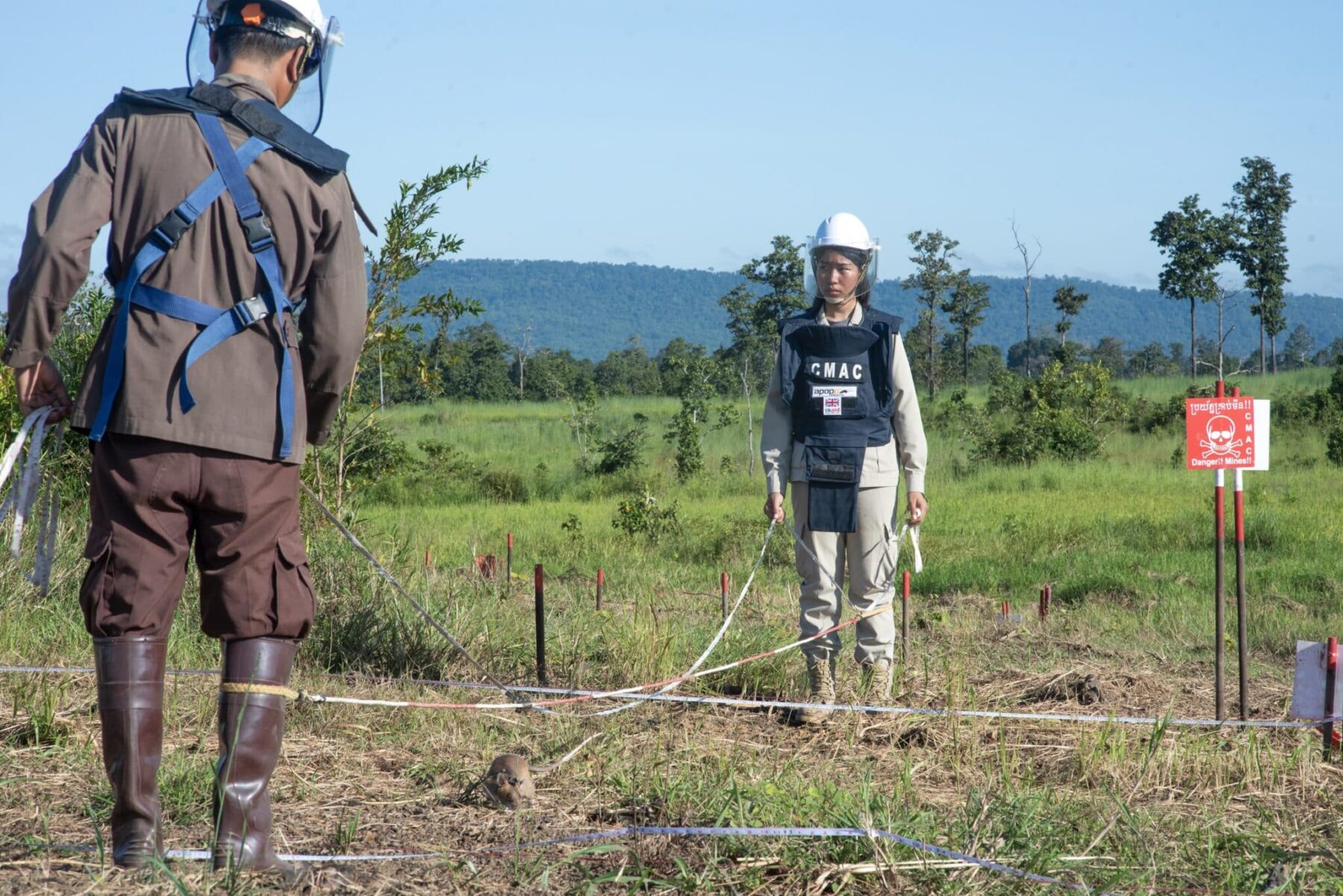
Through its Mine Action program, APOPO works alongside national partners, including the Cambodian Mine Action Centre, to identify and clear contaminated land. Teams use a combination of Mine Detection Rats (MDRs), Technical Survey Dogs (TSDs), and manual demining methods to locate explosive hazards and release land safely.
This process is deliberate and methodical. Large areas must be surveyed, hazards identified, and clearance verified before land can be handed back. Once that happens, however, the change is immediate. Land that has remained unused for years can be brought back into cultivation, often within a single growing season.
What That Change Looks Like for Farmers
For farmers, the shift from contamination to clearance is practical and immediate.

Saman, a farmer in Preah Vihear province, purchased land he believed he could farm, only to discover it was contaminated and unusable. For years, the land represented both investment and uncertainty. After it was cleared by APOPO, he was able to return to it. “I was so relieved to finally be able to use it and to know that it was safe.”
Access to cleared land allowed him to expand beyond the smaller area he had previously been using. Alongside clearance, he received support through the project, including training and improved rice seed varieties. This helped him make full use of the land and improve both yield and consistency.
“Last year, which was the first year I was able to use the cleared land, I harvested 10 tons of rice.”
Saman’s experience reflects a broader pattern across cleared areas. When land is made safe and farmers are supported to bring it back into use, production can increase quickly, and previously underutilized land becomes part of a more stable farming system.
From Clearance to Rice Production
Peace Rice builds on this transition by connecting cleared land to rice production and, in some cases, to market.
Working with the Khmer Organic Cooperative, rice grown on cleared land is processed and distributed, creating a direct link between mine clearance and livelihoods. Farmers are supported not only to resume cultivation, but to improve production and access more stable outlets for their crops.
The rice itself is a familiar Cambodian variety, suited to everyday use. It is not defined by novelty, but by its origin. Its significance lies in the fact that it is grown on land that was previously considered unsafe, and is now fully integrated into local agricultural systems.
From Field to Table
Peace Rice is now available through a growing number of outlets, including the Khmer Organic Shop, the APOPO Visitor Centre, and Sister Srey café in Siem Reap, where it is served as part of the café’s menu.
This creates a visible connection between clearance and consumption. Land that was once defined by risk is now part of a functioning food system, moving from field to table within the same country.
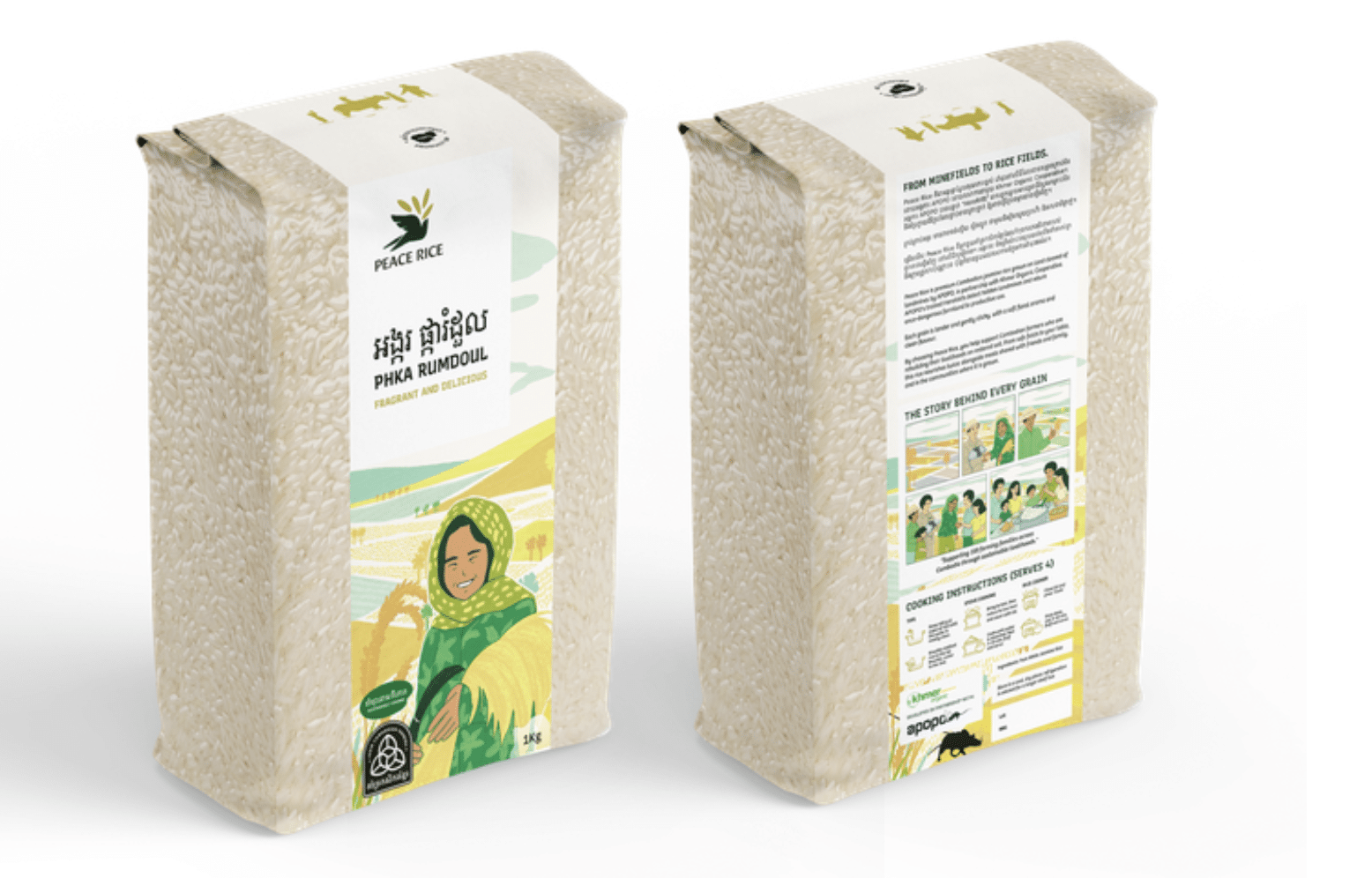
For consumers, the rice may appear no different from other local varieties. For the farmers who grow it, however, it represents restored access, increased production, and the ability to use land that was previously out of reach.
Supporting Long-Term Land Use
The return to farming is often immediate, but sustaining that productivity over time requires a different set of inputs.
Beyond initial cultivation, farmers may face challenges related to soil quality, changing weather patterns, and maintaining consistent yields. Clearance alone does not address these longer-term factors.
This is where APOPO’s HeroTREEs initiative connects to the work. HeroTREEs focuses on regenerative land use, promoting soil health, agroecological practices, and climate-resilient farming systems. In Cambodia, this includes supporting farmers to maintain productivity beyond the first seasons after land is returned to use.
By linking mine action with these longer-term approaches, APOPO and its partners aim to ensure that cleared land continues to deliver value for communities over time.
A Connected Model
The Cambodia program brings together several elements into a single, connected approach, linking clearance with practical outcomes on the ground.
Key components include:
- Results-based financing through a Development Impact Bond, funded by the Foreign, Commonwealth & Development Office, which ties funding to independently verified land release
- Advanced detection methods, including Mine Detection Rats (MDRs), Technical Survey Dogs (TSDs), and manual demining, enabling efficient survey and clearance
- The return of cleared land to agricultural use, allowing farmers to resume cultivation and increase production
- Agricultural support, including training and improved seed varieties, helping farmers make effective use of newly accessible land
- Peace Rice, developed with the Khmer Organic Cooperative, linking cleared land to rice production and distribution
- Long-term land use support through HeroTREEs, promoting soil health and climate-resilient farming practices
Taken together, these elements show how mine action can extend beyond immediate safety outcomes, connecting technical clearance with livelihoods, food production, and longer-term land use.
Turning Safety Into Opportunity
Peace Rice reflects a process that begins beneath the surface and continues through everyday life. It shows how land once defined by risk can be made safe, returned to use, and integrated into farming systems that support households and communities. It also highlights the role of funding, technical expertise, and local partnerships in making that transition possible. In Cambodia, that shift is already underway, moving step by step from minefields to rice fields.
