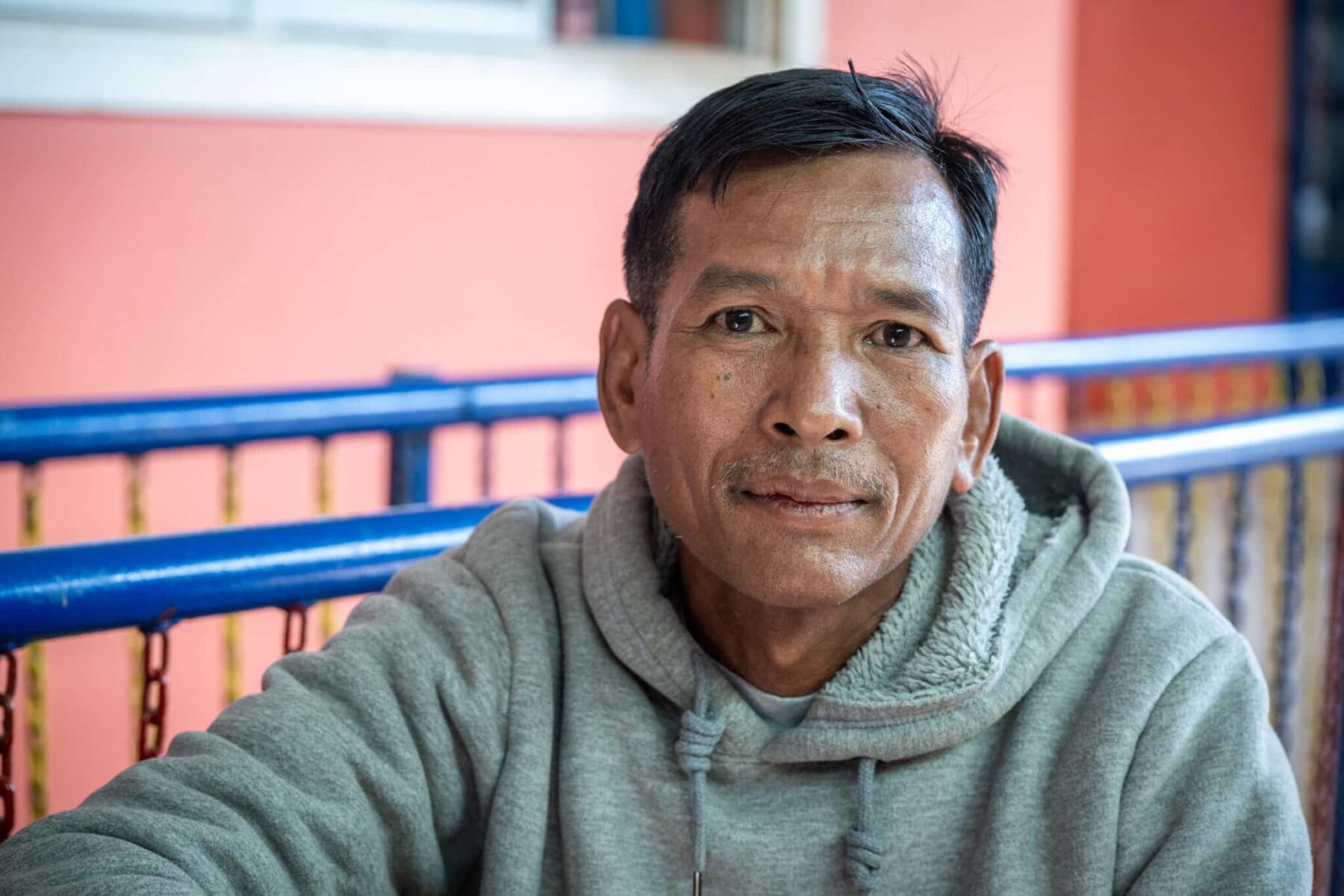
Ongoing prosthetic support in Cambodia: Sen’s story
In Cambodia, many people are still living with the long-term consequences of landmines and explosive remnants of war. For those who have lost limbs, mobility is closely linked to independence, income, and daily life.
For prosthetic users, support is not a one-time need. Prosthetic limbs wear out or break regularly, especially for people who rely on them for work and daily movement. Without ongoing access to fittings, repairs, and replacements, mobility can quickly decline.
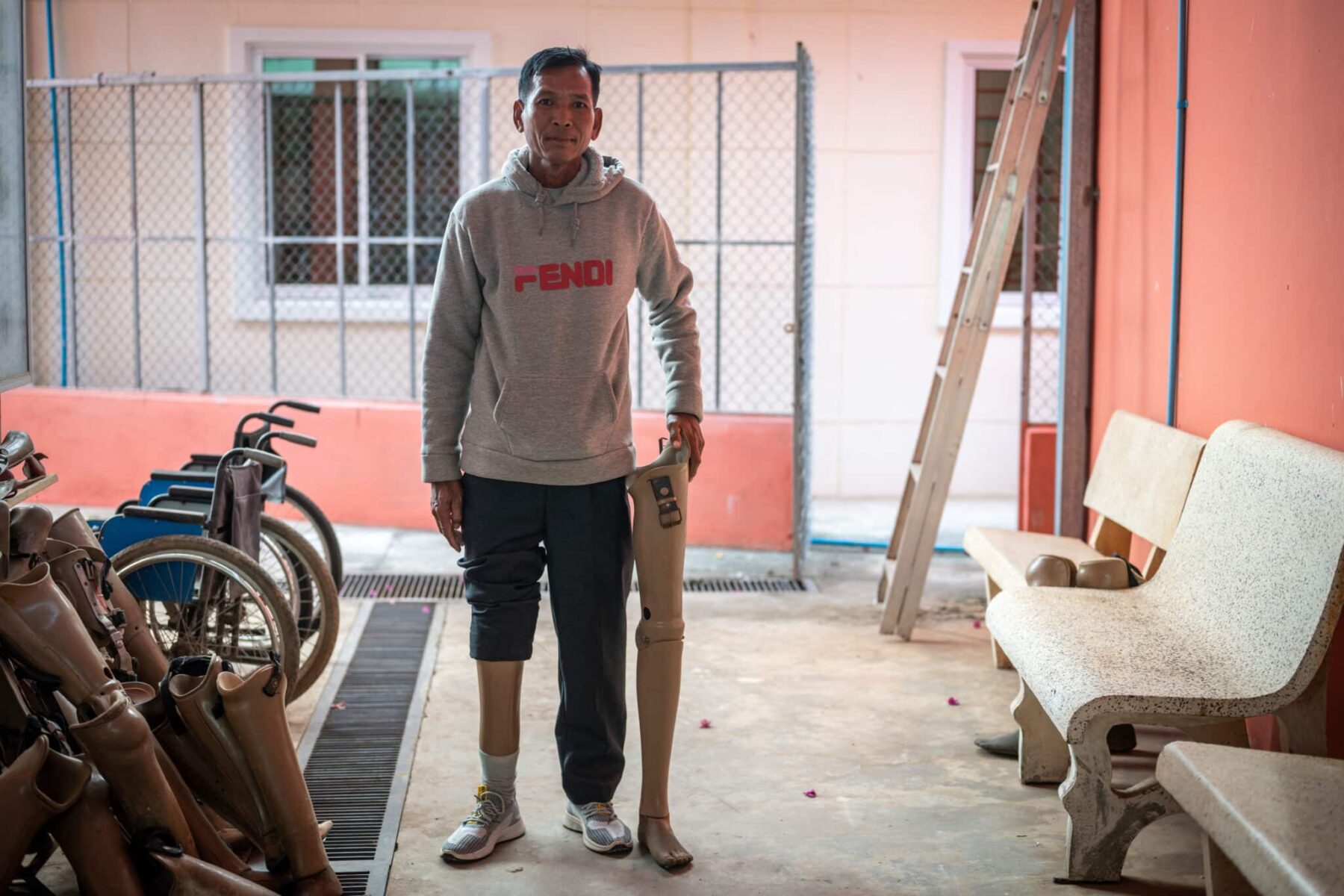
Sen, 62, from Jongan District in Preah Vihear province, lost his leg in 1988 after stepping on a landmine during the conflict. Over the years, he has relied on multiple prosthetic limbs to stay mobile. The prosthetic he uses today is his fifth.
Prosthetic limbs are provided by Humanity & Inclusion. APOPO supports transport to and from the rehabilitation center and clinic, enabling people to return for fittings, repairs, and replacements as needed. Through this support, Sen has been able to access both his fourth and fifth prosthetic limbs and maintain his mobility over time.
“This new leg is much more comfortable”
My name is Sen. I am 62 years old and I come from Jongan District, in Preah Vihear province. I am married and I have three children. The oldest is 26 years old and the youngest is nine.
Two of my children are already married. They do farming, mostly rice, and they live away from me now. At the moment I live with my wife and our youngest daughter, who is still in school. We grow rice to support our daily life.
The accident happened in 1988, in Oddar Meanchey province. At that time I was a soldier. It happened during fighting in the war and I stepped on a landmine. I was 32 years old. During the war we moved around all the time, trying to protect ourselves and move from one position to another. I did not expect a landmine in that area.
After the explosion, the other soldiers helped me. They wrapped cloth around the wound to stop the bleeding, and then they carried me about three kilometers to a place where a doctor was available. It was a military base with a small medical unit. I received injections and cleaning of the wound. After that they transferred me around 50 kilometers to a military hospital in Preah Vihear, and there the doctors amputated my leg.
When I recovered, they moved me to Siem Reap Hospital. I stayed there for three months and then I was sent back to the military base in Preah Vihear. They also gave me walking sticks. I continued working there as part of the army, but I did not return to fighting. I just did small tasks and received a basic monthly salary. I stayed in that job until 2005, when I retired. I still receive a small retirement payment every month.
I received my first proper prosthetic leg from an organization in Siem Reap. This new one I am using now is the fifth prosthetic I have had. The fourth and the fifth were both supported by APOPO. APOPO also helped by transporting me to the clinic in Kampong Cham for the fitting and adjustment.
Normally a prosthetic leg lasts eight months to one year, depending on how much you move. I go to the farm sometimes, and when the leg hits stones or water it can be damaged more quickly. But this new leg is much more comfortable. It does not hurt much. I can move around easily. When I arrive home I take the leg off and use the walking stick to rest.
I am very thankful to APOPO. Before, I had to pay all transport costs myself to reach the clinic. Now APOPO brings me there and back, and they also support the daily allowance during the trip. If the leg is broken or damaged, I can contact APOPO again for a replacement. This helps me a lot.
Before making a new leg, the clinic measures everything carefully for each perso
n and adjusts the prosthetic to fit. After the first measurement, it usually takes around five days to receive the new leg. The process is quick and helpful. I hope APOPO’s help will continue for me and for many other victims and people in the community.
