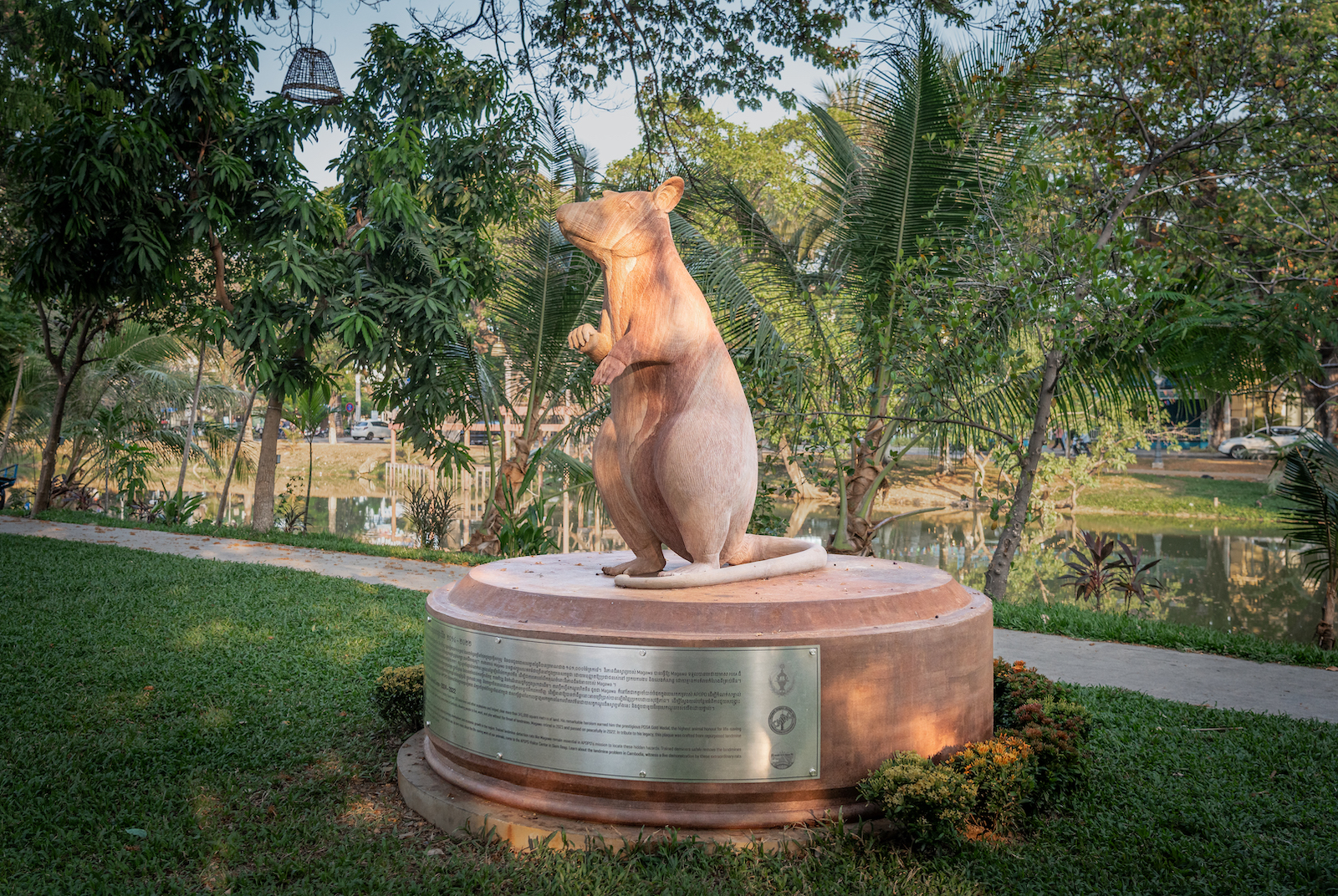
Siem Reap, Cambodia, April 4, 2026 — In the center of Siem Reap, a 2.2-meter stone statue now stands in honor of an unlikely hero. His name was Magawa, an African giant pouched rat trained by APOPO who helped detect more than 100 landmines and unexploded ordnance during his working life in Cambodia. Over several years, he cleared more than 141,000 square meters of land, roughly the size of 20 soccer fields, making it safe for people to live, farm, and build again. He retired in 2021 after a highly successful career and died peacefully the following year, aged eight.
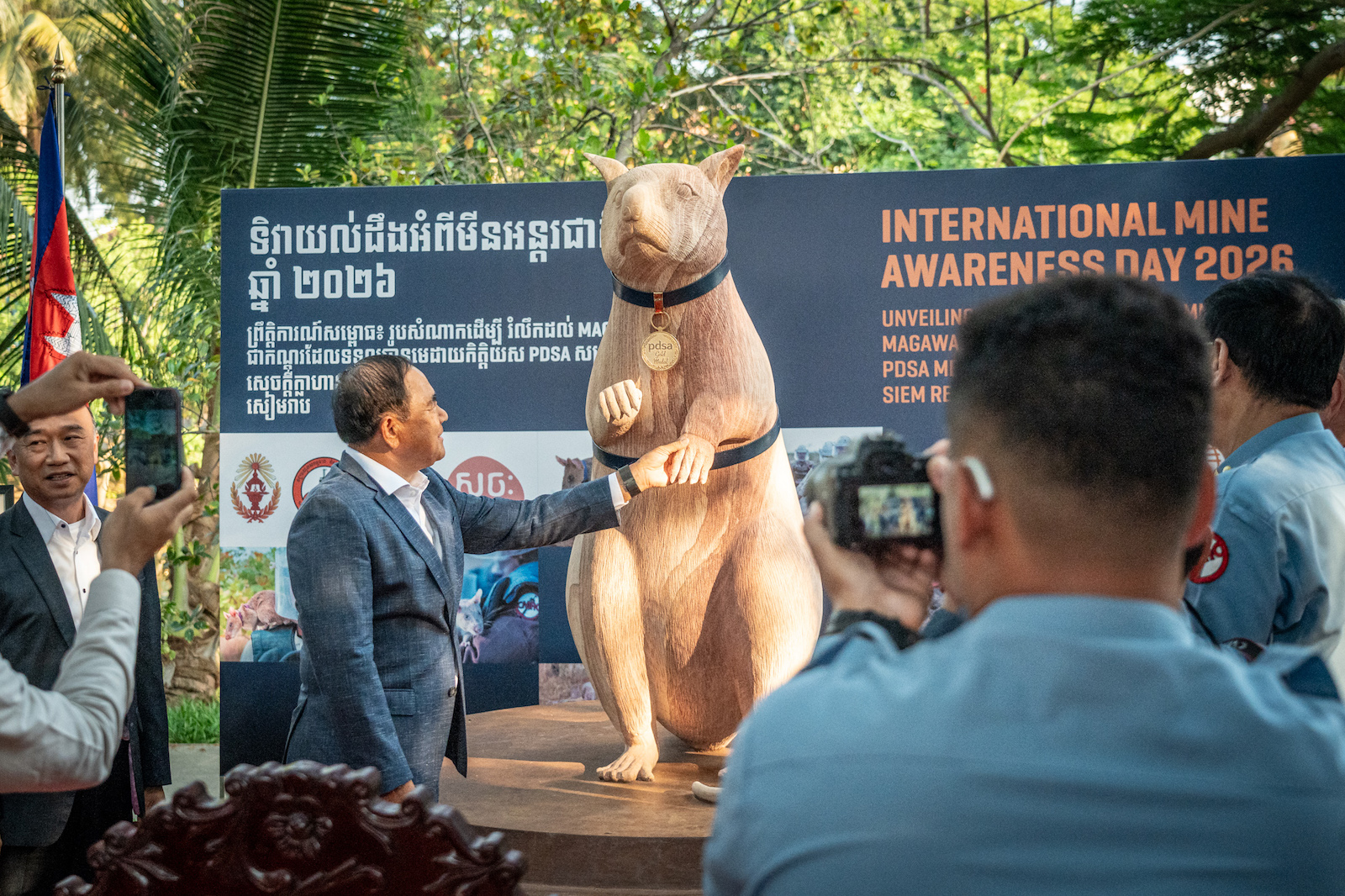
The statue was unveiled on April 3, ahead of International Mine Awareness Day, in a city that receives millions of visitors each year. Set near Angkor Wat and close to APOPO’s Visitor Center, where visitors can learn about the landmine detection process, see how the rats are trained and work in practice, and even hold one. The statue places Magawa’s story in a public space where people can come across it without knowing the background and still understand its significance.
Carved from local stone by Cambodian artisans from Satcha Handicraft Center, the statue was commissioned by APOPO and depicts Magawa wearing his medal and the harness he used during operations. Its landmine-shaped pedestal contains fragments of decommissioned explosives — a symbol of his victory over the threat. Located in central Siem Reap, the monument stands in one of the city’s most visited areas on the riverfront, directing tourists to APOPO’s Visitor Center where they can learn how the rats are trained and understand the lasting impact of landmines on Cambodian communities.
From Working Rat to Global Recognition

Magawa’s work gained attention not only because of what he achieved, but because of what it showed. During his lifetime, he became the first rat to receive the PDSA Gold Medal for animal bravery, one of the highest honors given to animals for courage and service, often compared to the George Cross. He was also the first rat to hold a Guinness World Record for detecting the most landmines by a rat, bringing wider attention to a type of work that usually goes unseen.
That record has since been passed to Ronin, another APOPO HeroRAT who continued this work and, until his death earlier this year, held the current world record. The shift from Magawa to Ronin shows that this is not a one-off success. Both rats were also available for virtual adoption through the APOPO website, giving supporters a way to contribute directly to their lifesaving work and follow their progress over time. Other rats continue this work today, trained in the same way and working in the same conditions.
A Visible Reminder of an Invisible Problem
Landmines do not disappear when conflicts end. In Cambodia, up to six million are still believed to remain buried beneath the soil, a legacy of decades of conflict that still affects daily life. Most of the time they cannot be seen, but their impact is constant. Land cannot be safely farmed or built on, movement is limited, and risk becomes part of everyday decisions.
Magawa’s work helps make that impact easier to understand. Each area he helped clear is land that can be used again, fields that can be farmed, ground that can support homes, and places where people can move more freely. The statue makes that link clear by focusing on a single, real example.
Part of a Broader Effort to Make Land Safe
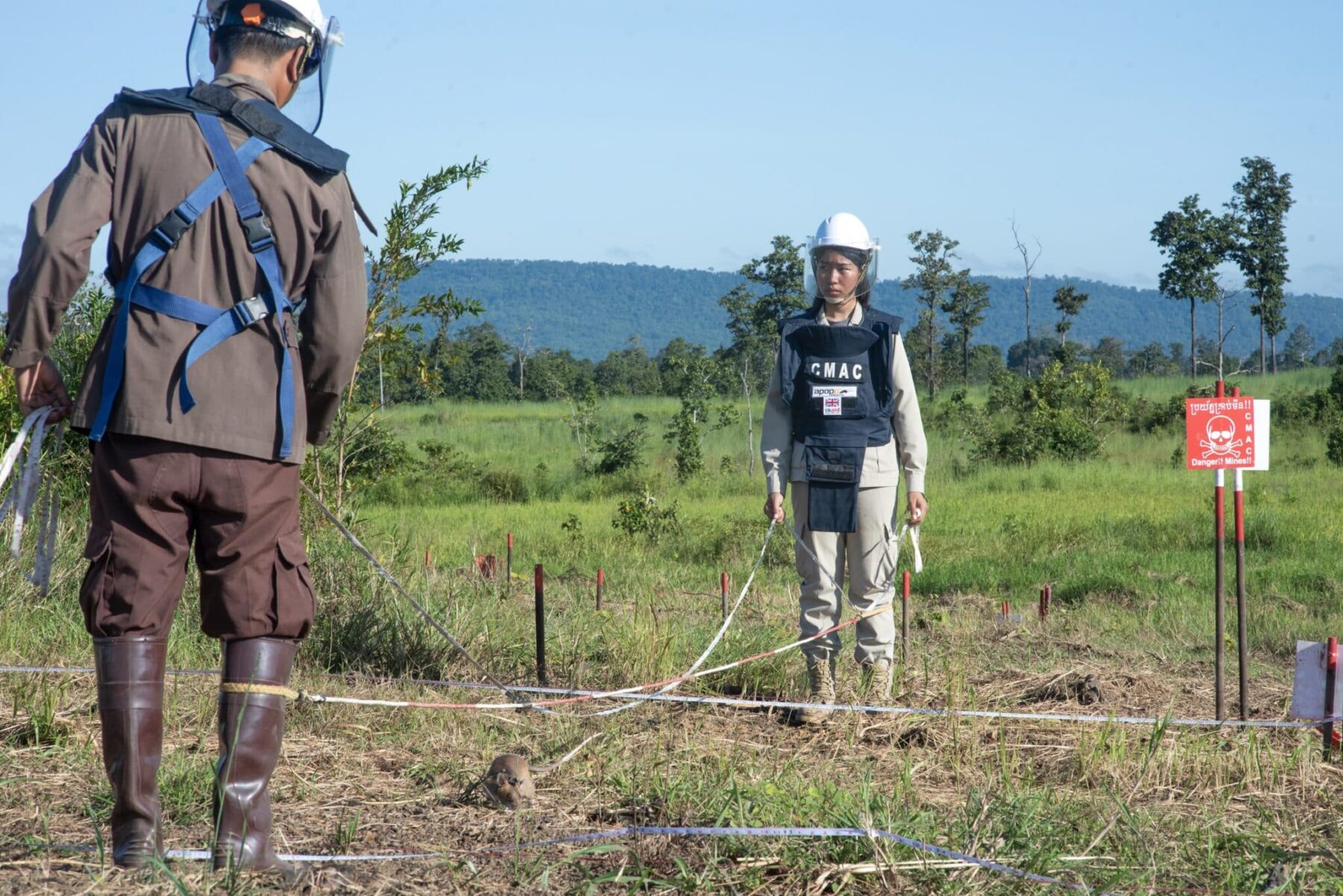
Magawa’s work was part of a wider system developed by APOPO. African giant pouched rats, known as HeroRATs, are trained to detect explosives left behind by war and work alongside human deminers to find dangerous areas quickly and safely. They detect explosive compounds rather than metal, and they are too light to trigger landmines.
This makes a big difference in how quickly land can be searched. A single rat can cover a tennis court sized area in about 30 minutes, while the same task could take a person with a metal detector up to four days, depending on the conditions. Since 2014, APOPO’s work in Cambodia has helped clear more than 40 square kilometers of land and destroy thousands of landmines and unexploded ordnance.
Magawa’s results are part of that larger effort. What he achieved on his own reflects a system that works across teams, locations, and years of steady, detailed work.
A Legacy That Continues
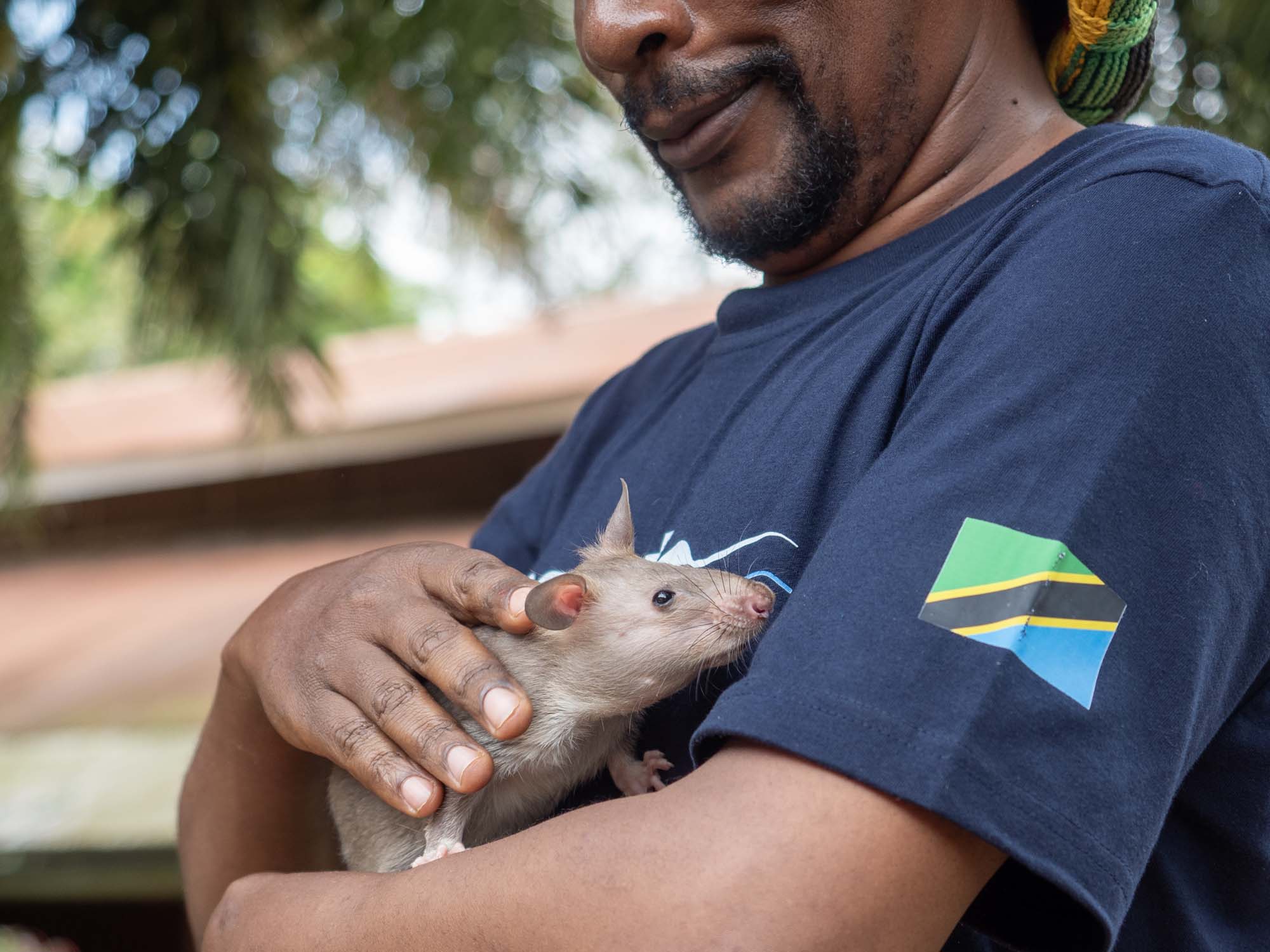
Magawa’s life began at APOPO’s Training Center in Tanzania at Sokoine University of Agriculture, where he was born and trained to become one of the organization’s most successful Mine Detection Rats. Magawa’s working life ended in 2021, but the problem he worked on has not. Around the world, one person is killed or injured by landmines or unexploded ordnance every hour, and most victims are civilians. In Cambodia and other affected countries, APOPO’s teams continue to clear land and reduce risk in areas where contamination still limits how people live and work.
Other HeroRATs now carry that work forward. In Cambodia, HeroRAT Imeldo has taken on the role of adoption rat, continuing the connection between individual animals and the supporters who help fund this work. The statue stands as a record of what has been achieved and as a reminder of the ongoing effort behind it.