International Day of Women and Girls in Science, observed each year on 11 February, recognizes the essential role women play across science, technology, engineering, and mathematics. At APOPO, women contribute to STEM-related work across research, operations, data analysis, animal training, health, and program management, applying technical expertise to solve complex humanitarian and environmental challenges.
One of those women is Jenny Rodriguez, Manager of APOPO’s Dog Training Center in Cambodia. Her work sits at the intersection of engineering, training science, animal welfare, and leadership. In this interview, Jenny shares what her role involves, how her background in engineering led her to this work, and why structure, observation, and collaboration are central to high-quality dog training and care.
Can you describe your role at the Dog Training Center and what your main responsibilities are?
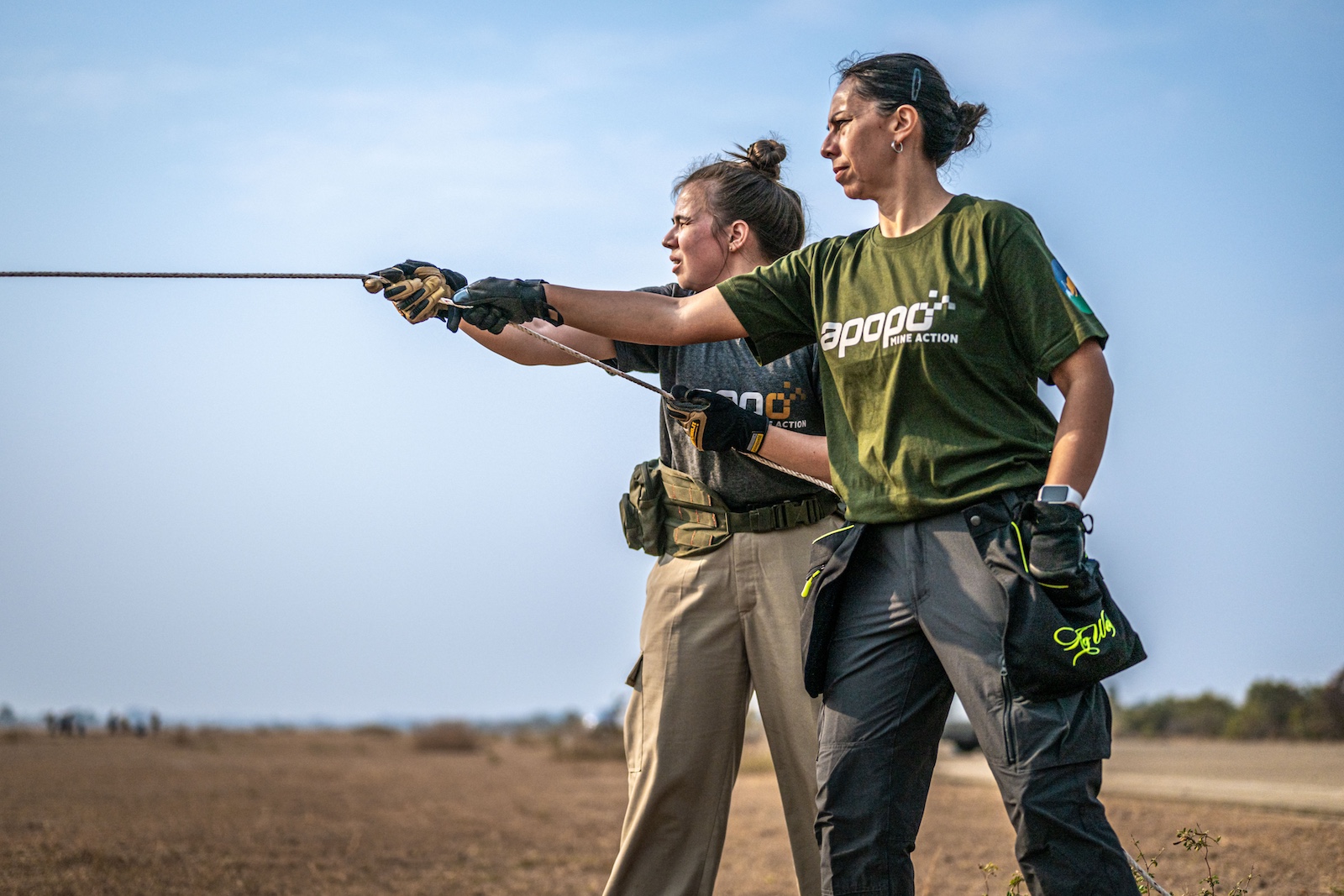
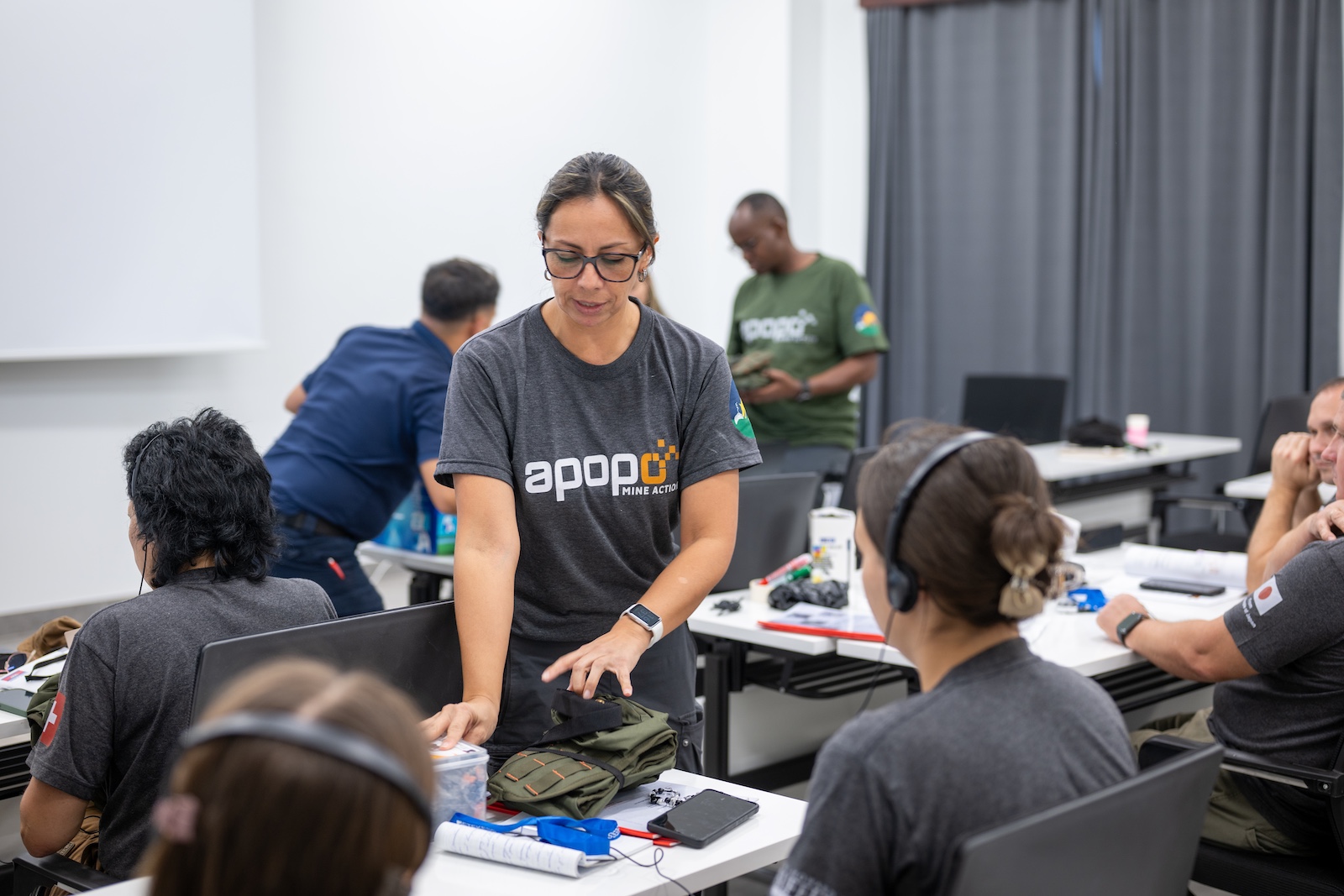
I am the Manager of the Dog Training Center for APOPO in Cambodia. My role combines operational leadership, technical oversight, and hands-on involvement in training the dogs. I supervise and support the team of trainers, coordinate training programs for new staff and new dogs, and ensure that all our processes align with the highest standards of animal welfare and performance.
I am also a trainer for new mine detection dog and technical survey dog handlers. These courses last three months and are delivered twice a year.
I provide support to APOPO programs abroad on dog health and welfare issues when needed. At the moment, I am responsible for 36 dogs, five trainers, two assistant trainers, and four kennel assistants who are in the process of becoming assistant trainers.
What does a typical day look like for you at the training center?
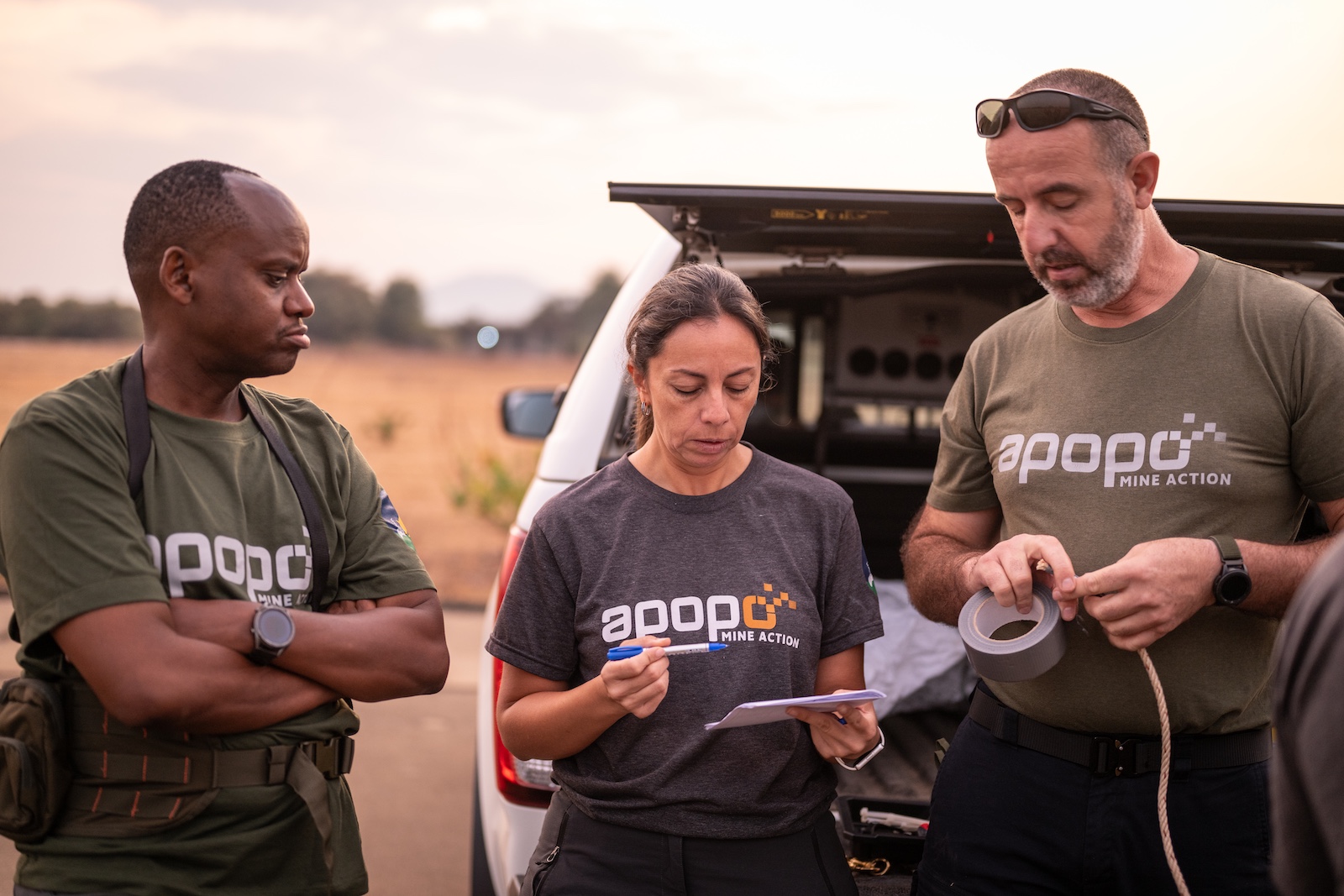
No two days are exactly the same. We work with animals and humans, so unpredictability is part of the job. A normal day also depends on whether we are delivering training to handlers.
We usually begin at 5:30 a.m. We walk the dogs, load them into the cars, and drive to the training field. If we have handlers in training, I deliver lessons and follow their progress closely.
My mornings start with observing training sessions and checking the dogs’ condition, including their energy level, behavior, and interaction with handlers or trainers. Small details matter. If any health issue arises, I focus on the dog’s wellbeing. After training, we return to the kennels, feed the dogs, and make sure they rest.
Throughout the day, I coordinate with trainers, review training plans, and support problem-solving in specific cases. There are also meetings, data reviews, and discussions about welfare monitoring and supplies.
We return to training sessions in the afternoon, around 2 or 3 p.m., depending on the heat. When possible, I like to work directly with the dogs myself. When we are training people, the focus shifts to matching dogs with new handlers.
After training, we swim the dogs, allow them to rest, feed them, and make sure everyone is fit, healthy, and ready for the job.
What is your background, and how did it lead you to this kind of work?
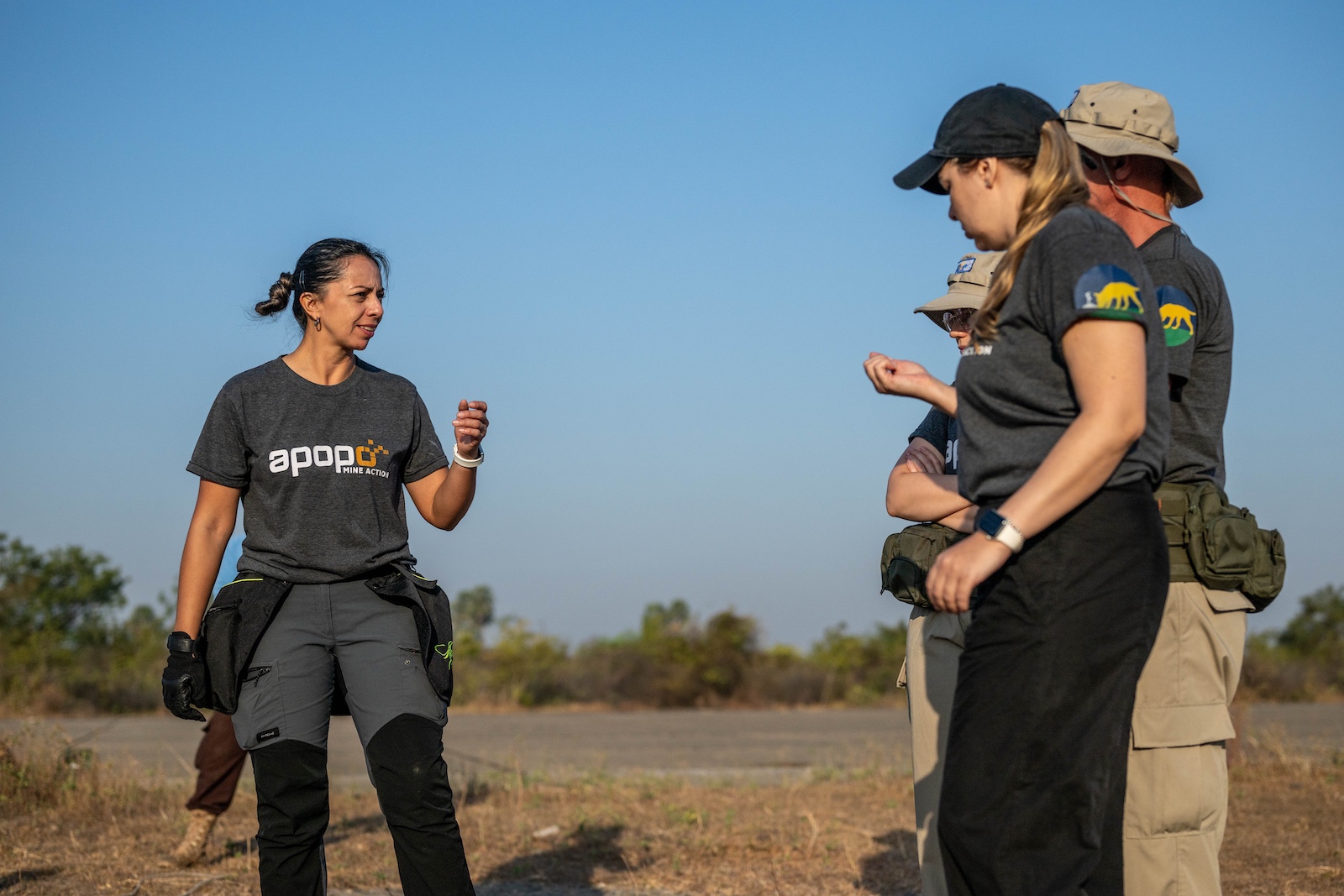
I am an engineer in bioprocesses. During my university studies, I also worked as a teacher, which was a formative experience. It helped me understand technical concepts and explain them clearly, adapting to different learning styles. Engineering trained me to think systematically, design processes, measure outcomes, and improve systems.
Later, I became an entrepreneur and ran a kennel in Colombia for ten years before joining APOPO. That experience gave me hands-on expertise in canine behavior, animal management, health monitoring, and daily welfare practices. It also meant managing people and making decisions that directly affected animals and staff.
When I joined APOPO two years ago as a dog trainer, all these experiences came together. My engineering background supports structured training protocols and data monitoring. My kennel experience grounds me in practical animal care. My teaching experience shapes how I train new handlers and support trainers.
Today, I combine technical thinking, education, leadership, and animal welfare. Each step of my path prepared me for this role and allows me to bridge science and compassion.
Which parts of your background do you draw on most in your day-to-day work now?
From engineering, I draw heavily on process thinking, documentation, and problem analysis. Dog training is not random. It requires structure, measurable progress, and controlled variables.
From my kennel experience, I bring a deep understanding of canine behavior, early development, and welfare management. Managing a kennel also taught me leadership, decision-making under pressure, and long-term planning. Today, I combine both worlds.
Your work involves daily decisions about dogs’ training, health, and welfare. How do you approach those decisions?
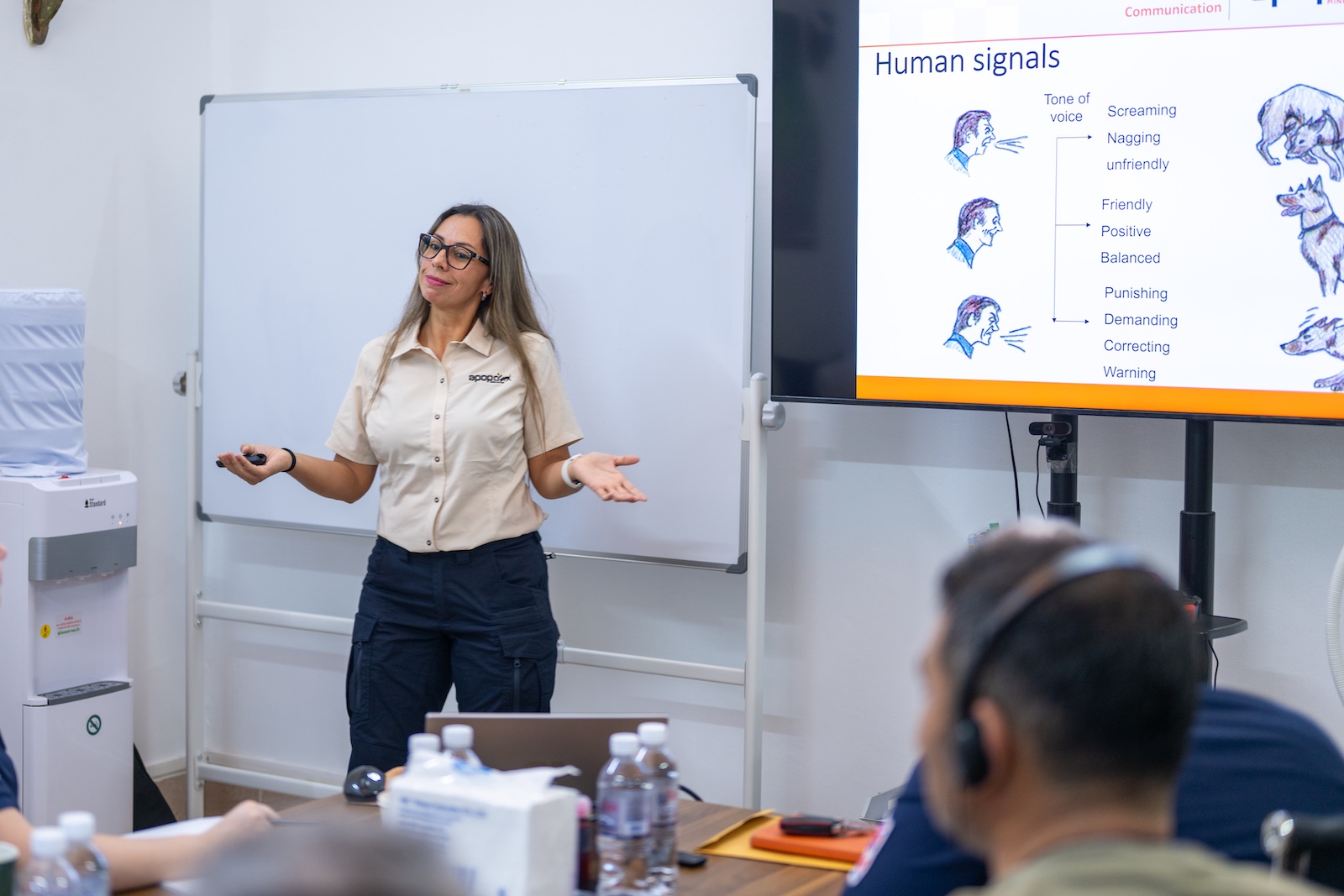
I balance observation and empathy. We track performance and health indicators, but we also rely on careful daily observation of each dog as an individual, as well as each trainer or handler.
I talk with my team and gather information from their experience. I try to avoid reactive decisions and instead focus on consistent, evidence-based adjustments that support both learning and wellbeing.
How important are observation, routine, and consistency in your work?
They are fundamental. Dogs thrive on consistency and predictability. Routine and discipline improve learning and performance.
Observation is equally important. Subtle changes in posture, appetite, motivation, or social interaction can indicate stress, discomfort, or progress. When you work with animals, you must be attentive to non-verbal communication. Consistency builds trust and is the foundation of successful training.
Can you share an example of how noticing small changes helped improve a dog’s wellbeing or progress?
Dogs communicate constantly through body language. When a dog that was performing well suddenly shows reduced motivation or hesitation, it is often a sign that something is wrong.
Sometimes it is a minor issue such as stomach discomfort, a small paw injury, or hormonal changes. In a few cases, it has been more serious, such as gastric torsion. We monitor closely and aim to prevent small issues from becoming major health problems. Working with more than 1,000 dogs over my career has reinforced how essential daily observation is for welfare and performance.
How do you work with trainers, veterinarians, or other specialists?
Collaboration is essential. Trainers provide insight into behavior and performance. Veterinarians bring medical expertise. Our welfare team supports decision-making.
My role is often to connect these perspectives and translate them into action. Small adjustments in environment, nutrition, enrichment, or handling can have a big impact. Good results are always team efforts, often across different cultures and languages.
What might surprise people about how structured dog training and welfare work really is?
Many people imagine dog training as intuitive or based only on affection. In reality, it is highly structured and data-driven.
We design training protocols, track performance, evaluate environmental variables, and monitor health data. There is a strong scientific foundation behind learning theory and welfare management. Nutrition, health, and performance are all connected, and without good structure, quality is affected.
Have you faced challenges in a role that combines hands-on care with leadership?
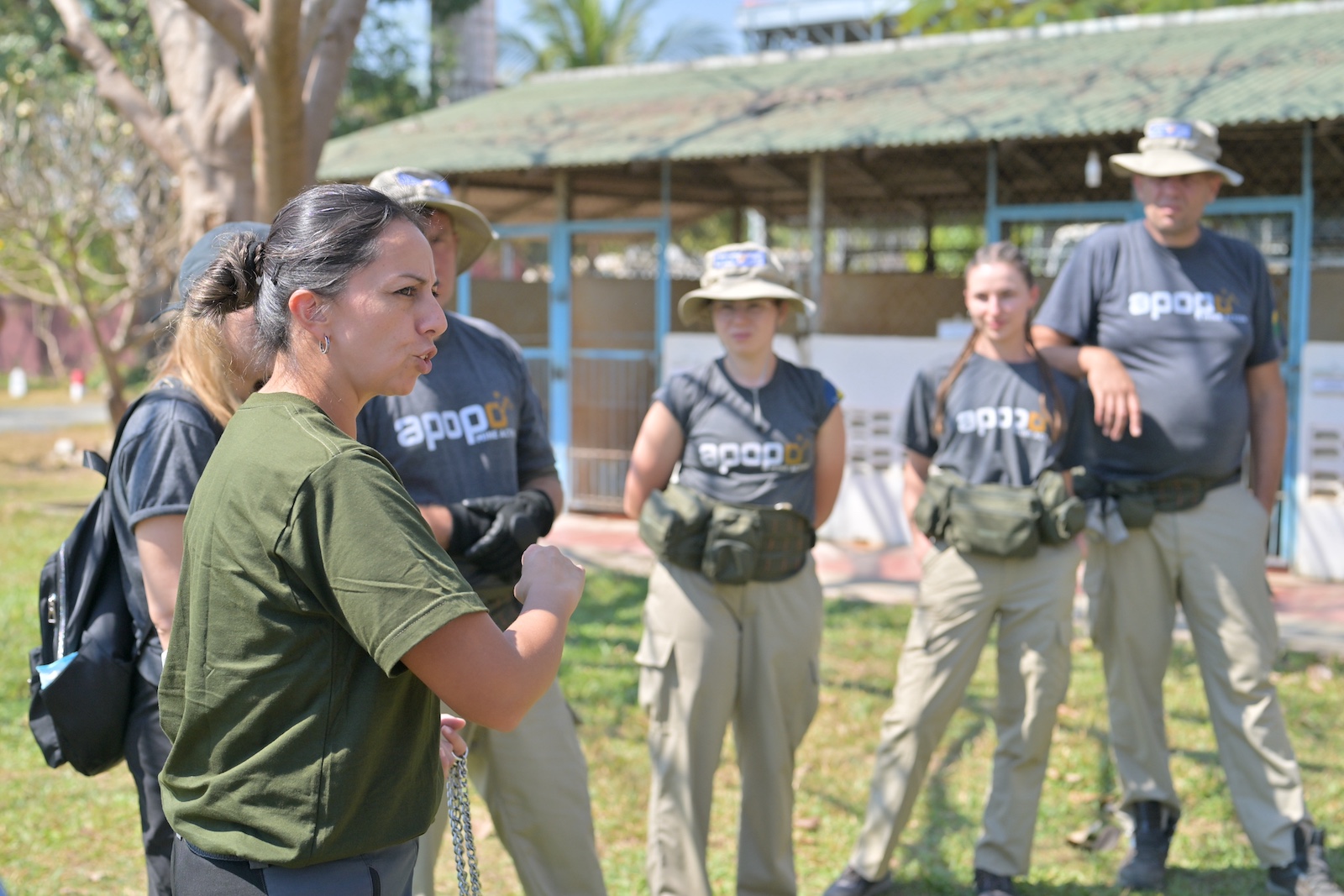
Every day brings challenges, whether with dogs or people. In life-threatening situations, staying calm and making fast decisions has helped save dogs’ lives.
Balancing operational management with direct involvement is not always easy. Leadership requires planning and difficult decisions, while working with animals requires presence and emotional awareness. As a woman in technical and leadership roles, I have learned to trust my expertise. Competence, experience, consistency, and an honest smile build credibility.
What do you find most rewarding about your work?
The most rewarding part is seeing the dogs develop. When they are deployed to operations, I wait for feedback. Knowing that our dogs are successfully detecting landmines is an incredible feeling.
Our work helps save lives, protect children, and build hope. That is motivation enough to keep doing our best.
What advice would you give to women or girls interested in working with animals, welfare, or technical teams?
Do not feel limited by traditional career paths. Technical knowledge and compassion are powerful when combined.
Build strong foundations in science or technical fields, stay curious, seek mentors, and remain open to learning from everyone. Trust your ability to lead and collaborate. There is space for women in engineering, management, and leadership. The path may not always be easy, but it is worth it.