After over a decade of groundbreaking work, APOPO is concluding its tuberculosis (TB) detection program in Mozambique. This marks the end of an era characterized by innovation, collaboration, and significant contributions to public health in a country that has faced immense challenges.
Over a Decade of Achievement
APOPO’s journey in Mozambique began in 2012, following the success of our TB detection program in Tanzania. Neighboring country Mozambique, with a high TB burden and a significant detection gap, was a natural next step for our efforts. The program was initiated after Princess Astrid of Belgium highlighted our work with TB detection rats to Mozambique’s First Lady, Mrs. Guebuza. Recognizing the potential impact, she connected us with key institutions like the National Institute of Health (INS) and Eduardo Mondlane University (UEM).
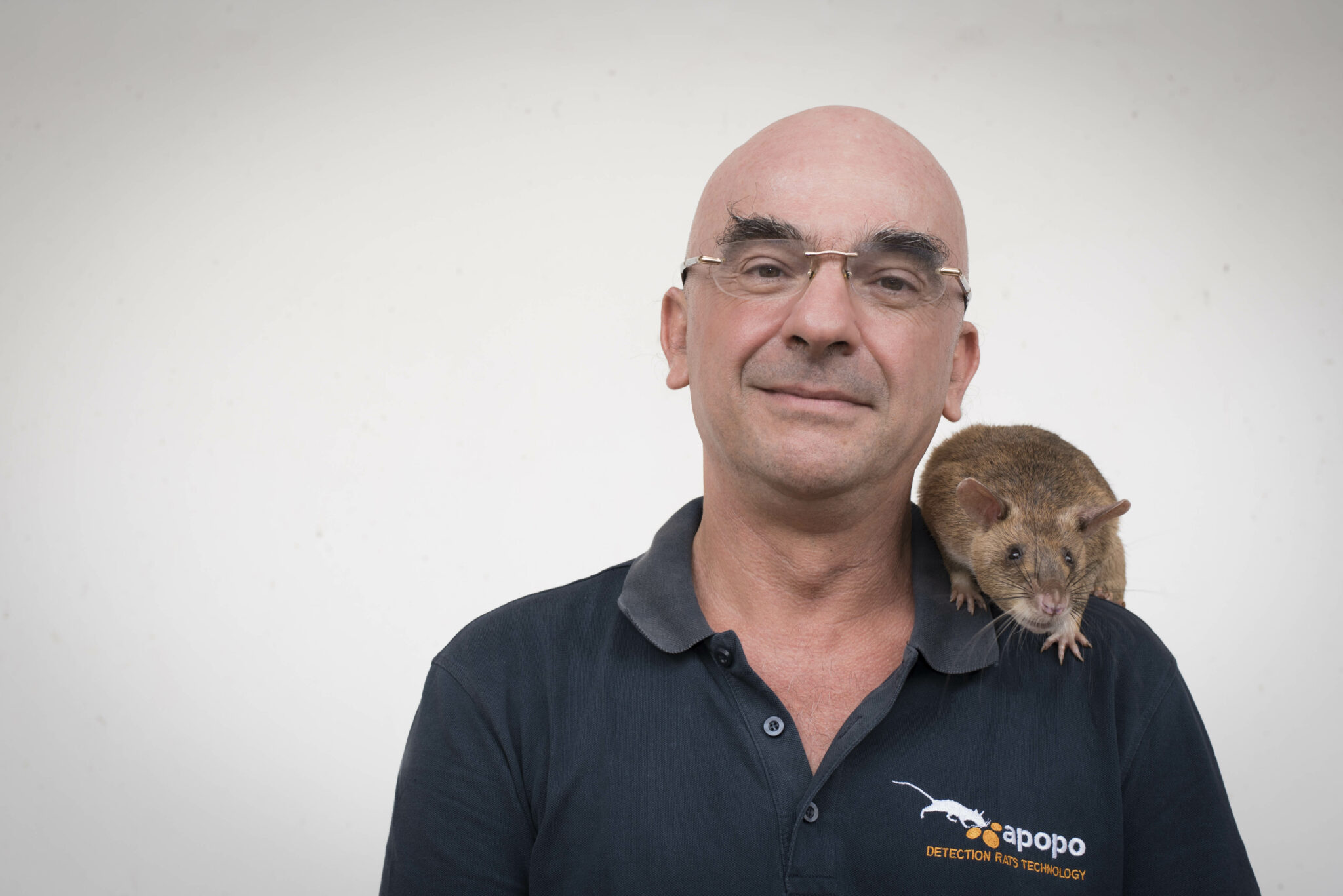
Under the leadership of Dr. Emilio Valverde, we established a state-of-the-art TB detection laboratory in Maputo. The lab, equipped with advanced diagnostic tools and APOPO’s trained African giant pouched rats, quickly became an important factor in TB detection in the region. By 2013, the lab was officially inaugurated by Mozambican President Filipe Nyussi, and our work began in earnest.
Notable Contributions and Results
Over the years, APOPO’s TB program in Mozambique achieved remarkable results:
- Testing Capacity: Our laboratory was capable of performing up to 160 tests per day, utilizing both rat detection technology and molecular testing (GeneXpert©).
- Job Creation: The program created 15 local jobs, with ongoing capacity-building efforts that enhanced local expertise in TB detection.
- Rapid Detection: Our rats demonstrated an extraordinary ability to evaluate over 100 samples in just 20 minutes, with high levels of accuracy.
- Wide-reaching Impact: APOPO’s daily TB testing services supported 30 health facilities across Maputo city and province, significantly boosting TB detection rates in partner clinics.
- Publications and Recognition: Our work was recognized through scientific publications and featured in international media, highlighting the effectiveness of our diagnostic model.
Between 2014 and 2017, APOPO tested over 113,000 samples from more than 56,000 patients, identifying over 4,000 new TB cases. This increased the detection rate by 57% in the health facilities we supported. Additionally, our partnership with the community-based organization Kenguelekezé played a critical role in ensuring that more patients began treatment, addressing a significant challenge in TB management.
Challenges and Adaptation

Despite our success, the landscape of TB detection in Mozambique began to shift in 2016, when the Ministry of Health implemented widespread molecular testing (GeneXpert). This shift began reducing the demand for our rat-based detection technology, as molecular testing became the standard. Recognizing the need to adapt, APOPO integrated services into the national health system, supporting the new Xpert® MTB/RIF testing while continuing to use our rats for secondary evaluations.
The COVID-19 pandemic further challenged our operations, but APOPO pivoted to support both COVID-19 and TB testing efforts, demonstrating our flexibility and commitment to public health.
From early 2020 to October 2022, APOPO partnered with Population Services International (PSI) in Mozambique to test for Human Papillomavirus (HPV), the leading cause of cervical cancer among women. The project delivered rapid and reliable results, leading to a revision in the Ministry of Health’s strategy to include HPV screening in routine family planning consultations nationwide. This collaboration continued into 2023 with further research to refine testing methods.
The Conclusion of a Successful Program
Throughout our eleven-year tenure in Mozambique, APOPO tested 148,295 samples from 99,375 patients, identifying 7,418 TB cases that might otherwise have gone undetected. Our efforts not only enhanced TB detection but also strengthened Mozambique’s public health infrastructure.
However, with the national shift toward molecular testing, APOPO’s TB detection program has reached its natural conclusion. The national TB program has discouraged the continuation of rat-based second-line testing, signaling the end of our innovative approach in this context.
This closure marks the end of a significant chapter for APOPO in Mozambique. It follows the successful conclusion of our demining operations in the country, which contributed to Mozambique being declared mine-free in 2015—a milestone we are incredibly proud of.
Key Achievements in Mozambique:
- Construction of a TB diagnostic laboratory in Maputo with a capacity of up to 160 tests per day.
- Creation of 15 local jobs with continuous capacity building.
- High-speed, high-sensitivity TB detection using trained rats.
- Support for 30 partner clinics in Maputo city and province.
- Contribution to TB screening for special populations, including prison inmates.
- Enhanced patient care through partnerships with local organizations, improving treatment initiation rates.
As we close this chapter, we extend our heartfelt thanks to our partners, donors, and dedicated team members who made these achievements possible. APOPO’s work in Mozambique has left an indelible mark on public health, demonstrating the power of innovation and collaboration in the fight against tuberculosis.